آرامگاهها و معابد نیکو
| میراث جهانی یونسکو | |
|---|---|
 | |
| مکان |  ژاپن ژاپن |
| معیار ثبت | فرهنگی: i, iv, vi |
| شمارهٔ ثبت | ۹۱۳ |
| تاریخ ثبت | ۱۹۹۹ |
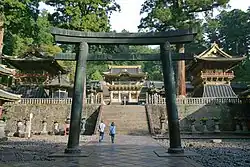
آرامگاهها و معابد نیکّو (Nikko، 日光) که در فهرست میراث جهانی یونسکو قرار دارد شامل ۱۰۳ ساختمان یا بنا و مجموعههای طبیعی اطراف آن است و در نیکو، منطقه توچیگی در ژاپن قرار دارد . این ساختمانها وابسته به دو معبد شینتو ( معبد فوتاراسان و توشو-گو ) و یک معبد بودائی ( رینو-جی ) هستند . از میان این ۱۰۳ ساختمان ، ۹ تای آنها به عنوان گنجینههای ملی ژاپن برگزیده و ۹۴ تای باقیمانده به عنوان داراییهای مهم فرهنگی این کشور شناخته شدند . در سال ۱۹۹۹ این اماکن به عنوان میراث جهانی یونسکو ثبت شدند .[۱]
مکان ها
آرامگاه فوتاراسان
| نام | سخنان | سال | نگاره |
|---|---|---|---|
| Honden | Main building enshrining the three deities of the Futarasan shrine. | ۱۶۱۹ | 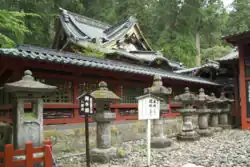 |
| Karamon | Gate in front of the Honden. | early دوره ادو | |
| Wakimon | Gate of the Sukibe. | early دوره ادو | |
| Sukibe | Roofed wall enclosing the Honden. | early دوره ادو | |
| Haiden | Worship hall. | ۱۶۴۵ | 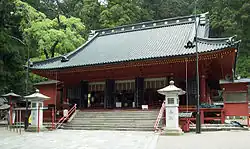 |
| توری | Copper torii marking the entrance to the shrine. | ۱۷۹۹ | 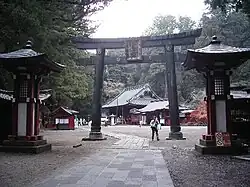 |
| Shinkyō | Wooden arched bridge. | ۱۹۰۴ | 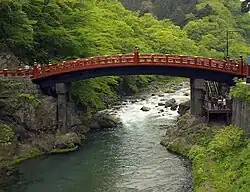 |
| Betsugū Taki-no-o-jinja Honden | Building enshrining Tagorihime no Mikoto. | ۱۷۱۳ | |
| Betsugū Taki-no-o-jinja Karamon | Gate of the Betsugū Taki-no-o-jinja Honden. | ۱۷۴۰ | |
| Betsugū Taki-no-o-jinja Haiden | Worship hall. | c. ۱۷۱۳ | |
| Betsugū Taki-no-o-jinja Rōmon | Gate to the Betsugū Taki-no-o-jinja. | ۱۶۹۷ | |
| Betsugū Taki-no-o-jinja توری (۳ structures) | Stone torii at the approach to the Betsugū Taki-no-o-jinja marking the sacred area. | ۱۶۹۶، ۱۷۷۹ | |
| Betsugū Hongū-jinja Honden | Building enshrining Ajisukitakahikone no Mikoto. | ۱۶۸۵ | 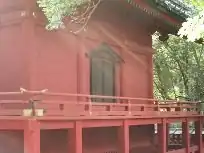 |
| Betsugū Hongū-jinja Karamon | Gate in front of the Betsugū Hongū-jinja Honden. | c. ۱۶۸۵ | |
| Betsugū Hongū-jinja Sukibe | Roofed wall enclosing the Betsugū Hongū-jinja Honden. | c. ۱۶۸۵ | 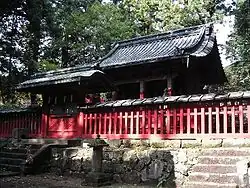 |
| Betsugū Hongū-jinja Haiden | Worship hall. | ۱۶۸۵ | |
| Betsugū Hongū-jinja توری | Stone torii at the approach to the Betsugū Hongū-jinja marking the sacred area. | ۱۸۰۰ | |
| Shin-yosha | Storehouse for میکوشی, portable shrines. | ۱۶۴۱ |  |
| Daikokuden | Building enshrining Ōkuninushi no Mikoto. | ۱۷۴۵ | 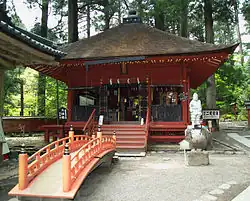 |
| Massha Mitomo-jinja Honden | Building enshrining Sukunabikona no Mikoto. | c. ۱۷۵۱–۱۷۶۱ |  |
| Massha Hie-jinja Honden | Building enshrining Ōyamakui no Mikoto. | c. ۱۶۴۸–۱۶۵۱ |  |
توشو گو
| نام | سخنان | سال | نگاره |
|---|---|---|---|
| Honden, Ishinoma, Haiden | Honden: Building enshrining the deified image of توکوگاوا ایهیاسو, Tōshō Daigongen. Ishinoma: Chamber connecting Honden and Haiden. Haiden: Worship hall. |
۱۶۳۶ | 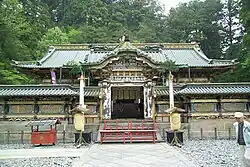 |
| Shōmen Karamon | Gate in front of Haiden. Third gate. | ۱۶۳۶ | |
| Haimen Karamon | Gate behind Honden. | ۱۶۳۶ | |
| Tōzai Sukibe | Roofed wall enclosing Honden, Ishinoma and Haiden. | ۱۶۳۶ | |
| Yōmeimon | Two-storied gate. Second gate. | ۱۶۳۶ | 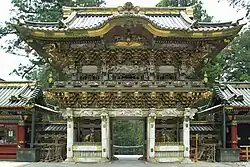 |
| Tōzai Kairō and Kugurimon | Roofed cloisters enclosing shrine buildings. | ۱۶۳۶ | 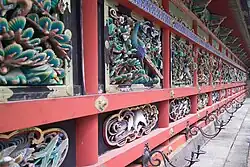 |
| Kamishamusho | Building for شینتو services. | ۱۶۳۶ | |
| Kaguraden | Building for the Kagura ritual. | early دوره ادو | 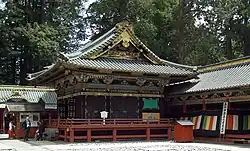 |
| Shin-yosha | Storehouse for میکوشی, portable shrines. | ۱۶۳۶ | 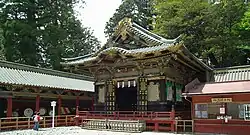 |
| Shōrō | Belfry | ۱۶۳۶ | |
| Korō | Storehouse for drums. | ۱۶۳۶ | |
| Honjidō | Building enshrining Yakushi, the healing Buddha. | ۱۶۳۶ | |
| Kyōzō | Storehouse for sutras. | ۱۶۳۶ | 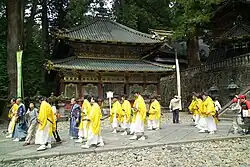 |
| Kamijinko | Storehouse. | early دوره ادو |  |
| Nakajinko | Storehouse. | early دوره ادو | 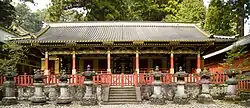 |
| Shimojinko | Storehouse. | early دوره ادو | 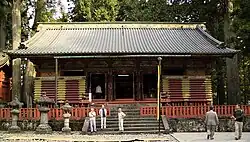 |
| Mizuya | Stone building sheltering the water basin. | ۱۶۳۶ | 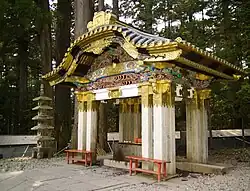 |
| Shinkyū | Stable for sacred horses. | ۱۶۳۶ | 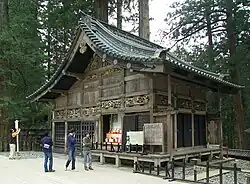 |
| Omotemon | First gate. | ۱۶۳۶ | 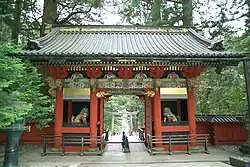 |
| Gojūnotō | Five-storied pagoda. | ۱۸۱۸ | 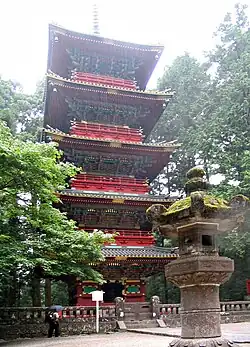 |
| Ishidorii | Stone توری at front approach. | ۱۶۱۸ |  |
| Sakashitamon | Gate at the entrance to the Okusha. | ۱۶۳۶ | |
| Okusha Hōtō | Building enshrining the remains of توکوگاوا ایهیاسو. | ۱۶۸۳ | 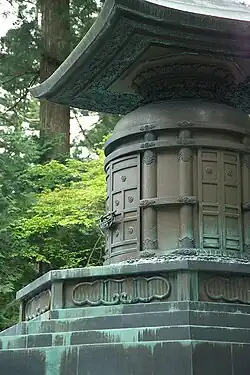 |
| Okusha Karamon | Gate in front of the Hōtō. | ۱۶۵۰ | |
| Okusha Ishitamagaki | Stonewall enclosing the Okusha. | early دوره ادو | |
| Okusha Haiden | Worship hall. | ۱۶۳۶ | |
| Okusha Dōjinko | Treasure storehouse. | ۱۶۵۴ | |
| Okusha Torii | Copper توری at the front approach to the Okusha. | c. ۱۶۸۳ | |
| Okusha Sekisaku | Stone fence along the front approach. | early دوره ادو | |
| Kariden Honden, Ainoma, Haiden | Honden: Building enshrining the deified image of توکوگاوا ایهیاسو, Tōshō Daigongen in case of repair works on the main Honden. Ainoma: Building connecting the Honden and Haiden. Haiden: Worship hall. |
۱۶۳۹ | |
| Kariden Karamon | Gate in front of the Kariden Honden. | early دوره ادو | |
| Kariden Sukibe | Roofed wall enclosing the Kariden Honden. | early دوره ادو | |
| Kariden Wakimon | Gate of the Kariden Sukibe. | early دوره ادو | |
| Kariden Torii | Copper توری at the front approach to the Kariden Honden. | early دوره ادو | |
| Kariden Shōrō | Belfry. | early دوره ادو | |
| Otabisho Honden | Building used in the Togyosai festival. | ۱۶۸۵ | |
| Otabisho Haiden | Worship hall used in the Togyosai festival. | c. ۱۶۸۵ | |
| Otabisho Shinsenjo | Building where sacred food is prepared during the Togyosai festival. | c. ۱۶۸۵ | |
| Kyūokusha Karamon | Stone gate of the Kyūokusha. Reconstructed in a new location after destruction in an earthquake. | ۱۶۴۱ | |
| Kyūokusha Torii | توری of the Kyūokusha. Reconstructed in a new location after destruction in an earthquake. | ۱۶۴۱ |
رینو جی
| سال | سخنان | سال | نگاره |
|---|---|---|---|
| Hon-dō (Sanbutsudō) | Buddha hall. | ۱۶۴۷ | 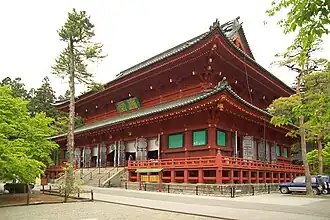 |
| Sōrintō | Copper sutra repository tower. | ۱۶۴۳ | |
| Hombō Omotemon | Front gate of the Hombō. | mid دوره ادو | |
| Kaizandō | Founder's hall dedicated to the priest Shōdō. | c. ۱۷۲۰ | |
| Jōgyōdō | Buddha hall enshrining آمیداگرایی. | ۱۶۴۹ | |
| Hokkedō | Buddha hall enshrining گوتاما بودا. | ۱۶۴۹ | |
| Jōgyōdō Hokkedō Watarirō | Roofed corridor between Hokkedō and Watarirō. | ۱۶۴۹ | |
| Jigendō Byōdō | Building enshrining the remains of the priest Tenkai. | early دوره ادو | |
| Jigendō Haiden | Building for worshipping Jigendō. | ۱۶۴۹ | |
| Jigendō Kyōzō | Storehouse for documents collected by the priest Tenkai. | early دوره ادو | |
| Jigendō Shōrō | Belfry. | early دوره ادو | |
| Jigendō Amidadō | Buddha hall enshrining آمیداگرایی. | early دوره ادو | |
| Kodamadō | Buddha hall enshrining Kodama. | early دوره ادو | |
| Gohōtendō | Buddha hall enshrining Bishamonten, Benzaiten and دایککوتن. | c. ۱۶۱۵–۱۶۲۳ | |
| Kannondō | Buddha hall enshrining Kanzeon Bosatsu (اولوکیتشوره Kṣitigarbha). | ۱۶۸۵ | |
| Sanjūnotō | Three-storied پاگودا. | ۱۶۸۵ | |
| معبد ریننو (Taiyū-in Reibyō): Honden, Ainoma and Haiden | Honden: Building enshrining Taiyū-in, the deified image of توکوگاوا ایهمیتسو. Ainoma: Chamber connecting the Honden and Haiden. Haiden: Worship hall. |
۱۶۵۳ | 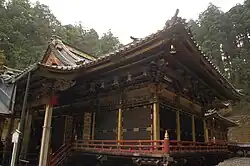  |
| Taiyū-in Reibyō Karamon | Gate in front of the Taiyū-in Reibyō. | ۱۶۵۳ | 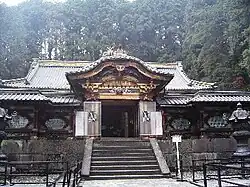 |
| Taiyū-in Reibyō Mizugaki | Roofed wall enclosing the Taiyū-in Reibyō Honden and other structures. | ۱۶۵۳ | |
| Taiyū-in Reibyō Wakamon | Gate of the Taiyū-in Reibyō Mizugaki. | ۱۶۵۳ | |
| Taiyū-in Reibyō Gokūsho | Building used for preparing sacred food. | ۱۶۵۳ | |
| Taiyū-in Reibyō Gokūsho Watarirō | Roofed corridor between the Honden and Gokūsho. | ۱۶۵۳ | |
| Taiyū-in Reibyō Yashamon | Third gate. | ۱۶۵۳ | |
| Taiyū-in Reibyō Yashamon Sayū Kairō | Roofed corridors on both sides of the Yashamon. | ۱۶۵۳ | |
| Taiyū-in Reibyō Shōrō | Belfry. | ۱۶۵۳ | |
| Taiyū-in Reibyō Korō | Storehouse for drums. | ۱۶۵۳ | |
| Taiyū-in Reibyō Nitemmon | Second gate. | ۱۶۵۳ | |
| Taiyū-in Reibyō Saijō | Lavatory for ritual use. | ۱۶۵۳ | |
| Taiyū-in Reibyō Mizuya | Stone column building sheltering the water basin. | ۱۶۵۳ | |
| Taiyū-in Reibyō Hōko | Storehouse. | ۱۶۵۳ | |
| Taiyū-in Reibyō Niōmon | First gate. | ۱۶۵۳ | |
| Taiyū-in Reibyō Kōkamon | Gate at the entrance to the Taiyū-in Reibyō Oku-in. | ۱۶۵۳ | 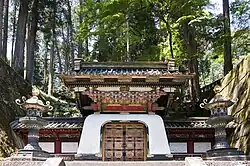 |
| Taiyū-in Reibyō Dōzutsumi Hōzō | Copper-plated storehouse. | ۱۶۵۳ | |
| Taiyū-in Reibyō Oku-in Hōtō | Building enshrining the remains of توکوگاوا ایهمیتسو. | ۱۶۵۳ | |
| Taiyū-in Reibyō Oku-in Inukimon | Copper gate in front of the Hōtō. | ۱۶۵۳ | |
| Taiyū-in Reibyō Oku-in Haiden | Worship hall | ۱۶۵۳ | |
| Taiyū-in Reibyō Bettōsho Ryūkō-in | Management building for Taiyū-in. | mid دوره ادو |
منابع
- ↑ «فهرست میراث جهانی یونسکو، آرامگاهها و معابد نی کو». دریافتشده در ۲۳-۰۹-۲۰۱۱. تاریخ وارد شده در
|تاریخ بازدید=را بررسی کنید (کمک)
- مشارکتکنندگان ویکیپدیا. «Shrines and Temples of Nikkō». در دانشنامهٔ ویکیپدیای انگلیسی، بازبینیشده در ۱۷ سپتامبر ۲۰۱۱.

در ویکیانبار پروندههایی دربارهٔ آرامگاهها و معابد نیکو موجود است.