انجمن مستا
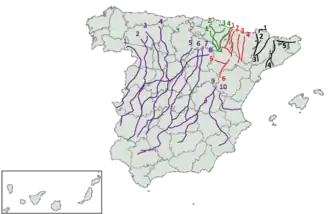
مستا (اسپانیایی: Honrado Concejo de la Mesta، ت. «شورای محترم مستا») یک انجمن قدرتمند برای حفاظت از مالکان دامها و حیوانات آنها در تاج کاستیا بود که در قرن سیزدهم تأسیس و در سال ۱۸۳۶ منحل شد. اگرچه بیشتر به خاطر سازماندهی مهاجرت سالانه گوسفندان کوچنشین، به ویژه از نژاد مرینو، شناخته میشد، ولی گلهها و انواع دامها در کاستیا و صاحبان آنها تحت نظارت مستا بودند، از جمله دامهای کوچنشین و ثابت.[۱]
گوسفندان کوچنشین عموماً در کاستیای قدیم و لئون، جایی که چراگاههای تابستانی آنها بود، نگهداری میشدند و به چراگاههای زمستانی اکسترمادورا و آندالوسیا مهاجرت میکردند.
پانویس
- ↑ Marín Barriguete (2015), p. 101
منابع
- I. J. de Asso y del Rio and M de Manuel y Rodriguez, (1805). Institutes of the Civil Law of Spain, sixth edition. translated by L. F. Johnstone, 1825. London, Butterworth.
- L. M. Bilbao and E. F. de Pinedo, (1994). Wool Exports Transhumance and Land Use in Castile in the 16th, 17th and 18th Centuries, in A. A. Thompson, B. Yun Casalilla and B. Yun (editors), The Castilian Crisis of the Seventeenth Century, Cambridge University Press. شابک ۹۷۸−۰−۵۲۱۴۱−۶۲۴−۵.
- C. J. Bishko, (1963) The Castilian as Plainsman: The Medieval Ranching Frontier in La Mancha and Extremadura. in A. R. Lewis and T. F. McGann (eds), The New World Looks at its History. Austin, University of Texas Press.
- C. J. Bishko, (1978). The Andalusian Municipal Mestas in the 14th-16th Centuries: Administrative and Social Aspects. Córdoba, Actas del I Congreso de Historia de Andalucía, Vol. 1, pp 347–374. شابک ۸۴−۵۰۰−۲۶۰۹−۱.
- C. J. Bishko, (1980) Studies in Medieval Spanish Frontier History. London: Variorum Reprints. شابک ۰−۸۶۰۷۸−۰۶۹−۴.
- F. Braudel, translated by S. Reynolds, (1995). The Mediterranean and the Mediterranean World in the Age of Philip II: Volume I. Berkeley, University of California Press. شابک ۹۷۸−۰−۵۲۰۲۰−۳۰۸−۲.
- K. W. Butzer, (1988) Cattle and Sheep from Old to New Spain: Historical Antecedents. Annals of the Association of American Geographers, Vol. 78, No. 1, pp. 29–56.
- A. L. Cahn, (2008). El espíritu del lugar en las Cañadas Reales de la Corona de Castilla. Revista de Urbanismo, Vol. 19, pp. 1–19.
- M. Diago Hernando, (2002). La aplicación en la Sierra Soriano del Derecho de Posesión Mesteño a los Agostaderos durante el Siglo XVII. Estudios Agrosociales y Pesqueros, No. 195, pp. 61–79.
- P. García Martín, (1992). La Ganderia Mesteña en la España Borbonica, (1700–1836), 2nd edition. Madrid, Ministerio de Agricultura. شابک ۸۴−۷۴۷۹−۹۳۹−۲.
- A. García Sanz, (1978). "La agonía de la Mesta y el hundimiento de las exportaciones laneras: un capítulo de la crisis económica del Antiguo Régimen en España. Revista Agricultura y Sociedad, nº 6. pp. ۲۸۳ –۳۵۶
- A. García Sanz, (1998). Los Privilegios Mesteños en el Tiempo, 1273–1836: Una Revisión de la Obra de Julius Klein. in F. Ruíz Martín and A. García Sanz (eds.), Mesta, Trashumancia y Lana en la España Moderna. Barcelona, Crítica. شابک ۸۴−۷۴۲۳−۸۴۷−۱.
- A. Gilman and J. B. Thornes, (2014). Land-use and Prehistory in South-East Spain, (revised edition). London, Routledge. شابک ۹۷۸−۱−۳۱۷۶۰−۴۷۵−۴.
- E. S. Higgs, (1976). The History of European agriculture — the Upland. Phil. Trans. R. Soc. Land. B. Vol. 275, pp. 159–173.
- J. F. Hough and R. Grier (2015). The Long Process of Development: Building Markets and States in Pre-Industrial England, Spain and their Colonies. Cambridge University Press. شابک ۹۷۸−۱−۱۰۷۶۷−۰۴۱−۹.
- J. Klein, (1920), The Mesta: A Study in Spanish Economic History 1273–1836. Harvard University Press.
- R. S. López, (1996) El origen de la oveja Merina. In P. García Martín and J. M. Sánchez Benito (editors). Contribución a la historia de la trashumancia en España. Madrid, Ministerio de Agricultura. شابک ۹۷۸−۸−۴۷۴۷۹−۴۹۶−۰.
- McAlister, Lyle N. (1984). Spain & Portugal in the New World: 1492–1700. Minneapolis: University of Minnesota Press. pp. 19–21..
- F. Marín Barriguete, (1992). Mesta y Vida Pastoril. Revista de Historia Moderna. Vol. 11, pp. 127–142.
- F. Marín Barriguete, (2015). La Legislación de la Trashumancia en Castilla (Siglo XVIII). Facultad de Derecho Universidad Complutense de Madrid. شابک ۹۷۸−۸ ۴۶۰۸۴−۷۷۸−۶.
- M. Á. Melón Jiménez, (2004). La Ganadería Española en la Edad Moderna. Actas de la VIIª Reunión Científica de la Fundación Española de Historia Moderna, pp. 727–70.
- J. F. O’Callaghan, (1985). Paths to Ruin: The Economic and Financial Policies of Alfonso the Learned. in R. I. Burns, ed The Worlds of Alfonso the Learned and James the Conqueror, pp. 41–67. Princeton University Press.
- E. Pascua Echegaray, (2007). Las Otras Comunidades: Pastores y Ganaderos en la Castilla Medieval. in Ana Rodriguez (ed). El Lugar del Campesino: En torno a la obra de Reyna Pastor. pp. 209–237. Universitat de Valencia. شابک ۹۷۸−۸−۴۳۷۰۶−۳۹۳−۵.
- R. Pastor de Togneri, (1996). La Lana en Castilla y León antes de la organización de la Mesta. In P. García Martín and J. M. Sánchez Benito (editors), Contribución a la Historia de la Trashumancia en España. Madrid, Ministerio de Agricultura. شابک ۹۷۸−۸−۴۷۴۷۹−۴۹۶−۰.
- C. Rahn Phillips and W. D. Philips Jnr. (1997). Spain's Golden Fleece: Wool Production and the Wool Trade from the Middle Ages to the Nineteenth Century. Johns Hopkins University Press. شابک ۹۷۸−۰−۸۰۱۸۵۵−۱۸−۴.
- B.F Reilly, (1993). The Medieval Spains. Cambridge University Press. شابک ۰−۵۲۱−۳۹۷۴۱−۳.
- L. Reitzer, (1960), Some Observations on Castilian Commerce and Finance in the Sixteenth Century. The Journal of Modern History, Vol. 32, No. 3, pp. 213–223.
- M. J. Walker, (1983), Laying a Mega-Myth: Dolmens and Drovers in Prehistoric Spain. World Archaeology, Vol. 15, No. 1, pp. 37–50.
پیوند به بیرون

در ویکیانبار پروندههایی دربارهٔ انجمن مستا موجود است.