دروزیهای سوریه
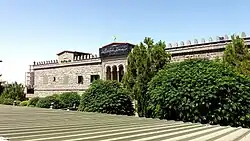 مقر جامعه دروزیها در سوریه | |
| کل جمعیت | |
|---|---|
| ۷۰۰٬۰۰۰[۱] | |
| زبانها | |
| زبان عربی | |
| دین | |
| دروز | |
دروزیها سومین دین بزرگ در سوریه هستند، بهطوریکه بر اساس آمار سال ۲۰۱۰، پیروان این دین ۳٫۲ درصد از جمعیت سوریه را تشکیل میدادند.[۲][۳] دروزیها عمدتاً در مناطق روستایی و کوهستانی شرق و جنوب دمشق، بهویژه در منطقهای موسوم به کوه الدروزی تمرکز یافتهاند.[۴]
دین دروزی یک دین یکتاپرست و ابراهیمی است.[۵][۶][۷][۸][۹][۱۰] سوریه دارای بیشترین جمعیت دروزیها در جهان است.[۱۱] بسیاری از دروزیهای سوری قرنهاست که در خارج از این کشور زندگی میکنند، بهطور خاص در ونزوئلا.[۱۲]
جستارهای وابسته
منابع
- ↑ Irshaid, Faisal (19 June 2015). "Syria's Druze under threat as conflict spreads". BBC News. Archived from the original on 6 March 2019. Retrieved 22 June 2018.
- ↑ "Syria". Central Intelligence Agency. 2 May 2023. Archived from the original on 3 February 2021. Retrieved 24 January 2021 – via CIA.gov.
- ↑ The Economist. Vol. 390 (8618–24). 2014. p. 49. Archived from the original on 28 March 2024. Retrieved 23 September 2016.
- ↑ "The Druze and Assad: Strategic Bedfellows". The Washington Institute. Archived from the original on 25 September 2019. Retrieved 4 May 2023.
- ↑ Pintak, Lawrence (2019). America & Islam: Soundbites, Suicide Bombs and the Road to Donald Trump. Bloomsbury Publishing. p. 86. ISBN 9781788315593.
- ↑ Jonas, Margaret (2011). The Templar Spirit: The Esoteric Inspiration, Rituals and Beliefs of the Knights Templar. Temple Lodge Publishing. p. 83. ISBN 9781906999254.
[Druze] often they are not regarded as being Muslim at all, nor do all the Druze consider themselves as Muslim
- ↑ "Are the Druze People Arabs or Muslims? Deciphering Who They Are". Arab America (به انگلیسی). 8 August 2018. Archived from the original on 20 October 2019. Retrieved 13 April 2020.
- ↑ J. Stewart, Dona (2008). The Middle East Today: Political, Geographical and Cultural Perspectives. Routledge. p. 33. ISBN 9781135980795.
Most Druze do not consider themselves Muslim. Historically they faced much persecution and keep their religious beliefs secrets.
- ↑ Yazbeck Haddad, Yvonne (2014). The Oxford Handbook of American Islam. Oxford University Press. p. 142. ISBN 9780199862634.
While they appear parallel to those of normative Islam, in the Druze religion they are different in meaning and interpretation. The religion is considered distinct from the Ismaili as well as from other Muslims belief and practice... Most Druze consider themselves fully assimilated in American society and do not necessarily identify as Muslims..
- ↑ De McLaurin, Ronald (1979). The Political Role of Minority Groups in the Middle East. Praeger Special Studies. Praeger. p. 114. ISBN 9780030525964. Archived from the original on 27 May 2024. Retrieved 8 July 2020.
Theologically, one would have to conclude that the Druze are not Muslims. They do not accept the five pillars of Islam. In place of these principles the Druze have instituted the seven precepts noted above..
- ↑ "Druze | History, Religion, & Facts". Encyclopedia Britannica (به انگلیسی). Archived from the original on 19 April 2019. Retrieved 2021-07-30.
- ↑ Khalifa, Mustafa (2013), "The impossible partition of Syria", Arab Reform Initiative: 6–7, archived from the original on 9 October 2016, retrieved 31 January 2023