شمشیر شرقی
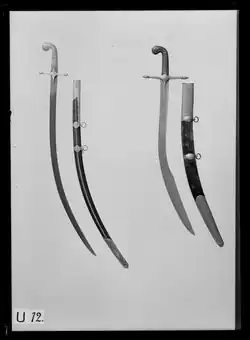
شمشیر یا شمشیر شرقی [۱] یک شمشیر تکلبه با تیغه منحنی محدب[۲][۳][۴] مربوط به خاورمیانه و فرهنگهای جنوب آسیا یا شمال آفریقا است. یک اصطلاح اروپایی، scimitar به یک نوع شمشیر خاص اشاره نمیکند، بلکه مجموعهای از شمشیرهای خمیده مختلف شرقی الهام گرفته شده از انواعی است که توسط غیلمانهای آسیای مرکزی به خاورمیانه معرفی شدهاند. این شمشیرها عبارتند از شمشیر ایرانی (منشأ کلمه scimitar)، سیف عربی، تلوار هندی، نیمچای شمال آفریقا و قلیج ترکی است.[۴][۵]
ریشهشناسی
اصطلاح انگلیسی scimitar از اواسط قرن شانزدهم به اثبات رسیدهاست و از cimeterre فرانسوی میانه (قرن ۱۵) یا از ایتالیایی scimitarra گرفته شدهاست. منشأ نهایی این اصطلاحات شمشیر ایرانی است. Scimitar بر خلاف شمشیرهای مستقیم و دولبه اروپایی آن زمان برای توصیف همه شمشیرهای تیغهخمیده شرقی استفاده شد. [note ۱]

.svg.png)
منابع
- ↑ «Scimitar» در مریام-وبستر
- ↑ Gordon, D. H. (1958). "14. Scimitars, Sabres and Falchions". Man. 58: 22–27. doi:10.2307/2795551. ISSN 0025-1496. JSTOR 2795551. Archived from the original on 2021-07-29. Retrieved 2021-07-29.
- ↑ Grancsay, Stephen V. (1935). "An Indian Scimitar". The Metropolitan Museum of Art Bulletin. 30 (7): 141–142. doi:10.2307/3254984. ISSN 0026-1521. JSTOR 3254984. Archived from the original on 2021-07-29. Retrieved 2021-07-29.
- 1 2 Föll, Helmut. "Sword Types - Iron, Steel and Swords". Christian-Albrechts-Universität zu Kiel. Faculty of Engineering, Kiel University. Retrieved 2021-08-02.
- ↑ Sayadi, Omer (2020-03-16). "The scimitar". MENA symbolism (به انگلیسی). Archived from the original on 19 اكتبر 2021. Retrieved 2021-07-30.
{{cite web}}: Check date values in:|archive-date=(help) - ↑ Page 1746.
- ↑ This is apparent in Thomas Page's The Use of the Broad Sword (1746).
"The Sword was of enormous length and breadth, heavy and unweildy, design'd only for right down chopping by the Force of a strong Arm; till Time and Experience discovering the Disadvantages, by Degrees contracted its Length and lighten'd its Weight in to the more handy Form of the Scymitar; which was first invented by the Eastern Nations, and has continued to be their principal Weapon to this Day:...." "The Saracens, Turks and Persians, made use of but three different Throws with the Scymitar, and one of those, only on Horseback; the other two on Foot."[۶]
<ref> برای گروهی به نام «note» وجود دارد، اما برچسب <references group="note"/> متناظر پیدا نشد. ().