معماری اسلامی مغربی
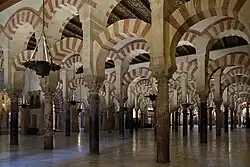 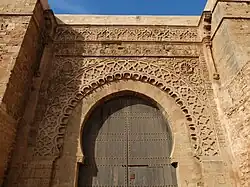  بالا: مسجد-کلیسای جامع قرطبه، اسپانیا (سده هشتم)؛ وسط: باب الودايه در رباط، مراکش (اواخر سدهٔ دوازدهم)؛ پائین: حیاط شیران در الحمرا در گرانادا، اسپانیا (سده چهاردهم) | |
| سالهای فعالیت | سده هشتم تا به امروز |
|---|---|
معماری اسلامی مغربی (انگلیسی: Architecture of the Islamic West) یا معماری سرزمینهای اسلامی غربی (انگلیسی: Architecture of the Western Islamic lands) یا معماری موری[الف] (انگلیسی: Moorish architecture) سبکی درون معماری اسلامی است که در جهان اسلام غربی شکل گرفت، از جمله در اندلس (شبهجزیره ایبری) و مناطقی که امروزه شامل مراکش، الجزایر و تونس (بخشی از مغرب) میشوند.[۹][۱۰] منابع علمی در زمینه معماری اسلامی معمولاً از این سنت معماری با عباراتی مانند «معماری جهان اسلام غربی» یا «معماری سرزمینهای اسلامی غربی» یاد میکنند.[۱۱]
این سنت معماری، تأثیراتی از معماریهای پیشااسلامی رومی، بیزانسی و ویزیگوتها،[۳][۱۲][۱۰] جریانهای هنری جاری در خاورمیانه اسلامی[۱۳][۱۲][۳] و همچنین سنتهای بربرهای شمال آفریقا را در هم آمیخت.[۹][۱۴][۳] مراکز اصلی رشد هنری در پایتختهای اصلی امپراتوریها و دولتهای مسلمان در طول تاریخ این منطقه قرار داشتند، از جمله کوردوبا، قیروان، فاس، مراکش، سویا، گرانادا و تلمسان. در سدههای هشتم تا دهم میلادی،[۹][۱۵] قیروان و کوردوبا از مهمترین مراکز محسوب میشدند. در ادامه، به لطف امپراتوریهای مرابطون و موحدون ــ که بیشتر مناطق مغرب و اندلس را در قرون یازدهم تا سیزدهم میلادی زیر سلطه داشتند ــ یک سبک منطقهای گستردهتر پدید آمد و در سراسر این مناطق رواج یافت.[۹][۱۵][۱۴][۱۶] با وجود این، همچنان تفاوتهایی میان سبکهای معماری در ناحیه شرقیتر افریقیه (تقریباً منطبق بر تونس امروزی) و سبک مشخصتری در مغرب غربی (مراکش و غرب الجزایر کنونی) و اندلس وجود داشت؛ که گاهی با اصطلاحاتی چون «هیسپانو-موری» یا «هیسپانو-مغربی» از آن یاد میشود.[۹]: viii–ix [۱۳]: ۱۲۱ و ۱۵۵
این سبک معماری ویژگیهای شاخصی را در بر گرفت؛ از جمله قوس نعلاسبی، باغهای ریاض (باغهای حیاطی با تقسیمبندی متقارن چهار قسمتی)، منارههای مکعبیشکل، و نقوش پیچیده هندسی و اسلیمی در چوب، گچبری و کاشیکاری (بهویژه کاشیکاری زلیج).[۹][۳][۱۷][۱۳] در گذر زمان، استفاده از تزئینات سطحی در این سبک افزایش یافت، در حالی که سنت تمرکز بر فضای داخلی ساختمانها در مقابل نمای بیرونی آنها حفظ شد. برخلاف معماری اسلامی در شرق، معماری اسلامی غربی از طاقها و گنبدهای بزرگ بهصورت برجسته استفاده نمیکرد.[۱۰]: ۱۱
حتی پس از پایان حکومت مسلمانان در شبهجزیره ایبری، سنتهای معماری موری در شمال آفریقا ادامه یافت، و در اسپانیا نیز در قالب سبک مودخار ــ که فنون و طراحیهای موری را برای حامیان مسیحی اقتباس میکرد ــ به حیات خود ادامه داد.[۱۰][۱۸] در الجزایر و تونس، سبکهای بومی از قرن شانزدهم به بعد تحت تأثیر معماری عثمانی و تغییرات دیگر قرار گرفتند، در حالی که در مراکش، سبک پیشین هیسپانو-مغربی تا دوران مدرن با تأثیرات بیرونی کمتر، تداوم یافت.[۱۰]: ۲۴۳–۲۴۵ در قرن نوزدهم و پس از آن، سبک موری بهطور گستردهای در قالب معماری نئوموری یا احیای سبک موری در اروپا و آمریکا تقلید شد،[۱۹] از جمله سبک نئومودخار در اسپانیا.[۲۰] برخی منابع علمی، اصطلاح «موری» یا «سبک موری» را بیشتر به این گرایش قرن نوزدهمی در معماری جهان غرب اطلاق میکنند.[۲۱][۱]
جستارهای وابسته
یادداشتها
- ↑ برخی منابع در زمینه هنر و معماری اسلامی، واژه «موری» را اصطلاحی منسوخ یا مورد مناقشه میدانند.[۱][۲] کاربرد این واژه برگرفته از نامگذاری تاریخی اروپای غربی برای ساکنان مسلمان شمال آفریقا و شبهجزیره ایبری بهعنوان «موروها» است.[۳][۴] این کلمه از واژه لاتین مائوری گرفته شده که در اصل به ساکنان پادشاهی قوم بربر مورتانیا (الجزایر و مراکش امروزی) اطلاق میشد،[۵] اما بعدها برای اعراب و ایبریاییهای عربزبان نیز به کار رفت.[۶][۷] این واژه در ادامه، بار معنایی نژادی بیشتری پیدا کرد و از اواسط قرن بیستم به بعد، بهتدریج از رواج افتاد. امروزه، استفاده از آن عمدتاً به کاربردهای وصفی محدود میشود، مانند «معماری موری» یا «هنر موری».[۸]
منابع
- 1 2 Mudejarismo and Moorish Revival in Europe: Cultural Negotiations and Artistic Translations in the Middle Ages and 19th-century Historicism (به انگلیسی). Brill. 2021. p. 1. ISBN 978-90-04-44858-2.
The authors of this volume are conscious of the contested terminology of Mudéjar and the negative connotations of the term Moorish. They are used here as denominators of two phenomena that have been essentially shaped in the 19th century. When speaking of the Islamic architecture of al- Andalus, the term Moorish is rejected. In these cases, the terms Ibero-Islamic or andalusí are used.
- ↑ Vernoit, Stephen (2017). "Islamic Art in the West: Categories of Collecting". In Flood, Finbarr Barry; Necipoğlu, Gülru (eds.). A Companion to Islamic Art and Architecture (به انگلیسی). Wiley Blackwell. p. 1173. ISBN 978-1-119-06857-0.
Some terms such as “Saracenic,” “Mohammedan,” and “Moorish” are no longer fashionable.
- 1 2 3 4 5 Barrucand, Marianne; Bednorz, Achim (1992). Moorish architecture in Andalusia. Taschen. ISBN 3822876348.
- ↑ Lévi-Provençal, E.; Donzel, E. van (1993). "Moors". In Bearman, P.; Bianquis, Th.; Bosworth, C.E.; van Donzel, E.; Heinrichs, W.P. (eds.). Encyclopaedia of Islam, Second Edition. Vol. 7. Brill. pp. 235–236.
- ↑ Gabriel Camps (2007). Les Berbères, Mémoire et Identité. pp. 116–118.
- ↑ Menocal, Maria Rosa (2002). The Ornament of the World: How Muslims, Jews, and Christians Created a Culture of Tolerance in Medieval Spain (به انگلیسی). Little, Brown, and Company. p. 16. ISBN 978-0-316-09279-1. Archived from the original on 8 January 2023.
- ↑ Fletcher, Richard A. (1992). Moorish Spain (به انگلیسی). University of California Press. pp. 1, 19. ISBN 978-0-520-24840-3. Archived from the original on 8 January 2023.
- ↑ Assouline, David (2009). "Moors". In Esposito, John L. (ed.). The Oxford Encyclopedia of the Islamic World (به انگلیسی). Oxford University Press. ISBN 9780195305135.
- 1 2 3 4 5 6 Marçais, Georges (1954). L'Architecture musulmane d'occident: Tunisie, Algérie, Maroc, Espagne et Sicile (به فرانسوی). Paris: Arts et métiers graphiques.
- 1 2 3 4 5 Bloom, Jonathan M. (2020). Architecture of the Islamic West: North Africa and the Iberian Peninsula, 700–1800. Yale University Press. ISBN 9780300218701.
- ↑ For example, see usage in:
- Bloom, Jonathan M. (2020). Architecture of the Islamic West: North Africa and the Iberian Peninsula, 700–1800. Yale University Press. ISBN 9780300218701.
- Marçais, Georges (1954). L'Architecture musulmane d'occident: Tunisie, Algérie, Maroc, Espagne et Sicile [The Muslim architecture of the west: Tunisia, Algeria, Morocco, Spain and Sicily] (به فرانسوی). Paris: Arts et métiers graphiques.
- Ettinghausen, Richard; Grabar, Oleg; Jenkins-Madina, Marilyn (2001). Islamic Art and Architecture: 650–1250 (2nd ed.). Yale University Press. ISBN 9780300088670.
- Bloom, Jonathan M.; Blair, Sheila S., eds. (2009). "Architecture". The Grove Encyclopedia of Islamic Art and Architecture. Vol. 1. Oxford University Press. pp. 68–212. ISBN 9780195309911.
- Flood, Finbarr Barry; Necipoğlu, Gülru, eds. (2017). A Companion to Islamic Art and Architecture. Wiley Blackwell. ISBN 9781119068662.
- 1 2 Arnold, Felix (2017). Islamic Palace Architecture in the Western Mediterranean: A History. Oxford University Press. ISBN 9780190624552.
- 1 2 3 Bloom, Jonathan M.; Blair, Sheila S., eds. (2009). "Architecture". The Grove Encyclopedia of Islamic Art and Architecture. Vol. 1. Oxford University Press. pp. 68–212. ISBN 9780195309911.
- 1 2 Salmon, Xavier (2018). Maroc Almoravide et Almohade: Architecture et décors au temps des conquérants, 1055–1269. Paris: LienArt.
- 1 2 Bennison, Amira K. (2016). "'The most wondrous artifice': The Art and Architecture of the Berber Empires". The Almoravid and Almohad Empires. Edinburgh University Press. pp. 276–328. ISBN 9780748646821.
- ↑ Perez, Manuel Casamar (1992). "The Almoravids and Almohads: An Introduction". In Dodds, Jerrilynn D. (ed.). Al-Andalus: The Art of Islamic Spain. New York: The Metropolitan Museum of Art. pp. 75–83. ISBN 0870996371.
- ↑ Parker, Richard (1981). A practical guide to Islamic Monuments in Morocco. Charlottesville, VA: The Baraka Press.
- ↑ Borrás Gualís, Gonzalo M.; Lavado Paradinas, Pedro; Pleguezuelo Hernández, Alfonso; Pérez Higuera, María Teresa; Mogollón Cano-Cortés, María Pilar; Morales, Alfredo J.; López Guzman, Rafael; Sorroche Cuerva, Miguel Ángel; Stuyck Fernández Arche, Sandra (2018). Mudéjar Art: Islamic Aesthetics in Christian Art (Islamic Art in the Mediterranean). Museum Ohne Grenzen (Museum With No Frontiers). ISBN 9783902782144.
- ↑ M. Bloom, Jonathan; S. Blair, Sheila, eds. (2009). "Moorish [Hindoo, Indo-Saracenic]". The Grove Encyclopedia of Islamic Art and Architecture. Vol. 2. Oxford University Press. pp. 543–545. ISBN 9780195309911.
- ↑ Giese, Francine; Varela Braga, Ariane; Lahoz Kopiske, Helena; Kaufmann, Katrin; Castro Royo, Laura; Keller, Sarah (2016). "Resplendence of al-Andalus: Exchange and Transfer Processes in Mudéjar and Neo-Moorish Architecture" (PDF). Asiatische Studien – Études Asiatiques. 70 (4): 1307–1353. doi:10.1515/asia-2016-0499. S2CID 99943973.
- ↑ M. Bloom, Jonathan; S. Blair, Sheila, eds. (2009). "Moorish [Hindoo, Indo-Saracenic]". The Grove Encyclopedia of Islamic Art and Architecture. Vol. 2. Oxford University Press. pp. 543–545. ISBN 9780195309911.
Term used specifically in the 19th century to describe a Western style based on the architecture and decorative arts of the Muslim inhabitants (the Moors) of northwest Africa and (between 8th and 15th centuries) of southern Spain; it is often used imprecisely to include Arab and Indian influences
برای مطالعه بیشتر
- Arnold, Felix (2017). Islamic palace architecture in the Western Mediterranean : a history. New York. ISBN 978-0-19-062456-9. OCLC 974711878. – Comprehensive review of palace architecture in Al-Andalus and the Maghreb; slightly more technical than an introductory text.
- Marçais, Georges (1954). L'architecture musulmane d'Occident. Paris: Arts et métiers graphiques. – In French; older, but one of the major comprehensive works on Islamic architecture in the region.
- Bloom, Jonathan M. (2020). Architecture of the Islamic West: North Africa and the Iberian Peninsula, 700–1800. Yale University Press. – A more recent English-language introduction to Islamic architecture in the region.
- Barrucand, Marianne; Bednorz, Achim (1992). Moorish architecture in Andalusia. Taschen. شابک ۳۸۲۲۸۹۶۳۲۲. – Overview focusing on architecture in al-Andalus.
- Dodds, Jerrilynn D., ed. (1992). Al-Andalus: The Art of Islamic Spain. New York: The Metropolitan Museum of Art. شابک ۰۸۷۰۹۹۶۳۷۱. – Edited volume and exhibition catalogue focusing on architecture of al-Andalus and some related topics.
- Salmon, Xavier (2018). Maroc Almoravide et Almohade: Architecture et décors au temps des conquérants, 1055–1269. Paris: LienArt. – In French; well-illustrated volume focusing on Almoravid and Almohad architecture. The same author has published other books on Saadian and Marinid architecture.
