کاوسیا
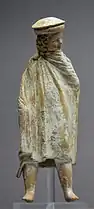
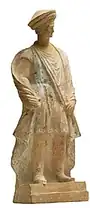
کاوسیا (یونانی باستان: καυσία[۱]) یک کلاه تخت مقدونی باستان بود. یک کاوسیای ارغوانی همراه با یک دیهیم توسط شاهان مقدونیه بهعنوان بخشی از جامهٔ سلطنتی پوشیده میشد.[۲]
نام
این نام برگرفته از خاصیت دفع گرما (یونانی باستان: καῦσις, kaûsis) است.[۲]
پیشینه
این کلاه در دورهٔ هلنیستی پوشیده میشد، اما شاید حتی پیش از زمان اسکندر مقدونی نیز رایج بوده است.[۳] بعدها نیز بهعنوان محافظی در برابر آفتاب توسط طبقات فقیرتر در روم به کار میرفت.[۴]
نگارههای کاوسیا بر روی انواع سکهها و مجسمههای یافتشده از دریای مدیترانه تا پادشاهی یونانی باختری و هندویونانیان در شمال غربی هند دیده میشود. پارسها هم به مقدونیان و هم به دیگر یونانیان «یَئونا» (ایونیاییها) میگفتند، اما میان «یَئونای ساحلی» و آنانی که «کلاههایی مانند سپر بر سر دارند» (یَئونا تَکابارا) تمایز قائل میشدند که احتمالاً اشاره به کلاه کاوسیای مقدونی دارد.[۵]
ارنست فردریکسمایر پیشنهاد کرده است که شباهت میان پکول امروزی که در پاکستان، افغانستان و شمال غربی هند پوشیده میشود و کاوسیای مقدونی را میتوان اینگونه توضیح داد که بومیان پس از فتوحات اسکندر و در جریان تعاملات گستردهٔ شرق و غرب در سدههای بعدی، این کلاه را از سربازان و مهاجران یونانی و مقدونی اقتباس کردهاند و این کلاه بهگونهای تا امروز در آن مناطق باقی مانده است. در همین حال، میتوان نسبتاً مطمئن بود که مقدونیان اسکندر کاوسیا، شنل «مقدونی» و کفشهای کرپیدس را از هندیان در زمستان ۳۲۷/۳۲۶ پ.م. به دست نیاوردند و آن را تقریباً بلافاصله بهعنوان پوشاک ملی خود نپذیرفتند.[۶] بانی کینگزلی، ضمن مقایسهٔ کاوسیا با پکول، این احتمال را مطرح کرده است که این کلاه بهعنوان کلاه کارزار اسکندر و کهنهسربازانش در درهٔ سند، بهویژه پس از لشکرکشی اسکندر در ۳۲۷/۳۲۶ پ.م. در شرق، به مدیترانه راه یافته باشد و آن را از مردمان جنوب هندوکش گرفته باشند.[۷][۸] به گفتهٔ فردریکسمایر، کاوسیا چندان در پوشاک مقدونی تثبیت شده بود که نمیتوان آن را از آسیا به مقدونیه وارد شده دانست.[۹] ویلم فوگلسانگ هر دو نظریه را رد میکند و میگوید پکول بهطور مستقل در اوایل دوران مدرن پدیدار شده است.[۱۰]
نگارخانه
 سربازان مقدونی باستان از مقبرهٔ آگیوس آتاناسیوس (یونان) در حال پوشیدن کاوسیا، سدهٔ چهارم پیش از میلاد
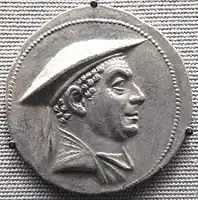 سکهٔ شاه یونانی-باختری آنتیماخوس یکم تئوس با کاوسیای مقدونی، حدود ۱۸۵–۱۷۰ پ.م.
 آنتیگونوس دوم گوناتاس با کاوسیا و نیزه در دست، جزئیات دیوارنگارهٔ ویلای فانیوس، حدود ۴۰ پ.م.، موزهٔ باستانشناسی ناپل
منابع
- ↑ Henry George Liddell; Robert Scott. "καυσία". A Greek-English Lexicon – via Perseus.
- 1 2 Harry Thurston Peck, Harpers Dictionary of Classical Antiquities (1898), Causia
 This article incorporates text from this source, which is in the public domain.
- ↑ Kingsley, Bonnie M. (1984). "The Kausia Diadematophoros". American Journal of Archaeology. 88 (1): 66–68. doi:10.2307/504602. JSTOR 504602. S2CID 193037990.
- ↑ Plautus, Titus Maccius (1997). Miles Gloriosus (in English). Harvard University Press. p. 184. ISBN 978-0-674-57437-3.
- ↑ Roisman, Joseph; Worthington, Ian (2010). A Companion to Ancient Macedonia. John Wiley and Sons. p. 87. ISBN 978-1-4051-7936-2.
- ↑ Fredricksmeyer, E. A. (1994). "The Kausia: Macedonian or Indian?". Ventures into Greek history. انتشارات دانشگاه آکسفورد. p. 158. ISBN 978-0198149286.
The similarity between the modern Eastern chitrali and the ancient kausia, unless fortuitous, can perhaps be accounted for by an assumption that natives of Afghanistan and/or northwest India adopted the kausia from Macedonian and Greek soldiers, settlers and traders in the wake of Alexander's conquests and in the course of the extensive interactions between East and West in those regions in the succeeding centuries, and that the cap has somehow survived there to this day. Meanwhile, we may be fairly confident that Alexander's Macedonians did not acquire the kausia, the 'Macedonian' chlamys, and the krepides from the Indians in the winter of 327/6, and did not adopt this ensemble near instantaneously as virtually their national garb.
{{cite book}}: نگهداری یادکرد:تاریخ و سال (رده) - ↑ Kingsley, Bonnie M. (1981). "The Cap That Survived Alexander". American Journal of Archaeology. 85 (1): 39–46. doi:10.2307/504964. ISSN 0002-9114.
- ↑ Kingsley, Bonnie (1991). "Alexander's "Kausia" and Macedonian Tradition". Classical Antiquity. 10 (1): 59–76. doi:10.2307/25010941. ISSN 0278-6656.
The Macedonians, officers and men, and probably others accompanying them had acquired their kausiai and robes in the southern Hindu Kush or along the Kabul in the winter of 327/6 B.C. from "barbarians," some of whose Aryan descendants today make and wear the caps and cloaks in the same way.
- ↑ Fredricksmeyer, Ernst (1986). "Alexander the Great and the Macedonian kausia". Transactions and Proceedings of the American Philological Association. 116: 215–227. doi:10.2307/283917. JSTOR 283917.
- ↑ Vogelsang, Willem (2006). "The Pakol: A Distinctive, but Apparently not so Very Old Headgear from the Indo-Iranian Borderlands". Khil'a. 2: 149–155. doi:10.2143/KH.2.0.2021290.
There certainly appears to be an uncanny resemblance between the pakol and a headgear worn by the ancient Greeks and Macedonians, the so-called kausia. It subsequently proved attractive and rather romantic for some writers to link the pakol to Alexander the Great's campaigns in the Indo-Afghan borderlands in the late fourth century BC. The pakol was also connected to the Bactrian-Greek and Indo-Greek kingdoms of the ensuing centuries, and to the many local stories of Greek origin among the population of the borderlands. In this brief article I want to discuss the pakol and its history, and try to point out that the pakol has a very recent history in Nuristan, going back no older than the late nineteenth century, but also that the same headgear is relatively young in neighbouring Chitral.
- کلاهها
- فرهنگ مقدونیه باستان
- پوشاک یونانی