یونیواک ۱
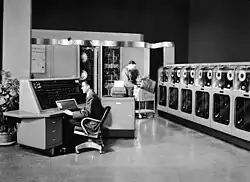

یونیواک ۱ (انگلیسی: UNIVAC I) که نامش مخففِ عبارتِ «رایانهٔ خودکارِ همگانی» است، نخستین رایانهٔ دیجیتال الکترونیکیِ همهمنظوره برای کاربردهای تجاری بود که در ایالات متحده آمریکا تولید شد. این دستگاه عمدتاً توسط جان پرسپر اکرت و جان ماکلی، مخترعان انیاک طراحی شد. کار طراحی توسط شرکت آنها، یعنی شرکت رایانهای اکرِت–ماچلی (EMCC)، آغاز شد و پس از آنکه این شرکت توسط رمینگتون رَند خریداری شد (که بعدها بخشی از اسپری کورپوریشن و امروزه یونیسیس شد)، تکمیل گردید. در سالهایی که هنوز مدلهای جانشین یونیواک ۱ عرضه نشده بودند، این دستگاه بهسادگی با نام «یونیواک» شناخته میشد.[۱]
نخستین یونیواک در ۳۱ مارس ۱۹۵۱ توسط اداره سرشماری ایالات متحده آمریکا پذیرفته شد و در ۱۴ ژوئن همان سال رسماً به بهرهبرداری رسید.[۲][۳] پنجمین دستگاه (که برای کمیسیون انرژی اتمی ایالات متحده آمریکا ساخته شده بود) توسط شبکهٔ سیبیاس برای پیشبینی نتیجهٔ انتخابات ریاستجمهوری ایالات متحده آمریکا مورد استفاده قرار گرفت. این رایانه با نمونهای تنها ۵٫۵٪ از مشارکت رأیدهندگان، بهطور مشهور پیروزی قاطع دوایت آیزنهاور را پیشبینی کرد.[۴]
جستارهای وابسته
منابع
- ↑ Johnson, L.R., "Coming to grips with Univac," IEEE Annals of the History of Computing, vol. 28, no. 2, pp. 32, 42, April–June 2006. doi:10.1109/MAHC.2006.27
- ↑ Reference: CNN's feature on the 50th anniversary of the UNIVAC.
- ↑ Norberg, Arthur Lawrence (2005). Computers and Commerce: A Study of Technology and Management at Eckert-Mauchly Computer Company, Engineering Research Associates, and Remington Rand, 1946–1957 (به انگلیسی). MIT Press. pp. 190, 217. ISBN 9780262140904.
- ↑ Lukoff, Herman (1979). From Dits to Bits: A personal history of the electronic computer. Portland, Oregon: Robotics Press. pp. 127–131. ISBN 0-89661-002-0. LCCN 79-90567.
پیوند به بیرون
- UNIVAC Conference Oral history on 17–18 May 1990. Charles Babbage Institute, University of Minnesota, Minneapolis. 171-page transcript of oral history with computer pioneers, including Jean Bartik, involved with the Univac computer, held on 17–18 May 1990. The meeting involved 25 engineers, programmers, marketing representatives, and salesmen who were involved with the UNIVAC, as well as representatives from users such as General Electric, Arthur Andersen, and the U.S. Census.
- Margaret R. Fox Papers, 1935–1976, Charles Babbage Institute, University of Minnesota. collection contains reports, including the original report on the ENIAC, UNIVAC, and many early in-house National Bureau of Standards (NBS) activity reports; memoranda on and histories of SEAC, SWAC, and DYSEAC; programming instructions for the UNIVAC, LARC, and MIDAC; patent evaluations and disclosures relevant to computers; system descriptions; speeches and articles written by Margaret Fox's colleagues; and correspondence of Samuel Alexander, Margaret Fox, and Samuel Williams.
- UNIVAC I documentation – From computer documentation repository www.bitsavers.org
- UNIVAC 1: The First Mass-Produced Computer – Unisys History Newsletter, Volume 5, Number 1 توسط Wayback Machine (بایگانیشده آوریل ۲۲, ۲۰۱۷)
- The UNIVAC and the Legacy of the ENIAC – From the University of Pennsylvania Library (PENN UNIVERSITY/exhibitions)
- UNIVAC 1 Computer System – By Allan G. Reiter, formerly of the ERA division of Remington Rand
- UNIVAC I & II Simulator بایگانیشده در ۲۰۱۳-۱۰-۱۱ توسط Wayback Machine – By Peter Zilahy Ingerman; Shareware simulator of the UNIVAC I and II. Archived download
- Core memory slide show – This slide show contains a photo of a 1951 core memory module for a UNIVAC I
- Remington-Rand Presents UNIVAC – Promotional film from the collection of the Computer History Museum, Mountain View, California
- "Winky Blinky Lights". Off The Broiler. 10 December 2012. Archived from the original on 10 December 2012. Pictures and video in flash of UNIVAC main console; sales and marketing documents
- "Want To Buy A Brain", May 1949, Popular Science early illustrated article on the UNIVAC for the general public
- YouTube Video: 1951 UNIVAC 1 Computer Basic System Components – Computer History Archives Project
