بلوتر
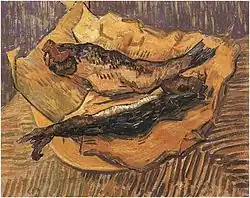
بلوتر (انگلیسی: Bloater) نوعی شاهماهی کامل دودی شده به روش سرد است که «نمکزده و کمی دودی میشود بدون اینکه احشاء آن خارج شود، و این موجب طعم کمی شکاری و خاص آن میگردد».[۱][۲] این نوع ماهی به ویژه با شهر گریت یارموث در انگلستان مرتبط است.[۳][۴] اگرچه در قرن نوزدهم و اوایل قرن بیستم محبوب بود، امروزه این غذا کمیاب شده است.[۵][۶] گاهی به بلوتر، «بلوتر یارموث» نیز گفته میشود، هرچند تولید این محصول در یارموث با تعطیلی کارخانهٔ ماهی دودی در سال ۲۰۱۸ متوقف شده است. همچنین بلوتر به شوخی با نامهای «کاپون یارموث»، «استیک دوچشمی» یا «قرقاول بیلینگسگیت» (به افتخار بازار ماهی بیلینگسگیت در لندن) شناخته میشود.[۷][۸][۹][۱۰]
بلوتر با انگلستان مرتبط است، در حالی که کیپرها با اسکاتلند و جزیرهٔ من (کیپر منکسی) پیوند دارند. بلوتر «کمتر نمکزده و برای مدت کوتاهتری دودی میشود»، در حالی که کیپر «کمنمک و طی یک شب تا صبح، دودی میشود»؛ تهیهٔ شاهماهی قرمز (red herring) به نمک بیشتر و زمان دودی طولانیتر نیاز دارد.[۱۱][۱۲]
اصطلاحشناسی
نام «بلوتر» احتمالاً از ظاهر متورم یا «بادکرده» ماهی در طول فرایند تهیه گرفته شده است،[۱۳] در حالی که دستکم یک منبع آن را از کلمهٔ سوئدی blöta میداند که به معنای خیس کردن، خیساندن یا آغشته کردن به مایع (مثلاً خیساندن در آب نمک) است.[۱۴]
باکلینگ، بلوتر و کیپر
هر سه، نوعی شاهماهی دودی هستند با این تفاوت که:
- باکلینگ: کامل و دودی گرم
- بلوتر: کامل و دودی سرد
- کیپر: از وسط شکافته و احشاء آن جدا شده و سپس دودی سرد میشود.
منابع
- ↑ Mason, Laura (2004). Food Culture in Great Britain. Greenwood Publishing Group. p. 80. ISBN 978-0-313-08567-3.
[...] the Yarmouth bloater [...]; these are salted and lightly smoked without gutting, giving them a characteristic slightly gamey flavor.
- ↑ Fearnley-Whittingstall, Hugh; Fisher, Nick (2007). The River Cottage Fish Book. Bloomsbury. p. 168. ISBN 978-0-7475-8869-6.
BLOATERS[:] Lightly cold-smoked whole herrings, which have a slightly gamey flavour because they are ungutted.
- ↑ Mason, Laura (2004). Food Culture in Great Britain. Greenwood Publishing Group. p. 80.
- ↑ Fearnley-Whittingstall, Hugh; Fisher, Nick (2007). The River Cottage Fish Book. Bloomsbury. p. 168. ISBN 978-0-7475-8869-6.
Great Yarmouth has long been famous for its bloaters.
- ↑ Mason, Laura (2004). Food Culture in Great Britain. Greenwood Publishing Group. p. 80. ISBN 978-0-313-08567-3.
Another herring cure popular during the nineteenth and early twentieth centuries, but now rare, was the Yarmouth bloater (from Great Yarmouth on the east coast) [...].
- ↑ Fearnley-Whittingstall, Hugh; Fisher, Nick (2007). The River Cottage Fish Book. Bloomsbury. p. 168. ISBN 978-0-7475-8869-6.
- ↑ Barrère, Albert; Leland, Charles Godfrey (1889). A Dictionary of Slang, Jargon & Cant. Vol. 1. Ballantyne Press. p. 21.
- ↑ Barrère, Albert; Leland, Charles Godfrey (1897). A Dictionary of Slang, Jargon & Cant. Vol. 2. G. Bell. p. 373.
- ↑ Hotten, John Camden (1874). Slang Dictionary: Etymological, Historical, and Anecdotal. Chatto and Windus. p. 332.
- ↑ Morris, William; Morris, Mary (1988). Morris Dictionary of Word and Phrase Origins. HarperCollins. p. 62.
- ↑ Bender, David A. (29 January 2009). A Dictionary of Food and Nutrition (3 ed.). Oxford University Press. p. 256. ISBN 9780191579752.
Herring, red [...] Herrings that have been well salted and smoked for about ten days. Bloaters are salted less and smoked for a shorter time; [...] kippers lightly salted and smoked overnight. Also called Yarmouth bloaters.
- ↑ "Isle of Man: Nature: Get Kippered". BBC. 27 April 2008. Retrieved 30 March 2011.
- ↑ Partridge, Eric (1983). Origins: a short etymological dictionary of modern English (1983 ed.). New York: Greenwich House. p. 50. ISBN 0-517-41425-2.
- ↑ "Bloater". Rigby’s Encyclopaedia of the Herring. Graeme Philip Rigby. 2018. Retrieved 12 June 2023.