حوضچههای سلیمان
| حوضچههای سلیمان | |
|---|---|
 | |
| موقعیت | بیتلحم، فلسطین |
| گونه | آب انبار |
| دفتر مدیریت | تشکیلات خودگردان فلسطین |
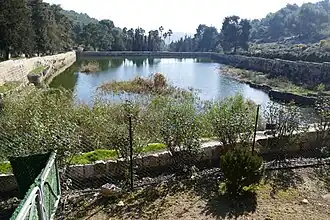
حوضچههای سلیمان (عربی: برک سلیمان) مجموعهای از سه آبانبار باستانی هستند که در جنوب مرکزی کرانه باختری و در جنوب روستای الخضر، حدود ۳٫۵ کیلومتر (۲٫۲ مایل) جنوبغربی شهر بیتلحم و در نزدیکی جاده الخلیل قرار دارند.[۱][۲] این حوضچهها در محدودهٔ منطقه A از کرانه باختری واقع شدهاند و تحت کنترل تشکیلات خودگردان فلسطین قرار دارند.[۳]
حوضچههای سلیمان منبع تأمین آب برای دو قنات باستانی بودند که در اواخر دوره معبد دوم، آب را به اورشلیم منتقل میکردند.[۴] نخستین قنات، که به عنوان قنات سطح پایین شناخته میشود، احتمالاً در قرن نخست پیش از میلاد و در اواخر دوره حشمونیان ساخته شده است. این قنات آب را به مخازنی که در زیر کوه معبد قرار داشتند و عمدتاً برای مصارف معبد دوم اورشلیم به کار میرفتند، منتقل میکرد.[۵][۶] قنات دوم، موسوم به قنات سطح بالا، مسیری مشابه را دنبال میکرد، اما مقصد نهایی آن در اورشلیم بهطور دقیق مشخص نیست. بر اساس برخی فرضیات، این قنات احتمالاً آب کاخ هیرودیس را تأمین میکرده است.[۶] همچنین، هیرودیوم نیز از آب تأمینشده توسط حوضچههای سلیمان بهرهمند بوده است.[۷]
نام
اگرچه این حوضچهها بهطور سنتی به شاه سلیمان نسبت داده میشوند و با نام او شناخته شدهاند، پژوهشهای معاصر نشان میدهد که این ساختارها در واقع بسیار متأخرتر از دوران سلیمان هستند. بر اساس بررسیهای باستانشناسی، قدیمیترین بخشهای حوضچهها به قرن دوم پیش از میلاد بازمیگردد.[۸][۹] علاوه بر این، سنگتراشیهای یک استخر و یک قنات که بهتازگی کشف شدهاند، به اوایل دوره روم باستان نسبت داده میشوند و مؤید آناند که این سامانه آبرسانی در طول قرون متمادی توسعه یافته است.
این حوضچهها که به نام سلیمان نامگذاری شده و بهطور سنتی با او مرتبط دانسته میشوند،[۲] معمولاً با آیهای از کتاب جامعه (۲:۶) مرتبطاند که در آن آمده است:
«من برای خود، حوضچههایی ساختم تا از آنها جنگل درختان در حال رشد را آبیاری کنم».
مورخ یهودی یوسف فلاوی نیز مینویسد که سلیمان از زیبایی چشمه پرآب ایتام (یکی از چشمههای اصلی عین ایتام؛ عبری: עין עיטם به معنی «چشم عقاب») لذت میبرد.[۱۰][۱۱] این حوضچهها در نزدیکی شهر باستانی ایتام (که امروزه با نام خربه الخواح شناخته میشود) و در مجاورت چشمه معروف عین ایتام قرار دارند.
بر اساس روایات عامیانه، گفته میشود که پادشاه سلیمان این حوضچهها را برای همسران متعدد خود ساخت تا بتوانند در آب آنها حمام کنند.[۱۲]
به گفتهٔ یوسف فلاوی، پادشاه سلیمان هنگام سوار شدن بر ارابهاش از این مکان عبور میکرد.[۱۳][۱۴][۱۵] در قرن نوزدهم، کاوشگر فرانسوی ویکتور گرن نیز از این محل بازدید کرد و در کتاب خود با عنوان توصیف فلسطین به توصیف منبع آب این برکهها و همچنین روستاهای اطراف آن پرداخت.[۱۶]
منابع
- ↑ Mahmoud Hawari; Hamish Auld; Julian Hudson (1 January 2000). "Qal'at al-Burak. A Fort of the Ottoman Period South of Bethlehem". Levant: The Journal of the Council for British Research in the Levant. 32 (1): 101–120. doi:10.1179/lev.2000.32.1.101. S2CID 162056191.
- 1 2 Leeper, J. L. (1903). "Remains of the Temple at Jerusalem". The Biblical World. 22 (5): 340. doi:10.1086/473292. ISSN 0190-3578.
- ↑ Blumenthal, Itay (2016-05-09). "Second Temple era archaeological site suffer serious damage". ynetnews. Retrieved 2019-05-15.
- ↑ Gurevich, David (2017-04-03). "The Water Pools and the Pilgrimage to Jerusalem in the Late Second Temple Period". Palestine Exploration Quarterly. 149 (2): 103–134. doi:10.1080/00310328.2017.1310563. ISSN 0031-0328. S2CID 165135217.
- ↑ Mazar, A. , 2002. ‘Survey of the Aqueducts to Jerusalem’, in Amit, Patrich, and Hirschfeld 2002. 210-42
- 1 2 Billig, Y. , 2002. ‘The Low-level Aqueduct to Jerusalem: Recent Discoveries’ in Amit, Patrich, and Hirschfeld 2002, 242-52
- ↑ Garbrecht, Günter; Peleg, Yehuda (1994). "The Water Supply of the Desert Fortresses in the Jordan Valley". The Biblical Archaeologist. 57 (3): 161–170. doi:10.2307/3210411. ISSN 0006-0895. JSTOR 3210411. S2CID 132210394.
- ↑ Allegro, John M. (1964). The Treasure of the Copper Scroll (2 ed.). Garden City, NY: Doubleday. p. 67. OCLC 917557044.
- ↑ "Solomon's Pools and relating aqueducts, the heart of Jerusalem's past water supply". HYDRIA Project. 2009. Archived from the original on 2017-02-23. Retrieved 2014-12-18.
- ↑ Flavius, Josephus Antiquities 8.7.3. (8:179)
- ↑ Burial Places of the Fathers, published by Yehuda Levi Nahum in book: Ṣohar la-ḥasifat ginzei teiman (Heb. צהר לחשיפת גנזי תימן), Tel-Aviv 1986, p. 253, who quotes from an ancient rabbinic source: "Between Beth-Lehem and Hebron is the great pool, being the [water] duct that Hezekiah made, and the pool that he made, and it is [known as] Ein Etam." Rashi, who had not seen Josephus' writings, surmised that Ein Etam was the place known as "the waters of Nephtoah" (cf. Rashi's commentary on Yoma 31a and Zevahim 54b, s.v. עין עיטם); see also Rashi's comments on Joshua 15:8 and Deuteronomy 33.
- ↑ Solomon Pools: Fit for a king, Jerusalem Post
- ↑ Josephus, Antiquities 8.7.3.
- ↑ Biblical Encyclopaedia - Encyclopedia of the Bible and its Period (vol. 6), Bialik Institute: Jerusalem 1950-1988, pp. 186-187
- ↑ D.F. Buhl, Geographie des alten Palästina, Leipzig 1896, p. 92. Buhl's words are as follows (translated from the German): "Southwest of Bethlehem, the channel from the southeast intersects another which comes from a source in the Wadi Biyyar. Where the two channels intersect, there are the famous pools of Solomon, large terraced water reservoirs, also fed by independent springs, namely ʻAin el-Burak on the northwest corner of the upper pool, which connects to another source ʻAin Ṣâliḥ, and of ʻAin Farûğe at the bottom of the lower pool; further down the channel intersects the source of ʻAṭân coming from the southern side of the valley. This source of the ʻAṭân is mentioned in the Talmud as the source ʻEṭâm, although the remark that it was 23 cubits higher than the floor of the Temple court clearly points to the aqueduct. Josephus speaks of the springs in Etan and of Solomon's Gardens there, with which Ecclesiastes 2:5 can be compared."
- ↑ Victor Guérin, Description de la Palestine, Judée, Description de la Judée, Paris 1869, pp. 104–119, 303–309; See: Guérin, Victor (1869). Description Géographique Historique et Archéologique de la Palestine (به فرانسوی). Vol. 1: Judee, pt. 3. Paris: L'Imprimerie Nationale.