روابط اسرائیل و سومالی
 | |
 اسرائیل |
 سومالی |
|---|---|
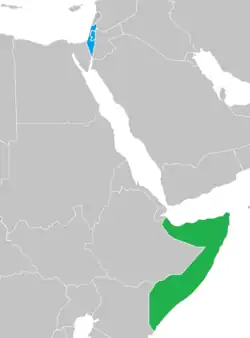
هیچ روابط دیپلماتیک رسمی بین دو کشور وجود ندارد زیرا سومالی، اسرائیل را به عنوان یک کشور مستقل به رسمیت نمیشناسد.[۱]
تاریخچه
اسرائیل یکی از ۳۵ کشوری بود که استقلال کوتاه پنج روزه ایالت سومالیلند را در سال ۱۹۶۰ به رسمیت شناخت.[۲]
در اوایل ژوئیه ۲۰۱۶، بنیامین نتانیاهو، نخستوزیر اسرائیل، با حسن شیخ محمود، رئیسجمهور سومالی، در نایروبی، کنیا دیدار کرد. این اولین دیدار سطح بالا بین دو کشور بود.[۳]
در مارس ۲۰۱۹، سومالی برای اولین بار در تاریخ، به قطعنامه شورای حقوق بشر سازمان ملل متحد که خواستار عقبنشینی اسرائیل از بلندیهای جولان بود، به جای رأی مثبت، رأی ممتنع داد.[۴]
در دسامبر ۲۰۲۵، دولت اسرائیل اعلام کرد که اولین کشور عضو سازمان ملل خواهد بود که سومالیلند، کشوری که در سال ۱۹۹۱ از سومالی اعلام استقلال کرد و به رسمیت شناخته نشد، را به عنوان یک کشور مستقل به رسمیت میشناسد.[۵] دولت سومالی بیانیهای صادر کرد و تصمیم دولت اسرائیل را محکوم کرد.[۶]
جستارهای وابسته
منابع
- ↑ American Universities Field Staff (1966). AUFS reports: Northeast Africa series. p. 5: "Somalia does not recognise Israel, and generally sides with the Arab cause in the Near Eastern controversy."
- ↑ Bereketeab, Redie (2012). Self-determination and Secessionism in Somaliland and South Sudan: Challenges to Postcolonial State-building (به انگلیسی). Nordiska Afrikainstitutet. ISBN 978-91-7106-725-8.
- ↑ American Universities Field Staff (1966). AUFS reports: Northeast Africa series. p. 5: "Somalia does not recognise Israel, and generally sides with the Arab cause in the Near Eastern controversy."
- ↑ American Universities Field Staff (1966). AUFS reports: Northeast Africa series. p. 5: "Somalia does not recognise Israel, and generally sides with the Arab cause in the Near Eastern controversy."
- ↑ American Universities Field Staff (1966). AUFS reports: Northeast Africa series. p. 5: "Somalia does not recognise Israel, and generally sides with the Arab cause in the Near Eastern controversy."
- ↑ American Universities Field Staff (1966). AUFS reports: Northeast Africa series. p. 5: "Somalia does not recognise Israel, and generally sides with the Arab cause in the Near Eastern controversy."
| آفریقا |  | |
|---|---|---|
| آمریکا | ||
| آسیا |
| |
| اروپا | ||
| اقیانوسیه | ||
| پیشین |
| |
| سازمانها و نهادهای مرتبط |
| |
| جستارهای وابسته |
| |