سنگیادبود تل دان
| سنگیادبود تل دان | |
|---|---|
 | |
| مواد | بازالت |
| نوشته | زبان آرامی باستان (الفبای فنیقی) |
| خلقشده | 870–750 BCE |
| کشفشده | ۱۹۹۳–۹۴ |
| مکان کنونی | موزه اسرائیل |
سنگیادبود تل دان (انگلیسی: Tel Dan stele) یک سنگ یادبود تکهتکه حاوی یک کتیبه کنعانی است که مربوط به قرن نهم قبل از میلاد است. قابل توجه است که احتمالاً مهمترین و شاید تنها مرجع باستانشناسی خارج از کتاب مقدس به سلسله داوود است.
کتیبه تل دان یک کتیبه تکهتکه شده است که شامل نگاشتی به زبان آرامی میباشد و مربوط به قرن نهم پیش از میلاد است. این کتیبه اولین مرجع باستانشناسی شناختهشده غیرکتاب مقدس به خانه داوود است.[۱] [۲]کتیبه در سال ۱۹۹۳ در تل دان توسط گیلا کوک، عضو تیم باستانشناسی به رهبری آبرام بیران کشف شد. قطعات آن برای ساخت دیوار سنگی باستانی که تا دوران مدرن باقی مانده، استفاده شد.[۲] کتیبه چندین خط به عبری باستانی دارد. نگارش باقیمانده جزئیات کشتن یهورام، پادشاه اسرائیل-سامره، پسر آخاب، و آحزیا پادشاه یهودیه، از خاندان داوود را شرح میدهد.[۱] این کتیبه در موزه اسرائیل به نمایش گذاشته شده است.[۳] این کتیبه به عنوان KAI 310 شناخته میشود.
این نوشتهها بخشهایی از کتاب مقدس عبری را تأیید میکنند، زیرا در کتاب دوم پادشاهان ذکر شده که یهورام پسر یک پادشاه اسرائیلی به نام آخاب است که از همسر فنیقی خود، آیسابِل (یزابل) زاده شده است. طبق کتاب مقدس عبری، حازل، پادشاه آرام-دمشق، احتمالاً کسی است که کتیبه را نصب کرده است، زیرا زبان او باید آرامی کهن بوده باشد. او در دوم پادشاهان ۱۲:۱۷–۱۸ ذکر شده که اسرائیل-سامره را فتح کرده اما اورشلیم را فتح نکرده است:
در آن زمان، پادشاه حازل از آرام به غت حمله کرد و آن را تصرف نمود؛ سپس حازل به سمت اورشلیم حرکت کرد. در این هنگام، پادشاه یواش از یهودا تمام اشیایی که توسط پیشینیانش، پادشاهان یهوشافات، یهورام و آحزیا از یهودا، و خود او تقدیس شده بود، و همچنین تمام طلایی که در خزانههای معبد خداوند و در کاخ سلطنتی وجود داشت را جمعآوری کرده و به پادشاه حازل از آرام فرستاد. پس از آن حازل از حمله به اورشلیم بازگشت.[۴]
کشف و توصیف
قطعه A از کتیبه تل دان در جولای ۱۹۹۳ توسط گیلا کوک از تیم آبرام بیران که در حال مطالعه تل دان در شمال اسرائیل بود، کشف شد. قطعات B1 و B2 در ژوئن ۱۹۹۴ یافت شدند.[۵] کتیبه در "زمینه اولیه" خود حفاری نشد، بلکه در "استفاده ثانویه" آن کشف گردید[۶] این قطعات توسط بیران و همکارش جوزف ناوه در سالهای ۱۹۹۳ و ۱۹۹۵ منتشر شدند.[۵]
مرور کلی
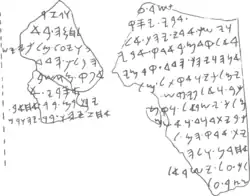
سنگنوشتهٔ تل دان از چندین قطعه تشکیل شده است که بخشی از یک کتیبهٔ پیروزمندانه به زبان آرامی کهن را شکل میدهند و به احتمال زیاد بهدست حزائیلِ آرام-دمشق برجای گذاشته شده است،[۷] که شخصیتی مهم در سطح منطقهای در اواخر سدهٔ نهم پیش از میلاد بود. پادشاهِ بینام از پیروزیهای خود بر پادشاه اسرائیل و متحد ظاهری او[۸]، یعنی پادشاه «خانهٔ داوود» (آرامی امپراتوری: 𐤁𐤉𐤕𐤃𐤅𐤃، آوانویسی: bytdwd) سخن میگوید. این کتیبه بهعنوان کهنترین اشارهٔ بهطور گسترده پذیرفتهشده به نام داوود بهعنوان بنیانگذار یک حکومت یهودایی در خارج از کتاب مقدس عبری در نظر گرفته میشود،[۹] هرچند سنگنوشتهٔ مشع شامل چندین اشارهٔ احتمالی پیشین است که میزان پذیرش آنها متفاوت است.

اقلیتی از پژوهشگران به دلیل نبودِ جداکنندهٔ واژه میان byt و dwd، به اشاره به داوود تردید کردهاند و ترجمههای دیگری نیز پیشنهاد شده است. سنگنوشتهٔ تل دان یکی از تنها چهار کتیبهٔ فراکتابیِ شناختهشده است که در دورهای حدوداً ۴۰۰ ساله (۱۲۰۰–۸۰۰ پیش از میلاد) نام «اسرائیل» را دربردارند؛ سه مورد دیگر عبارتاند از سنگنوشتهٔ مرنپتاح، سنگنوشتهٔ مشا، و تکسنگهای کورخ.[۱۰][۱۱][۱۲]
کتیبهٔ تل دان بحثهای فراوان و موجی از مقالات را برانگیخت که به قدمت، پدیدآورنده و اصالت آن میپرداختند؛[۱۳] با این حال، این سنگنوشته عموماً از سوی پژوهشگران بهعنوان اثری اصیل و حاوی اشارهای به خاندان داوود پذیرفته شده است.[۱۴][۱۵][۱۶]
متن
آنچه در ادامه میآید، رونویسی متن است. نقطهها واژهها را از هم جدا میکنند (همانگونه که در متن اصلی آمده است)، کروشههای مربعِ خالی نشاندهندهٔ متن آسیبدیده یا از دسترفتهاند، و متنی که داخل کروشههای مربع قرار دارد، بهدست بیران و ناوه بازسازی شده است:
1. [ 𐤀]𐤌𐤓.𐤏[ ]𐤅𐤂𐤆𐤓[ ]
2. [ ---].𐤀𐤁𐤉.𐤉𐤎𐤒[.𐤏𐤋𐤅𐤄.𐤁𐤄]𐤕𐤋𐤇𐤌𐤄.𐤁𐤀[ ]
3. 𐤅𐤉𐤔𐤊𐤁.𐤀𐤁𐤉.𐤉𐤄𐤊.𐤀𐤋[.𐤀𐤁𐤄𐤅]𐤄.𐤅𐤉𐤏𐤋.𐤌𐤋𐤊𐤉[ 𐤉𐤔]
4. 𐤓𐤀𐤋.𐤒𐤃𐤌.𐤁𐤀𐤓𐤒.𐤀𐤁𐤉[.𐤅]𐤄𐤌𐤋𐤊.𐤄𐤃𐤃[.]𐤀[𐤉𐤕𐤉]
5. 𐤀𐤍𐤄.𐤅𐤉𐤄𐤊.𐤄𐤃𐤃.𐤒𐤃𐤌𐤉[.𐤅]𐤀𐤐𐤒.𐤌𐤍.𐤔𐤁𐤏[𐤕---]
6. 𐤉.𐤌𐤋𐤊𐤉.𐤅𐤀𐤒𐤕𐤋.𐤌𐤋[𐤊𐤍.𐤔𐤁]𐤏𐤍.𐤀𐤎𐤓𐤉.𐤀[𐤋𐤐𐤉.𐤓]
7. 𐤊𐤁.𐤅𐤀𐤋𐤐𐤉.𐤐𐤓𐤔.[𐤒𐤕𐤋𐤕.𐤀𐤉𐤕.𐤉𐤄𐤅]𐤓𐤌.𐤁𐤓.[𐤀𐤇𐤀𐤁.]
8. 𐤌𐤋𐤊.𐤉𐤔𐤓𐤀𐤋.𐤅𐤒𐤕𐤋[𐤕.𐤀𐤉𐤕.𐤀𐤇𐤆]𐤉𐤄𐤅.𐤁𐤓[.𐤉𐤄𐤅𐤓𐤌.𐤌𐤋]
9. 𐤊.𐤁𐤉𐤕𐤃𐤅𐤃.𐤅𐤀𐤔𐤌.[𐤀𐤉𐤕.𐤒𐤓𐤉𐤕.𐤄𐤌.𐤇𐤓𐤁𐤕.𐤅𐤀𐤄𐤐𐤊.𐤀]
10. 𐤉𐤕.𐤀𐤓𐤒.𐤄𐤌.𐤋[𐤉𐤔𐤌𐤍 ]
11. 𐤀𐤇𐤓𐤍.𐤅𐤋𐤄[... 𐤅𐤉𐤄𐤅𐤀.𐤌]
12. 𐤋𐤊.𐤏𐤋.𐤉𐤔[𐤓𐤀𐤋... 𐤅𐤀𐤔𐤌.]
13. 𐤌𐤑𐤓.𐤏[𐤋. ]
ترجمهٔ ارائهشده توسط بیران در سال ۱۹۹۵ چنین است؛[۱۷]
[ ]...[...] و برید [...]
[...] پدرم بر [او] یورش برد، آنگاه که [او] در [...] جنگید
و پدرم درگذشت، او به نزد [نیاکانش (یعنی بیمار شد و مرد)] رفت. و پادشاهِ ا[سـ]
رائیل پیشتر به سرزمین پدرم درآمده بود، [و] حدَد مرا پادشاه کرد،
و حدَد پیشاپیش من حرکت کرد، [و] من از هفت [...]
ِ پادشاهیام بیرون شدم، و [هفتا]د شا[ه] را کشتم، که [هزاران ارابه]
و هزاران سوار (یا: اسب) به یوغ بسته بودند. [من یَهُور]ام پسر [اَخاب]
پادشاه اسرائیل را کشتم، و [من] [اَخَز]یاهو پسر [یَهُورام، پادشا-]
ه خاندان داوود را] کشتم، و [شهرهایشان را به ویرانی کشاندم و]
سرزمینشان را به [ویرانی بدل کردم]
دیگر [... و یَهُو بر]
اس[رائیل] فرمان راند و [من]
محاصره کردم [ ]
دیگر پژوهشگران ترجمههای جایگزینی ارائه کردهاند. برای نمونه، ترجمهٔ آندره لومر در سال ۱۹۹۸ چنین است؛[۱۸]
[.....]..[.............] و برید [..............]
[.....] پدرم بالا رفت [......f] تا/بر ضدِ اب[...] بجنگد
و پدرم درگذشت، او به نزد [پدرانش] رفت. و پادشاهانِ ا[سـ]
رائیل به سرزمین پدرم نفوذ کردند[. و] حدَد مرا ـ خودِ مرا ـ پادشاه کرد
و حدَد پیشاپیش من رفت[، و] من از .... [....]
ِ پادشاهانم بیرون شدم. و دو شا[ه] نیرومند را کشتم،
که دو هزار [ارابه] و دو هزار سوار را به یوغ بسته بودند. [من یو]رام پسر [اَخاب]
پادشاه اسرائیل را کشتم، و [اَخَز]یاهو پسر [یورام، پادشاه]
از خاندان داوود را کشتم. و [......]
سرزمینشان [.......]
دیگر ...[............ و یَهُو بر]
اس[رائیل ............] فرمان راند
محاصره بر [.......]
تفاوتهای اصلی در خطوط ۶ و ۷ هستند؛ لمِر پیشنهاد میکند که دو پادشاه، نه هفتاد پادشاه، کشته شدند و اینکه آنها دو هزار ارابه و سوارکار داشتهاند.
محتوای متن
در نیمه دوم قرن نهم پیش از میلاد (که رایجترین تاریخ برای استل است)، پادشاهی آرام-دمشق تحت فرمانروایی حزائل، یکی از قدرتهای بزرگ شام بود. دان، که تنها ۷۰ مایل با پایتخت حزائل، دمشق، فاصله داشت، تقریباً مطمئناً تحت نفوذ آن قرار میگرفت. شواهد باستانشناسی این را تأیید میکنند: آثار اسرائیلی تا قرن هشتم پیش از میلاد ظاهر نمیشوند و به نظر میرسد دان حتی قبل از اینکه حزائل حدود سال ۸۴۳ پیش از میلاد پادشاه شود، در مدار نفوذ دمشق بوده است.[۱۹]
نویسنده کتیبه به درگیری با پادشاهان اسرائیل و «خانه داوود» اشاره میکند.[۲۰] نامهای دو پادشاه دشمن تنها تا حدی قابل خواندن هستند. بیراَن و ناوه آنها را بازسازی کردند به صورت یورام، پسر آخاب، پادشاه اسرائیل، و آخابیا، پسر یورام از خانه داوود. به نظر میرسد دانشمندان در این شناساییها نظرات متفاوتی دارند.[۲۱] این بازسازی وابسته به چینش خاصی از قطعات است و همه دانشمندان با آن موافق نیستند.

در متن بازسازیشده، نویسنده شرح میدهد که چگونه اسرائیل در زمان پدرش به کشورش یورش برده و چگونه خدای هدد سپس او را پادشاه کرد و با او علیه اسرائیل جنگید. نویسنده سپس گزارش میدهد که او هفتاد پادشاه را با هزاران ارابه و اسب شکست داده است (جزئیات بیشتر در ادامه). در آخرین سطر، اشارهای به یک محاصره، احتمالاً محاصره سامره، پایتخت پادشاهان اسرائیل وجود دارد.[۲۱] با این حال، این خوانش مورد اختلاف است.[۲۲]
تفسیر های مختلف
پیکر بندی
این استله در سه قطعه یافت شد که به ترتیب A، B1 و B2 نامگذاری شدهاند. تقریباً همه پژوهشگران بر این موضوع اتفاق نظر دارند که هر سه قطعه به یک متن تعلق دارند و قطعات B1 و B2 بههم پیوستهاند. با این حال، در مورد نحوهٔ قرارگیری قطعهٔ A نسبت به ترکیب B1/B2 توافق کمتری وجود دارد: بیران و ناوه، B1/B2 را در سمت چپ قطعهٔ A قرار دادهاند (همانطور که در تصویر بالای این مقاله دیده میشود). برخی پژوهشگران این چینش را مورد پرسش قرار دادهاند؛ ویلیام شنایدویند تغییرات جزئی در همین چینش پیشنهاد کرده است، گرشون گلیل قطعهٔ B را بالای A قرار داده و جورج آتاس آن را بهخوبی در زیر A جای داده است.[۲۳]

تاریخ گذاری
باستانشناسان و کارشناسان سنگنوشته قدیمیترین تاریخ ممکن را حدود سال ۸۷۰ پیش از میلاد برآورد کردهاند، در حالی که تاریخ احتمالی بعدی «کمتر مشخص» است، اگرچه به گفتهٔ لارنس جی. میکیتیوک، این تاریخ «بهسختی میتواند خیلی بعد از ۷۵۰ پیش از میلاد باشد».[۲۴] با این حال، برخی پژوهشگران (عمدتاً مرتبط با مکتب کپنهاگ) – نیلز پیتر لمچه، توماس ال. تامپسون و اف. اچ. کرایر – تاریخگذاریهای بعدیتری را پیشنهاد کردهاند.[۲۵]
جستارهای وابسته
منابع
- 1 2 Hovee, Eric (14 January 2009). "Tel Dan Stele". Center for Online Judaic Studies. Retrieved 23 September 2019.
- 1 2 "Stone Tablet Offers 1st Physical Evidence of Biblical King David : Archeology: Researchers say 13 lines of Aramaic script confirm the battle for Tel Dan recounted in the Bible, marking a victory by Asa of the House of David". Los Angeles Times. 14 August 1993. Retrieved 23 September 2019.
- ↑ "Samuel and Saidye Bronfman Archaeology Wing". The Israel Museum, Jerusalem. Archived from the original on 12 August 2011. Retrieved 26 August 2011.
- ↑ "II Kings 12:18-19". www.sefaria.org.
- 1 2 Brooks, Simcha Shalom (2005). Saul and the Monarchy: A New Look. Ashgate Publishing. p. 2.
- ↑ Aaron Demsky (2007), Reading Northwest Semitic Inscriptions, Near Eastern Archaeology 70/2. Quote: "The first thing to consider when examining an ancient inscription is whether it was discovered in context or not. It is obvious that a document purchased on the antiquities market is suspect. If it was found in an archeological site, one should note whether it was found in its primary context, as with the inscription of King Achish from Ekron, or in secondary use, as with the Tel Dan inscription. Of course texts that were found in an archaeological site, but not in a secure archaeological context present certain problems of exact dating, as with the Gezer Calendar."
- ↑ Mykytiuk, Lawrence J. (2022). "Don't Pave the Way for Circular Reasoning! A Better Way to Identify the Two Deceased Hebrew Kings in the Tel Dan Stele". In Lubetski, Meir; Lubetski, Edith (eds.). pp. 128–131.
- ↑ Athas, George (2003). The Tel Dan Inscription: A Reappraisal and a New Interpretation. Continuum International Publishing Group. p. 217
- ↑ Finkelstein, Israel; Mazar, Amihay; Schmidt, Brian B. (2007). The Quest for the Historical Israel. Society of Biblical Literature. p. 14.
- ↑ Lemche 1998, pp. 46, 62: "No other inscription from Palestine, or from Transjordan in the Iron Age, has so far provided any specific reference to Israel. ... The name of Israel was found in only a very limited number of inscriptions, one from Egypt, another separated by at least 250 years from the first, in Transjordan. A third reference is found in the stele from Tel Dan – if it is genuine, a question not yet settled. The Assyrian and Mesopotamian sources only once mentioned a king of Israel, Ahab, in a spurious rendering of the name".
- ↑ Maeir, Aren M. (2013). "Israel and Judah". The Encyclopedia of Ancient History. New York: Blackwell. pp. 3523–27.
The earliest certain mention of the ethnonym Israel occurs in a victory inscription of the Egyptian king MERENPTAH, his well-known "Israel Stela" (ca. 1210 BCE); recently, a possible earlier reference has been identified in a text from the reign of Rameses II (see RAMESES I–XI). Thereafter, no reference to either Judah or Israel appears until the ninth century. The pharaoh Sheshonq I (biblical Shishak; see SHESHONQ I–VI) mentions neither entity by name in the inscription recording his campaign in the southern Levant during the late tenth century. In the ninth century, Israelite kings, and possibly a Judaean king, are mentioned in several sources: the Aramaean stele from Tel Dan, inscriptions of Shalmaneser III of Assyria, and the stela of Mesha of Moab. From the early eighth century onward, the kingdoms of Israel and Judah are both mentioned somewhat regularly in Assyrian and subsequently Babylonian sources, and from this point on there is relatively good agreement between the biblical accounts on the one hand and the archaeological evidence and extra-biblical texts on the other.
- ↑ Fleming, Daniel E. (1 January 1998). "Mari and the Possibilities of Biblical Memory". Revue d'Assyriologie et d'archéologie orientale. 92 (1): 41–78. JSTOR 23282083.
The Assyrian royal annals, along with the Mesha and Dan inscriptions, show a thriving northern state called Israël in the mid—9th century, and the continuity of settlement back to the early Iron Age suggests that the establishment of a sedentary identity should be associated with this population, whatever their origin. In the mid—14th century, the Amarna letters mention no Israël, nor any of the biblical tribes, while the Merneptah stele places someone called Israël in hill-country Palestine toward the end of the Late Bronze Age. The language and material culture of emergent Israël show strong local continuity, in contrast to the distinctly foreign character of early Philistine material culture.
- ↑ Lemche 1998, p. 41: "The inscription is kept in a kind of "pidgin" Aramaic, sometimes looking more like a kind of mixed language in which Aramaic and Phoenician linguistic elements are jumbled together, in its phraseology nevertheless closely resembling especially the Mesha inscription and the Aramaic Zakkur inscription from Aphis near Aleppo. The narrow links between the Tel Dan inscription and these two inscriptions are of a kind that has persuaded at least one major specialist into believing that the inscription is a forgery. This cannot be left out of consideration in advance, because some of the circumstances surrounding its discovery may speak against its being genuine. Other examples of forgeries of this kind are well known, and clever forgers have cheated even respectable scholars into accepting something that is obviously false".
- ↑ Grabbe, Lester L. (28 April 2007). Ahab Agonistes: The Rise and Fall of the Omri Dynasty. Bloomsbury Publishing USA. ISBN 978-0-567-25171-8.
The Tel Dan inscription generated a good deal of debate and a flurry of articles when it first appeared, but it is now widely regarded (a) as genuine and (b) as referring to the Davidic dynasty and the Aramaic kingdom of Damascus.
- ↑ Cline, Eric H. (28 September 2009). Biblical Archaeology: A Very Short Introduction. Oxford University Press. ISBN 978-0-19-971162-8.
Today, after much further discussion in academic journals, it is accepted by most archaeologists that the inscription is not only genuine but that the reference is indeed to the House of David, thus representing the first allusion found anywhere outside the Bible to the biblical David.
- ↑ Mykytiuk 2004, p. 113. "Some unfounded accusations of forgery have had little or no effect on the scholarly acceptance of this inscription as genuine."
- ↑ Biran, Avraham; Naveh, Joseph (1995). "The Tel Dan Inscription: A New Fragment". Israel Exploration Journal. 45 (1): 1–18.
- ↑ Lemaire, André (1998). "The Tel Dan Stela as a Piece of Royal Historiography". Journal for the Study of the Old Testament. 23 (81): 3–14.
- ↑ Athas, George (2003). The Tel Dan Inscription: A Reappraisal and a New Interpretation. Continuum International Publishing Group pp. 255–257.
- ↑ Knapp, Andrew (2014). "The Dispute over the Land of Qedem at the Onset of the Aram-Israel Conflict: A Reanalysis of Lines 3–4 of the Tel Dan Inscription". Journal of Near Eastern Studies. 73 (1): 105–116.
- 1 2 Hagelia, Hallvard (2005). "Philological Issues in the Tel Dan Inscription". In Edzard, Lutz; Retso, Jan (eds.). Current Issues in the Analysis of Semitic Grammar and Lexicon. Otto Harrassowitz Verlag. p. 235.
- ↑ Athas, George (2003). The Tel Dan Inscription: A Reappraisal and a New Interpretation. Continuum International Publishing Group. pp. 259–308.
- ↑ Hagelia, Hallvard (2005). "Philological Issues in the Tel Dan Inscription". In Edzard, Lutz; Retso, Jan (eds.). Current Issues in the Analysis of Semitic Grammar and Lexicon. Otto Harrassowitz Verlag. pp. 232–233.
- ↑ Mykytiuk, Lawrence J. (2004). Identifying Biblical Persons in Northwest Semitic Inscriptions of 1200–539 B.C.E. Society of Biblical Literature. pp. 115, 117 fn. 52.
- ↑ Compare: Hagelia (2005), pp. 233–234; "Except for some extremely late datings, most scholars date the text to the second half of the 9th century. The late datings come mainly from the Copenhagen scholars N. P. Lemche,[...] T. L. Thompson[...] and the late F. H. Cryer.[...] A not so late dating is argued by Athas, [...] dating the inscription to around 796 BC."
- مشارکتکنندگان ویکیپدیا. «Tel Dan stele». در دانشنامهٔ ویکیپدیای انگلیسی، بازبینیشده در ۱۱ دسامبر ۲۰۲۳.
پیوند به بیرون
