لئونارد کلاینراک
لئونارد کلاینراک | |
|---|---|
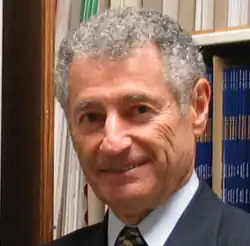 تصویر لئونارد کلاینراک | |
| زادهٔ | ۱۳ ژوئن ۱۹۳۴ (۹۲ سال) |
| تحصیلات | کالج شهری نیویورک مؤسسه فناوری ماساچوست |
| جوایز |
|
| پیشینه علمی | |
| پایاننامه |
|
| استاد راهنما | ادوارد آرتورز[۲] کلود شانون |
لئونارد کلاینراک (زادهٔ ۱۳ ژوئن ۱۹۳۴) دانشمند رایانه و پیشگام اینترنت اهل ایالات متحده است. او استاد ممتاز بازنشسته علوم رایانه در دانشگاه کالیفرنیا، لس آنجلس (UCLA) در دانشکده مهندسی و علوم کاربردی هنری ساموئلی است. کلاینراک مشارکتهای مهمی در زمینه علوم رایانه، بهویژه در مبانی ریاضی انتقال داده در شبکههای رایانهایداشته است. او جوایز معتبر متعددی دریافت کرده است.
در اوایل دهه ۱۹۶۰، کلاینراک در پایاننامه دکترای خود که در سال ۱۹۶۴ به صورت کتاب منتشر شد، پیشگام کاربرد نظریه صف برای مدلسازی تأخیرها در شبکههای تعویض پیام بود. در اواخر دهه ۱۹۶۰ و ۱۹۷۰، او نقش موثری در توسعه آرپانت ایفا کرد. در دهه ۱۹۷۰، او نظریه صف را برای مدلسازی و اندازهگیری عملکرد شبکههای راهگزینی بسته کوچک به کار گرفت و چندین اثر استاندارد در این زمینه منتشر کرد. او سرپرستی دانشجویان تحصیلات تکمیلی را بر عهده داشت که روی پروتکلهای ارتباطی آرپانت کار میکردند، از جمله دانشجویانی که کارهای بعدیشان در زمینه بیناشبکهسازی و مجموعه پروتکل اینترنت منجر به فناوری شبکهای شد که در اینترنت به کار گرفتهشده است. کار نظری او در زمینه مسیریابی سلسلهمراتبی در اواخر دهه ۱۹۷۰ با همکاری دانشجوی خود فاروق کامون، همچنان برای عملکرد اینترنت امروزی حیاتی است.
تحصیلات و فعالیت حرفهای
لئونارد کلاینراک در ۱۳ ژوئن ۱۹۳۴ در نیویورک در خانوادهای یهودی زاده شد[۳] و در سال ۱۹۵۱ از دبیرستان علوم برانکس که مدرسهای سرشناس است، فارغالتحصیل شد. او مدرک کارشناسی مهندسی برق خود را در سال ۱۹۵۷ از کالج شهری نیویورک دریافت کرد و در سالهای ۱۹۵۹ و ۱۹۶۳ به ترتیب مدرک کارشناسی ارشد و دکترا (Ph.D. ) خود را در رشتههای مهندسی برق و علوم رایانه از موسسه فناوری ماساچوست (MIT) گرفت. او سپس به عضویت هیئت علمی دانشگاه کالیفرنیا، لس آنجلس (UCLA) درآمد و تا به امروز در آنجا باقی مانده است؛ او در سالهای ۱۹۹۱ تا ۱۹۹۵ ریاست دانشکده علوم رایانه این دانشگاه را بر عهده داشت.[۴]
دستاوردها
نظریه صف
شناختهشدهترین و مهمترین اثر کلاینراک در زمینه نظریه صف است که موضوعی کلیدی در ریاضیات کاربردیبوده و در بسیاری از حوزهها کاربرد دارد. پیشنهاد پایاننامه او در سال ۱۹۶۱ با عنوان «جریان اطلاعات در شبکههای ارتباطی بزرگ»، منجر به نگارش پایاننامه دکترای او در سال ۱۹۶۲ با عنوان «تأخیر پیام در شبکههای ارتباطی دارای حافظه» شد که بعدها در سال ۱۹۶۴ در قالب کتابی با عنوان «شبکههای ارتباطی: جریان و تأخیر تصادفی پیام» منتشر گردید. او در این اثر، پیکربندی و عملکرد شبکههای ارتباطی را با در نظر گرفتن پارامترهای طراحی نظیر «ظرفیت کانال، تأثیر نظم اولویت، انتخاب روش مسیریابی و طراحی ساختار توپولوژیک» مورد بررسی قرار داد. او تأخیرها را در Plan 55-A، که یک سامانه تعویض پیام بود و توسط وسترن یونیون برای پردازش تلگرامها اداره میشد، تحلیل کرد. پایاننامه او در ادامه از نظریه احتمالات برای مدلسازی تأخیرهای صف در یک شبکه ارتباطی تعمیمیافته استفاده کرد.[۵][۶]
دانلد دیویس در مقاله سال ۱۹۶۶ خود درباره راهگزینی بسته کوچک،[۷] تکنیکهای کلاینراک را به کار گرفت تا نشان دهد که «حاشیه کافی بین عملکرد تخمینی سیستم [راهگزینی بسته کوچک] و نیازهای بیانشده» از نظر زمان پاسخدهی رضایتبخش برای یک کاربر انسانی وجود دارد.[۸] این موضوع به پرسشی کلیدی درباره قابلیت اجرایی شبکههای رایانهای پاسخ داد.[۹]
آرپانت
یکی از همدورهایهای کلاینراک در MIT، لارنس رابرت، در اوایل سال ۱۹۶۷ به طور غیررسمی لئونارد کلاینراک را وارد پروژه آرپانت کرد.[۱۰] رابرت از فرانک وستروِلت خواست تا پرسشهای مربوط به اندازه و محتوای پیام برای شبکه را بررسی کند و یک مقاله موضعگیری درباره پروتکل ارتباطی بینرایانهای شامل «قراردادهایی برای انتقال نویسه و بلوک، بررسی خطا و بازفرست، و شناسایی رایانه و کاربر» بنویسد.[۱۱] اواخر همان سال، رابرت از طریق مقالهای که توسط دیویس نوشتهشده و در اکتبر ۱۹۶۷ در سمپوزیوم اصول سیستمهای عامل ارائهشده بود، با مفهوم راهگزینی بسته کوچک آشنا شد و این مفهوم را در پیشنهاد پروژه آرپانت گنجاند.[۱۲][۱۳][۱۴][۱۵]
کلاینراک در سال ۱۹۶۸ قراردادی برای ایجاد یک مرکز اندازهگیری شبکه (NMC) جهت اندازهگیری و مدلسازی عملکرد شبکه دریافت کرد.[۱۶] کارهای ریاضی او بر توسعه آرپانت اولیه مطالعه و تأثیر گذاشت.[۵][۱۷][۱۸][۱۹] علاوه بر این، کلاینراک مدیریت تیم نرمافزاری در UCLA را بر عهده داشت — که شامل استیون دی کراکر، جان پاستل و وینتون سرف بود — کسانی که پروتکل میزبان-به-میزبان برای آرپانت، یعنی برنامه کنترل شبکه (NCP) را توسعه دادند.[۲۰]
نخستین پیام در آرپانت توسط یک دانشجوی کارشناسی در دانشگاه کالیفرنیا، لس آنجلس به نام [۲۱] چارلی کلاین،[۲۲] که تحت نظارت کلاینراک فعالیت میکرد، ارسال شد.[۲۳][۲۴] در ساعت ۱۰: ۳۰ شب، ۲۹ اکتبر ۱۹۶۹، از اتاق ۳۴۲۰ ساختمان بولتر (ساختمان اصلی مهندسی دانشگاه)، کلاین پیامی را از رایانه میزبان اسدیاس سیگما ۷ دانشگاه به رایانه میزبان اسدیاس ۹۴۰ در موسسه تحقیقاتی استنفورد مخابره کرد.[۲۲] متن پیام کلمه «login» بود؛ حروف «l» و «o» ارسال شدند، اما پس از آن سیستم دچار نقص فنی شد. از این رو، نخستین پیام تحتاللفظی در آرپانت «lo» بود. حدود یک ساعت بعد، پس از رفع نقص، رایانه اسدیاس سیگما ۷ یک «login» کامل را انجام داد.[۲۱][۲۵] نخستین پیوند دائمی آرپانت در ۲۱ نوامبر ۱۹۶۹ میان پردازنده پیام رابط (IMP) در دانشگاه کالیفرنیا، لس آنجلس و پردازنده پیام رابط در موسسه تحقیقاتی استنفورد برقرار شد. تا ۵ دسامبر ۱۹۶۹، شبکه اولیه چهار گرهای ایجادشده بود.[۲۶][۲۷]
کلاینراک در سال ۱۹۷۳ از آرپانت برای پیامرسانی فوری از ایالات متحده به لارنس رابرت در انگلستان استفاده کرد و این شبکه را برای کاربردهای مدرن و روزمره به کار گرفت.[۲۸][۲۹]
اینترنت
کلاینراک یکی از بنیانگذاران لینکابیت (Linkabit) و موسس و رئیس نومادیکس (Nomadix) و موسسه انتقال فناوری بود.[۱۶]
او صدها مقاله پژوهشی منتشر کرد،[۳۰][۳۱] که در نهایت منجر به راهاندازی حوزه پژوهشی جدیدی در زمینه نظریه و کاربرد نظریه صف در شبکههای رایانهای شد.[۵][۳۲][۳۳][۳۴] او در این نقش، بر پژوهشهای دهها دانشجوی تحصیلات تکمیلی نظارت داشت.[۳۱][۳۵] وی پژوهشهای خود و دانشجویانش را برای مخاطبان گستردهتر جهت استفادههای دانشگاهی و تجاری منتشر کرد و صدها سمینار تجاری را با ارائه متخصصان و پیشگامان در ایالات متحده و سطح بینالمللی سازماندهی نمود.[۳۵][۳۱] بسیاری از دانشجویان تحصیلات تکمیلی که کلاینراک از آنها حمایت میکرد، مسیر شغلی خود را بر پایه تخصصی بنا نهادند که هنگام کار بر روی آرپانت با او کسب کرده بودند؛ از جمله چندین نفری که کارهای بعدیشان در زمینه بیناشبکهسازی و مجموعه پروتکل اینترنت منجر به فناوری شبکهسازی مورد استفاده در اینترنت شد.[۹][۳۲] کارهای کلاینراک که در اواسط دهه ۱۹۷۰ درباره عملکرد آرپانت منتشر شد و در کارگروه بینالمللی شبکهسازی مورد بحث قرار گرفت،[۳۶] زیربنای توسعه پروتکل هدایت انتقال در مجموعه پروتکل اینترنت را فراهم کرد.[۳۷][۳۸][۳۹] کارهای تحلیلی او در دهه ۱۹۷۰ به شبکههای راهگزینی بسته کوچک، شبکههای رادیویی بستهای، شبکههای محلی، شبکههای پهنباند، رایانش سیار، شبکههای همتا به همتا و عاملهای نرمافزاری هوشمند پرداخت.[۳۰] کارهای نظری کلاینراک در زمینه مسیریابی سلسلهمراتبی با همکاری دانشجویش فاروق کامون، امروزه همچنان برای عملکرد اینترنت حیاتی است.[۴۰][۴۱]
در سال ۱۹۸۸، کلاینراک رئیس کمیتهای از «هیئت علوم رایانه و مخابرات» (CSTB) وابسته به شورای ملی تحقیقات بود که گزارش «به سوی یک شبکه تحقیقاتی ملی» را به کنگره ایالات متحده ارائه کرد و نتیجه گرفت که «نیاز مبرم و آشکاری برای یک شبکه تحقیقاتی ملی وجود دارد».[۴۲] اگرچه ایالات متحده یک شبکه ملی تحقیق و آموزش سراسری نساخت، اما این گزارش بر ال گور تأثیر گذاشت تا توسعه «قانون محاسبات با کارایی بالا ۱۹۹۱» را دنبال کند،[۴۳] که به تسهیل توسعه اینترنت به شکلی که امروزه شناخته میشود، کمک کرد.[۴۴] بودجه حاصل از این لایحه در توسعه مرورگر وب ۱۹۹۳، یعنی موزائیک در مرکز ملی کاربردهای ابررایانش (NCSA) استفاده شد که پذیرش وب جهانگستر را تسریع کرد.[۴۵][۴۶] او بعداً کمیته CSTB را رهبری کرد که گزارش تأثیرگذار ۱۹۹۴ با عنوان «تحقق آینده اطلاعات؛ اینترنت و فراتر از آن» را منتشر کرد.[۴۷][۱۶]
مناقشه «پدری» راهگزینی بسته کوچک
در سال ۱۹۹۰، کلاینراک گفت:[۳۵] > چیزی که واقعاً تحقیقات خودم را پیش برد، ایده یک شبکه تعویض پیام بود که پیشدرآمدی برای شبکههای راهگزینی بسته کوچک بود. ابزار ریاضی که در نظریه صف توسعه یافته بود، یعنی شبکههای صف، کاملاً با مدل شبکههای رایانهای مطابقت داشت. در واقع، این تطابق کامل نبود و من مجبور شدم آن مدل را برای انطباق با واقعیتهای شبکههای رایانهای تنظیم کنم. سپس برخی از روشهای طراحی را نیز برای تخصیص ظرفیت بهینه، روشهای مسیریابی و طراحی توپولوژی توسعه دادم.
از اواسط دهه ۱۹۹۰، کلاینراک تلاش کرد تا «به عنوان پدر شبکهسازی دادههای مدرن» شناخته شود.[۴۸] تا سال ۱۹۹۷، او ادعای تقدم علمی در اختراع راهگزینی بسته کوچک را مطرح کرد و مدعی شد که لارنس رابرت را متقاعد کرده است تا این تکنیک را بپذیرد.[۴۹] در سال ۲۰۰۴، او کار خود را اینگونه توصیف کرد: > اساساً، کاری که من برای تحقیقات دکتری خود در سالهای ۱۹۶۱-۱۹۶۲ انجام دادم، ایجاد یک نظریه ریاضی برای شبکههای بستهای بود که اصول اساسی هدایتکننده اینترنت امروزی را آشکار کرد.
با این حال، ادعاهای کلاینراک مبنی بر اینکه کار او در اوایل دهه ۱۹۶۰ سرآغاز مفهوم راهگزینی بسته کوچکبوده و کار او منبع مفاهیم راهگزینی بسته کوچک مورد استفاده در آرپانتبوده است، توسط سایر پیشگامان اینترنت،[۴۸][۵۰][۵۱][۵۲] از جمله رابرت تیلور،[۵۳] پل باران،[۵۴] و دونالد دیویس،[۵۵] مورد مناقشه است. مورخان و تالار مشاهیر مخترعان ملی ایالات متحده، باران و دیویس را به دلیل اختراع مستقل مفهوم راهگزینی بسته کوچک دیجیتال که در شبکهسازی رایانهای مدرن از جمله اینترنت استفاده میشود، به رسمیت میشناسند.[۱۲][۱۳][۵۶][۵۷][۵۸]
جوایز و افتخارات
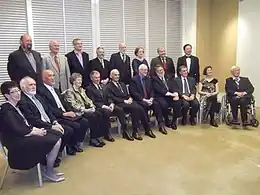
کلاینراک مشارکتهای مهم متعددی در زمینه علوم رایانه، بهویژه در مبانی ریاضی انتقال داده در شبکههای رایانهایداشته است. او جوایز حرفهای متعددی دریافت کرده است. در سال ۱۹۸۰، او به دلیل مشارکتهای پیشگامانه در این حوزه و رهبری به عنوان یک مربی در شبکههای ارتباطات رایانهای، به عنوان عضو آکادمی ملی مهندسی انتخاب شد.[۵۹] در سال ۲۰۰۱، او جایزه چارلز استارک دراپر را «برای توسعه اینترنت» دریافت کرد.[۶۰] او در سال ۲۰۰۲ به عنوان یکی از اعضای فلوهای موسسه پژوهشهای عملیاتی و علوم مدیریت انتخاب شد.[۶۱] کلاینراک برای دریافت نشان ملی علوم، بالاترین افتخار علمی کشور، توسط رئیسجمهور جرج دابلیو. بوش در کاخ سفید در ۲۹ سپتامبر ۲۰۰۸ انتخاب شد. «نشان ملی علوم سال ۲۰۰۷ به لئونارد کلاینراک برای مشارکتهای بنیادی او در نظریه ریاضی شبکههای داده مدرن، و برای مشخصات عملکردی راهگزینی بسته کوچک، که پایه و اساس فناوری اینترنت است، اهدا میشود. راهنمایی او برای نسلهای دانشجویان منجر به تجاریسازی فناوریهاییشده است که جهان را دگرگون کردهاند. »[۱]
در سال ۲۰۱۰، او به طور مشترک برنده جایزه دن دیوید شد.[۶۲] اتاق ۳۴۲۰ در ساختمان بولتر در دانشگاه کالیفرنیا، لس آنجلس به وضعیت سال ۱۹۶۹ خود بازگردانده شد و به سایت و آرشیو میراث اینترنت کلاینراک تبدیل گشت. این مکان در ۲۹ اکتبر ۲۰۱۱ با مراسم افتتاحیه بزرگی با حضور پیشگامان اینترنت به روی عموم باز شد.[۲۵][۶۳] او در سال ۲۰۱۱ به عنوان عضو برجسته به IEEE-ایتا کاپا نو (IEEE-ΗΚΝ) راه یافت. عنوان عضو برجسته، بالاترین درجه عضویت این سازمان است و به تعداد معدودی از افراد اعطا میشود که دستاوردهای فنی برجسته و مشارکتهایشان از طریق رهبری در زمینههای مهندسی برق و رایانه، به طور قابلتوجهی به جامعه سود رسانده است. در سال ۲۰۱۲، کلاینراک توسط جامعه اینترنت به تالار مشاهیر اینترنت راه یافت.[۳۰] در سپتامبر ۲۰۱۴، او جایزه مشارکت برجسته ACM SIGMOBILE را در کنفرانس MobiCom 2014 دریافت کرد. کلاینراک در سال ۲۰۱۴ جایزه بنیاد بیبیویای مرزهای دانش را «برای مشارکتهای بنیادین خود در نظریه و توسعه عملی اینترنت» دریافت کرد، که این عبارات در متن تقدیرنامه هیئت داوران آمده است.[۶۴] در سال ۲۰۱۴، نسخه ویژهای از نشریه Computer Networks به افتخار او منتشر شد. مقالاتی در جهت به رسمیت شناختن مشارکتهای کلاینراک در نظریه صف، راهگزینی بسته کوچک، شبکههای ارتباطات رایانهای و توسعه اینترنت و فناوریهای شبکه مرتبط با آن نوشته شد.[۶۵]
جستارهای وابسته
- تاریخ اینترنت
- پیشگامان اینترنت
- Nerds 2.0.1 – مستند سال ۱۹۹۸ که در آن کلاینراک مصاحبه مفصلی انجام میدهد
- جنگ پروتکلها
آثار
- Kleinrock, Leonard (May 1961). "Information Flow in Large Communication Nets". Ph.D. Thesis Proposal.
- Kleinrock, Leonard (July 1961). "Information Flow in Large Communication Nets". RLE Quarterly Progress Report.
- Kleinrock, Leonard (April 1962). "Information Flow in Large Communication Nets". RLE Quarterly Progress Report.
- Kleinrock, Leonard (December 1962). Message Delay in Communication Nets with Storage (PDF) (پایاننامه دکترا).
{{cite thesis}}: نگهداری یادکرد:وضعیت پیوند (رده) - Kleinrock, Leonard (1964). Communication Nets: Stochastic Message Flow and Design. McGraw-Hill. p. 220. الگو:شماره استاندارد بینالمللی کتاب.
- Kleinrock, Leonard (1975-01-02). Queueing Systems: Volume I – Theory. نیویورک: Wiley Interscience. pp. 417. ISBN 978-0471491101.
- Kleinrock, Leonard (1976-04-22). Queueing Systems: Volume II – Computer Applications. نیویورک: Wiley Interscience. pp. 576. ISBN 978-0471491118.
- Kleinrock, Leonard; Kamoun, Farok (January 1977). "Hierarchical Routing for Large Networks, Performance Evaluation and Optimization". Computer Networks. 1 (3): 155–174. doi:10.1016/0376-5075(77)90002-2.
- Kleinrock, Leonard; Gail, Richard (1996-04-12). Queueing Systems: Problems and Solutions. Wiley-Interscience. p. 240. ISBN 978-0471555681.
پانویس
- 1 2 "Eight National Medals of Science Awardees Honored at Gala". NSF. 26 September 2008. Archived from the original on 18 December 2022. Retrieved 19 May 2012.
- ↑ لئونارد کلاینراک at Mathematics Genealogy Project
- ↑ "Jews in Computer & Information Science". The Jewish Contribution to World Civilization web site. Retrieved 5 July 2011.
- ↑ "Leonard Kleinrock's Profile". UCLA. 12 April 2011. Retrieved 24 May 2012.
- 1 2 3 Clarke, Peter (1982). Packet and circuit-switched data networks (PDF) (PhD thesis). Department of Electrical Engineering, Imperial College of Science and Technology, University of London. Archived from the original (PDF) on 2022-08-03. Retrieved 2024-01-21. "Many of the theoretical studies of the performance and design of the ARPA Network were developments of earlier work by Kleinrock ... Although these works concerned message switching networks, they were the basis for a lot of the ARPA network investigations ... The intention of the work of Kleinrock [in 1961] was to analyse the performance of store and forward networks, using as the primary performance measure the average message delay. ... Kleinrock [in 1970] extended the theoretical approaches of [his 1961 work] to the early ARPA network."
- ↑ Kleinrock, Leonard (December 1962). Message Delay in Communication Nets with Storage (PDF) (Thesis). Cambridge: Massachusetts Institute of Technology.
- ↑ Roberts, Gareth Ffowc (2022). For the Recorde: A History of Welsh Mathematical Greats (in English). University of Wales Press. ISBN 978-1-78683-917-6.
Mathematicians had already developed methods of analysing traffic jams - 'queuing theory' ... - but it needed a new insight to solve the problem of how to avoid bottle-necks between computers.
- ↑ Davies, D. W. (1966). "Proposal for a Digital Communication Network" (PDF). p. 10, 16.
- 1 2 Heart, F.; McKenzie, A.; McQuillian, J.; Walden, D. (January 4, 1978). Arpanet Completion Report (PDF) (Technical report). Burlington, MA: Bolt, Beranek and Newman. Archived from the original (PDF) on 2023-05-27. pp. III-40-1
- ↑ "SRI Project 5890-1; Networking (Reports on Meetings). [1967]". web.stanford.edu. Archived from the original on 2011-08-10. Retrieved 2020-02-15.
W. Clark's message switching proposal (appended to Taylor's letter of April 24, 1967, to Engelbart )were reviewed.
- ↑ Pelkey, James. "4.7 Planning the ARPANET: 1967-1968 in Chapter 4 - Networking: Vision and Packet Switching 1959 - 1968". The History of Computer Communications. Archived from the original on December 23, 2022. Retrieved May 9, 2023.
- 1 2 "The real story of how the Internet became so vulnerable". Washington Post (in American English). Archived from the original on 2015-05-30. Retrieved 2020-02-18.
Historians credit seminal insights to Welsh scientist Donald W. Davies and American engineer Paul Baran
- 1 2 Hafner, Katie; Lyon, Matthew (1996). Where wizards stay up late : the origins of the Internet. Internet Archive. New York : Simon & Schuster. pp. 76–78. ISBN 978-0-684-81201-4.
Roger Scantlebury ... from Donald Davies' team ... presented a detailed design study for a packet switched network. It was the first Roberts had heard of it. ... Roberts also learned from Scantlebury, for the first time, of the work that had been done by Paul Baran at RAND a few years earlier.
- ↑ Moschovitis, Christos J. P (1999). History of the Internet: a chronology, 1843 to the present. Internet Archive. ABC-CLIO. ISBN 978-1-57607-118-2.
- ↑ Roberts, L.G. (1978). "The evolution of packet switching". Proceedings of the IEEE. 66 (11): 1307–1313. Bibcode:1978IEEEP..66.1307R. doi:10.1109/PROC.1978.11141. ISSN 1558-2256. S2CID 26876676.
- 1 2 3 "Leonard Kleinrock Helps Build The ARPANET". Living Internet. Retrieved 2021-03-19.
- ↑ Abbate, Janet (1999). Inventing the Internet. Internet Archive. MIT Press. pp. See page refs highlighted at url. ISBN 978-0-262-01172-3.
On Kleinrock's influence, see Frank, Kahn, and Kleinrock 1972, p. 265; Tanenbaum 1989, p. 631.
- ↑ Roberts, Lawrence G.; Wessler, Barry D. (1970). "Computer network development to achieve resource sharing". Proceedings of the May 5-7, 1970, spring joint computer conference on - AFIPS '70 (Spring). New York, NY, USA: Association for Computing Machinery. pp. 543–549. doi:10.1145/1476936.1477020. ISBN 978-1-4503-7903-8. S2CID 9343511.
The third paper by Kleinrock [5] derives procedures for optimizing the capacity of the transmission facility in order to minimize cost and average message delay. ... [5] L KLEINROCK. Analytic and simulation methods in Computer Network Design AFIPS Conference Proceedings, May 1970
- ↑ Kahn, R.E. (1972). "Resource-sharing computer communications networks". Proceedings of the IEEE. 60 (11): 1397–1407. Bibcode:1972IEEEP..60.1397K. doi:10.1109/PROC.1972.8911. ISSN 0018-9219.
7. H. Frank, R. E. Kahn and L. Kleinrock, "Computer communication network design—experience with theory and practice", AFIPS Spring Joint Comput. Conf., pp. 255-270, 1972.
- ↑ Meeting of the ARPA Computer Network Working Group at UCLA, November 16, 1967
- 1 2 Beranek, Leo (2000). "Roots of the Internet: A Personal History". Massachusetts Historical Review. 2: 55–75. ISSN 1526-3894. JSTOR 25081152.
- 1 2 "'We were just trying to get it to work': The failure that started the internet" (in British English). BBC. 2024-10-29. Archived from the original on 2026-04-23. Retrieved 2026-04-22.
- ↑ Orr, Tamra B. (2019-07-15). The Information Revolution: Transforming the World Through Technology (in English). Greenhaven Publishing LLC. ISBN 978-1-5345-6786-3.
- ↑ Rosenbaum, Philip (29 October 2009). "Web pioneer recalls 'birth of the Internet'". CNN. Retrieved October 30, 2009.
- 1 2 Savio, Jessica (1 April 2011). "Browsing history: A heritage site is being set up in Boelter Hall 3420, the room the first Internet message originated in". UCLA Daily Bruin. UCLA. Archived from the original on 5 January 2012. Retrieved 1 April 2011.
- ↑ Sutton, Chris. "Internet Began 35 Years Ago at UCLA with First Message Ever Sent Between Two Computers". UCLA. Archived from the original on 8 March 2008. Retrieved 1 April 2011.
- ↑ Kleinrock tells the story of the first Internet connection (UCLA video)
- ↑ "TALKING HEADERS". Washington Post (in American English). 2024-01-07. ISSN 0190-8286. Retrieved 2024-06-19.
- ↑ Still, tapping into the ARPANET to fetch a shaver across international lines was a bit like being a stowaway on an aircraft carrier. The ARPANET was an official federal research facility, after all, and not something to be toyed with. Kleinrock had the feeling that the stunt he'd pulled was slightly out of bounds. 'It was a thrill. I felt I was stretching the Net'. – "Where Wizards Stay Up Late: The Origins of the Internet", Chapter 7.
- 1 2 3 "Leonard Kleinrock". Internet Hall of Fame (in American English). Retrieved 2023-03-13.
- 1 2 3 "Kleinrock (Leonard) papers". oac.cdlib.org. Retrieved 2023-04-04.
- 1 2 Abbate, Janet (1999). Inventing the Internet. Internet Archive. MIT Press. p. 81. ISBN 978-0-262-01172-3.
- ↑ Davies, Donald Watts (1979). Computer networks and their protocols. Internet Archive. Wiley. pp. See page refs highlighted at url. ISBN 978-0-471-99750-4.
In mathematical modelling use is made of the theories of queueing processes and of flows in networks, describing the performance of the network in a set of equations. ... The analytic method has been used with success by Kleinrock and others, but only if important simplifying assumptions are made. ... It is heartening in Kleinrock's work to see the good correspondence achieved between the results of analytic methods and those of simulation.
- ↑ Kleinrock, L. (1978). "Principles and lessons in packet communications". Proceedings of the IEEE. 66 (11): 1320–1329. Bibcode:1978IEEEP..66.1320K. doi:10.1109/PROC.1978.11143. ISSN 0018-9219.
- 1 2 3 O'Neill, Judy (3 April 1990). "An Interview with Leonard Kleinrock" (PDF). pp. 7, 13–15.
- ↑ "General Notes index: 1-77, 98-111, 116-125 citing note number, author, and title; INWG Protocol Notes index: 1-10, 28-38 citing note number, author, title and date". umedia.lib.umn.edu. Retrieved 2024-05-29.
- ↑ Cerf, Vinton (March 1977). "Specification of Internet Transmission Control Program: TCP (Version 2)" (PDF). p. 96.
- ↑ Cerf, Vinton G.; Postel, Jon (January 1978). "Specification of Internetwork Transmission Program: TCP Version 3" (PDF). p. 81.
- ↑ Postel, Jon (September 1978). "Specification of Internetwork Transmission Control Protocol: TCP Version 4" (PDF). pp. 91–2.
- ↑ Davies, Donald Watts (1979). Computer networks and their protocols. Internet Archive. Wiley. pp. 110–111. ISBN 978-0-471-99750-4.
Hierarchical addressing systems for network routing have been proposed by Fultz and, in greater detail, by McQuillan. A recent very full analysis may be found in Kleinrock and Kamoun.
- ↑ Feldmann, Anja; Cittadini, Luca; Mühlbauer, Wolfgang; Bush, Randy; Maennel, Olaf (2009). "HAIR: Hierarchical architecture for internet routing" (PDF). Proceedings of the 2009 workshop on Re-architecting the internet. ReArch '09. New York, NY, USA: Association for Computing Machinery. pp. 43–48. doi:10.1145/1658978.1658990. ISBN 978-1-60558-749-3. S2CID 2930578.
The hierarchical approach is further motivated by theoretical results (e.g., [16]) which show that, by optimally placing separators, i.e., elements that connect levels in the hierarchy, tremendous gain can be achieved in terms of both routing table size and update message churn. ... [16] KLEINROCK, L., AND KAMOUN, F. Hierarchical routing for large networks: Performance evaluation and optimization. Computer Networks (1977).
- ↑ Toward a National Research Network (in English). Washington, D.C.: National Academies Press. 1988. p. 39. Bibcode:1988nap..book10334N. doi:10.17226/10334. ISBN 978-0-309-58125-7.
- ↑ "High-Performance Computing Act of 1991". Archived from the original on 19 October 2015. Retrieved 21 March 2011.
- ↑ "A Bill of Rights for the Internet: What Should it Have Been at the Outset" (PDF). Retrieved 21 March 2011.
- ↑ Tuutti, Camille (23 September 2011). "R&D in IT essential to help US stay competitive". Federal Computer Week. Archived from the original on 10 February 2012. Retrieved 25 May 2012.
- ↑ Vetter, Ronald J. (اکتبر 1994). "Mosaic and the World-Wide Web" (PDF). North Dakota State University. Archived from the original (PDF) on اوت 24, 2014. Retrieved نوامبر 20, 2010.
- ↑ National Research Council, Computer Science and Telecommunications Board (1994). Realizing the Information Future (in English). Washington, D.C.: National Academies Press. doi:10.17226/4755. ISBN 978-0-309-05044-9.
- 1 2 Isaacson, Walter (2014). The Innovators: How a Group of Hackers, Geniuses, and Geeks Created the Digital Revolution. Simon & Schuster. pp. 244–6. ISBN 9781476708690.
This led to an outcry among many of the other Internet pioneers, who publicly attacked Kleinrock and said that his brief mention of breaking messages into smaller pieces did not come close to being a proposal for packet switching ... until the mid-1990s, Kleinrock had credited [Baran and Davies] with coming up with the idea of packet switching
- ↑ "Brief History of the Internet" (PDF). Internet Society. 1997. p. 3.
- ↑ Alex McKenzie (2009), Comments on Dr. Leonard Kleinrock's claim to be "the Father of Modern Data Networking"
{{یادکرد}}: پارامتر|تاریخ بازیابی=نیاز به وارد کردن|پیوند=دارد (کمک) "... there is nothing in the entire 1964 book that suggests, analyzes, or alludes to the idea of packetization." - ↑ Harris, Trevor (2009). Pasadeos, Yorgo (ed.). "Who is the Father of the Internet? The Case for Donald Davies". Variety in Mass Communication Research (in English). ATINER: 123–134. ISBN 978-960-6672-46-0. Archived from the original on May 2, 2022.
Leonard Kleinrock and Lawrence (Larry) Roberts, neither of whom were directly involved in the invention of packet switching ... Dr Willis H. Ware, Senior Computer Scientist and Research at the RAND Corporation, notes that Davies (and others) were troubled by what they regarded as in appropriate claims on the invention of packet switching
- ↑ Haughney Dare-Bryan, Christine (June 22, 2023). Computer Freaks (Podcast). Chapter Two: In the Air. Inc. Magazine.
- ↑ Robert Taylor (November 22, 2001), "Birthing the Internet: Letters From the Delivery Room; Disputing a Claim", New York Times,
Authors who have interviewed dozens of Arpanet pioneers know very well that the Kleinrock-Roberts claims are not believed.
- ↑ Katie Hefner (November 8, 2001), "A Paternity Dispute Divides Net Pioneers", New York Times,
The Internet is really the work of a thousand people," Mr. Baran said. "And of all the stories about what different people have done, all the pieces fit together. It's just this one little case that seems to be an aberration.
- ↑ Donald Davies (2001), "A Historical Study of the Beginnings of Packet Switching", Computer Journal, British Computer Society, 44 (3): 152–162, doi:10.1093/comjnl/44.3.152,
I can find no evidence that he understood the principles of packet switching.
- ↑ Abbate, Jane (2000). Inventing the Internet. MIT Press. pp. 37–8, 58–9. ISBN 978-0262261333.
The NPL group influenced a number of American computer scientists in favor of the new technique, and they adopted Davies's term "packet switching" to refer to this type of network. Roberts also adopted some specific aspects of the NPL design.
- ↑ Pelkey, James L.; Russell, Andrew L.; Robbins, Loring G. (2022). Circuits, Packets, and Protocols: Entrepreneurs and Computer Communications, 1968-1988 (PDF). Morgan & Claypool. p. 4. ISBN 978-1-4503-9729-2. Archived from the original (PDF) on 2024-04-23. Retrieved 2023-11-22.
Paul Baran, an engineer celebrated as the co-inventor (along with Donald Davies) of the packet switching technology that is the foundation of digital networks
- ↑ "Inductee Details - Paul Baran". National Inventors Hall of Fame. Archived from the original on 6 September 2017. Retrieved 6 September 2017; "Inductee Details - Donald Watts Davies". National Inventors Hall of Fame. Archived from the original on 6 September 2017. Retrieved 6 September 2017.
- ↑ "Dr. Leonard Kleinrock". NAE Website. Retrieved 2021-07-01.
- ↑ "Draper Prize Honors Four 'Fathers of the Internet'". Wall Street Journal. February 12, 2001. Retrieved 5 September 2017.
- ↑ Fellows: Alphabetical List, Institute for Operations Research and the Management Sciences, archived from the original on 2019-05-10, retrieved 2019-10-09
- ↑ Wileen Wong Kromhout (March 15, 2010). "UCLA Internet pioneer Leonard Kleinrock looks toward future, helps students do the same". UCLA Engineering. Archived from the original on April 21, 2010. Retrieved March 30, 2011.
- ↑ McCarty, Meghan (19 July 2011). "Beginning of the Internet commemorated in new UCLA museum". Southern California Public Radio. Archived from the original on 16 February 2013. Retrieved 21 July 2011.
- ↑ "Leonard Kleinrock". Premios Fronteras (in English). Retrieved 2022-06-28.
- ↑ Silvester, John, and Parviz Kermani. “Professor Leonard Kleinrock – Tribute Volume.” Computer networks (Amsterdam, Netherlands : 1999) 66 (2014): 1–3.
پیوند به بیرون
- "Leonard Kleinrock's Home Page". UCLA. Retrieved 2004-02-11.
- "Leonard Kleinrock's Personal History/Biography: the Birth of the Internet". UCLA. Retrieved 2017-02-17.
- Biography of Leonard Kleinrock from the Institute for Operations Research and the Management Sciences
- "KIHC: The Kleinrock Internet History Center at UCLA". UCLA. Retrieved 2004-11-11.
- "Bibliography". UCLA. Retrieved 2012-05-24.
- "Network history links". Retrieved 2004-11-11.
- Kleinrock, Leonard (1990-04-03). "Oral history interview with Leonard Kleinrock". دانشگاه مینهسوتا، مینیاپولیس: Charles Babbage Institute. Retrieved 2008-05-15.
- Video:Interview with Leonard Kleinrock. ACM. Retrieved 2006-05-07.
- Video:Leonard Kleinrock on the first Internet connection. Retrieved 2008-08-25.
- Video:Leonard Kleinrock displays Internet's first router. Retrieved 2008-08-25.
- Video:Leonard Kleinrock on packet-switching, early Internet. Retrieved 2008-08-25.
الگو:کنترل اختیار الگو:جایزه چارلز استارک دراپر الگو:برندگان نشان ملی علوم
- زادگان ۱۹۳۴ (میلادی)
- دانشمندان رایانه اهل ایالات متحده آمریکا
- دانشآموختگان دبیرستان علوم برانکس
- دانشآموختگان سیتی کالج نیویورک
- فلوهای انجمن ماشینهای حسابگر
- پیشگامان اینترنت
- افراد زنده
- دانشآموختگان دانشکده مهندسی موسسه فناوری ماساچوست
- دانشمندان یهودی اهل ایالات متحده آمریکا
- برندگان جایزه چارلز استارک دراپر
- اعضای آکادمی ملی مهندسی آمریکا
- دانشمندان سده ۲۰ (میلادی) اهل ایالات متحده آمریکا
- دانشمندان سده ۲۱ (میلادی) اهل ایالات متحده آمریکا
- دانشمندان اهل نیویورک