فریسیها
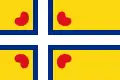  | |
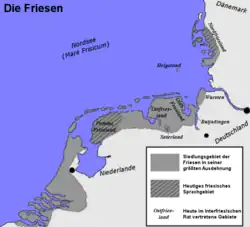 Frisians in Frisia | |
| کل جمعیت | |
|---|---|
| ح. 530,000 | |
| مناطق با جمعیت چشمگیر | |
 فریسلاند فریسلاند | ۳۵۰,۰۰۰[۳][الف] |
 هلند هلند | ۱۲۰,۰۰۰[۴][ب] |
 آلمان آلمان | ۶۰,۰۰۰[۵][پ] |
| زبانها | |
| زبانهای فریسی آلمانی پایین(لهجه فریزی-ساکسون) زبان هلندی (زبان فریزی هلندی غربی و اِستاد فریز) زبان آلمانی (میسینگیش) زبان دانمارکی (سوندریسک و شولسویگ جنوبی دانمارک) | |
| دین | |
| پروتستانتیسم (کالوینیسم و لوتریانیسم) اقلیت کلیسای کاتولیک | |
| قومیتهای وابسته | |
| ژرمنها (به ویژه آفریکانرها، هلندی ها، انگلیسی ها و آلمانیها) | |
| تاریخ هلند |
|---|
 |
|
درگاه هلند |
فریسیها گروهی از مردم ژرمن هستند که در نواحی ساحلی کشورهای آلمان، دانمارک و هلند زندگی میکنند.[۶][۷][۸][۹][۱۰]آنها در هلند در استانها فریسلاند و گرونینگن و در آلمان در فریسیای غربی و فریسیای شمالی زندگی میکنند.[۱۱] منطقه زندگی آنها به فریسیا معروف است. این مردم به داشتن موهای بور شناخته شده هستند.[۱۲]
زبان فریسی کهن به زبان انگلیسی کهن بسیار نزدیک بودهاست و همین طور زبانهای فریسی نوین نیز به زبان انگلیسی نوین بسیار نزدیک است.[۱۳]
سرشناسان
از سرشناسترین فریسیها میتوان افراد زیر را نام برد:
منابع
- ↑ "Groep fan Auwerk". www.groepfanauwerk.com.
- ↑ "Interfriesische Flagge". www.interfriesischerrat.de.
- ↑ Gooskens, Charlotte; Heeringa, Wilbert. "The Position of Frisian in the Germanic Language Area". Researchgate. University of Groningen. Retrieved 6 January 2020.
- ↑ Lewis, M. Paul (ed.), 2009. Ethnologue: Languages of the World, Sixteenth edition. Dallas, Tex.: SIL International. Online version.
- ↑ "Die friesische Volksgruppe". Minderheitensekretariat der vier autochthonen nationalen Minderheiten und Volksgruppen (به آلمانی). Retrieved 6 January 2020.
Geschätzt 60.000 Menschen sind ihrem Selbstverständnis nach Friesen. [an estimated 60,000 people self identify as Frisian]
- ↑ Danver, Steven L. (2015). Native Peoples of the World: An Encyclopedia of Groups, Cultures and Contemporary Issues. Routledge. p. 307. ISBN 1317464001. Retrieved March 30, 2019.
Frisians are a Germanic people that reside in Germany and the Netherlands
- ↑ Minahan, James (2000). One Europe, Many Nations: A Historical Dictionary of European National Groups. Greenwood Publishing Group. p. 264. ISBN 0313309841. Retrieved March 30, 2019.
The Frisians are a Germanic people with historical and linguistic ties to the English,* Dutch, and Germans.* Closely related to the ancient Anglo-Saxons, the Frisians have maintained their unique culture from the time of Roman control in northern Europe, in all over 2,500 years.
- ↑ Minahan, James (2000). One Europe, many nations: a historical dictionary of European national groups. Greenwood Publishing Group. p. 769. ISBN 978-0313309847. Retrieved March 30, 2019.
Germanic nations:.. Frisians...
- ↑ Homans, George Caspar (2017). Coming to My Senses: The Autobiography of a Sociologist. Routledge. p. 48. ISBN 1351527673. Retrieved March 30, 2019.
The English are ultimately of Germanic origin, as are the Flemish, Dutch, Frisians, Danes, Swedes, Norwegians, and Icelanders
- ↑ "Frisia". Encyclopædia Britannica Online. Retrieved April 16, 2019.
Frisia is the traditional homeland of the Frisians, a Germanic people who speak a language closely related to English.
- ↑ «Interfriesischer Rat / Ynterfryske Rie - Start». بایگانیشده از اصلی در ۵ ژوئن ۲۰۱۰. دریافتشده در ۱۳ مارس ۲۰۱۱.
- ↑ Coon, Carleton S. (1962). "XII, section 4". The Races of Europe. New York: Knopf.
The hair is blond to medium brown, especially the latter (Saller-Fischer chart A-O), in over 60 per cent, except for the North Frisian parish of Bökingharde, where it is darker; red hair runs as high as 7 per cent on Spiekeroog. The eyes are pure blue or light-mixed in 70 per cent to 80 per cent of instances. The Frisians are among the blondest people in the world.
- ↑ Kortlandt, Frederik (1999). "The origin of the Old English dialects revisited" (PDF). Leiden University.
- ↑ Number is the number of native West Frisian speakers.
- ↑ Native West Frisian speakers excluding those in Friesland.
- ↑ Although only 12,000 are native speakers.
<ref> برای گروهی به نام «persian-alpha» وجود دارد، اما برچسب <references group="persian-alpha"/> متناظر پیدا نشد. ().