کاظمه
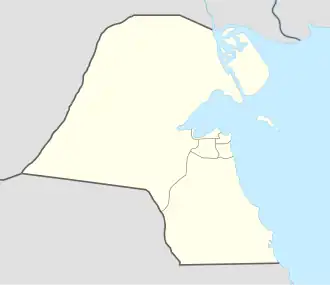 .svg.png) موقعیت در Kuwait 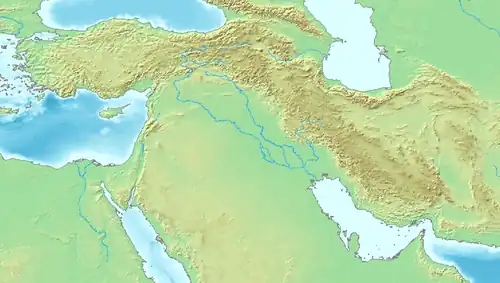 کاظمه (خاور نزدیک) | |
| مکان | کویت |
|---|---|
| منطقه | خلیج فارس |
| مختصات | ۲۹°۲۳′۳۴″شمالی ۴۷°۴۰′۱۷″شرقی / ۲۹٫۳۹۲۸۸۱°شمالی ۴۷٫۶۷۱۲۵۵°شرقی(تقریبی) |
کاظمه (انگلیسی: Kazma) یک منطقه در استان جهرا، کویت و در ۴۰ کیلومتری شمال شهر کویت است. این منطقه باستانی دارای تاریخی طولانی است که از دوران ساسانیان، جاهلیت و اوایل دوران اسلامی برای ایرانیان و اعراب شناخته شده است.
در سال ۶۳۳ میلادی، نبرد زنجیر بین امپراتوری ساسانی و خلافت راشدین در کویت در نزدیکی کاظمه درگرفت.[۱][۲] در آن زمان، کویت تحت کنترل امپراتوری ساسانی بود. نبرد زنجیر اولین نبرد خلافت راشدین بود که در آن ارتش مسلمانان به دنبال گسترش مرزهای خود بودند. در این نبرد مسلمان به پیروزی رسیدند و این منطقه و خلیج کویت در اختیار مسلمانان قرار گرفت.[۲][۳][۴][۵][۶][۷][۸] منابع عربی قرون وسطی شامل اشارات متعددی به خلیج کویت در اوایل دوره اسلامی هستند.[۷][۸][۹]
این شهر به عنوان یک بندر تجاری و محل استراحت زائران در مسیرشان از عراق به حجاز عمل میکرد. این شهر تحت کنترل پادشاهی الحیره در عراق بود[۷][۱۰][۱۱] و در اوایل دوره اسلامی، خلیج کویت به عنوان منطقهای حاصلخیز شناخته میشد.[۲][۱۲][۱۳]
همچنین کاظمه عمدتاً توقفگاهی برای کاروانهایی بود که از ایران و بینالنهرین در مسیر شبهجزیره عربستان میآمدند. فرزدق شاعر، در شهر کاظمه متولد شد. فرزدق بهعنوان یکی از بزرگترین شاعران کلاسیک عرب شناخته میشود.[۱۴]
کاظمه
نویسندگان و شاعران زیادی از کاظمه در آثار خود نام بردهاند که میتوان از امرؤالقیس، بحتری، فرزدق، مهیار دیلمی، شرفالدین بوصیری، بدیعالزمان همدانی و سید رضی نام برد.
جستارهای وابسته
منابع
- ↑ Kurt Ray (2003). A Historical Atlas of Kuwait. The Rosen Publishing Group, Inc. pp. 10. ISBN 978-0-8239-3981-7.
- 1 2 3 Dipiazza, Francesca Davis (2008). Kuwait in Pictures. pp. 20–21. ISBN 978-0-8225-6589-5.
- ↑ Brian Ulrich. "Kāzimah remembered: historical traditions of an early Islamic settlement by Kuwait Bay". British Museum, Seminar for Arabian Studies.
- ↑ Kennet, Derek. "Investigating an Early Islamic Landscape on Kuwait Bay: the archaeology of historical Kadhima". Durham University.
- ↑ Maguer-Gillon, Sterenn Le; Ulrich, Brian; Kennet, Derek. "Kadhima: Kuwait in the early centuries of Islam". academia.edu.
- ↑ "The Soft stone from Kadhima: evidence for trade connections and domestic activities". Kuwait NCCAL, Durham University.
- 1 2 3 Brian Ulrich (January 2013). "From Iraq to the Hijaz in the Early Islamic Period: History and Archaeology of the Basran Hajj Road and the Way(s) through Kuwait". The Hajj: Collected Essays, ed. Venetia Porter and Liana Saif.
- 1 2 Kennet, Derek; Blair, Andrew; Ulrich, Brian; Al-Duwīsh, Sultan M. (2011). "The Kadhima Project: investigating an Early Islamic settlement and landscape on Kuwait Bay". Proceedings of the Seminar for Arabian Studies. jstor.org. 41: 161–172. JSTOR 41622130.
- ↑ "Kāzimah". academia.edu.
- ↑ Proceedings of the Seminar for Arabian Studies Volumes 9–12. 1979. p. 53.
Although the town of al-Hira might have been too far northward to be considered a part of Eastern Arabia it is dealt with here as such because the kingdom of al- Hira controlled Kazima (Kuwait).
- ↑ "New field work at Kadhima (Kuwait) and the archaeology of the Early Islamic period in Eastern Arabia". SOAS. Archived from the original on 2018-11-25. Retrieved 2021-08-14.
- ↑ "Culture in rehabilitation: from competency to proficiency". Jeffrey L. Crabtree, Abdul Matin Royeen. 2006. p. 194.
During the early Islamic period, Kazima had become a very famous fertile area and served as a trading stations for travelers in the region.
- ↑ "Kadhima: an Early Islamic settlement and landscape on Kuwait Bay". Durham University. Archived from the original on 2013-10-19. Retrieved 2013-07-28.
- ↑ "Farazdaq center lauds Info. Min. care for youth". Kuwait News Agency. 22 May 2014.