تورانیها (اوستا)
| از سلسله مباحث |
| مَزدَیَسنا |
|---|
 |
|
درگاه مزدیسنا |
تورانیها (𐬙𐬏𐬌𐬭𐬌𐬌𐬀)، قومنام گروهی است که در اوستا آمده است، یعنی مجموعه متون مقدس مزدیسنا.[۱] در آن متون تورانیها از نزدیک با آریا یعنی ایرانیان اولیه تعامل دارند.[۲] هویت آنها نامعلوم است، اما گمان میرود که مردمان ایرانیتبار عشایر کوچنشین اوراسیایی از استپ اوراسیا باشند.[۳] مانند قومنام ایرانی که از ایرانشهر گرفته شده است، اصطلاح امروزی تورانی نیز یک پسینسازی از نام توران است. توران و ایران هر دو به ترتیب تشکیلاتی از قومیتهای ایرانی باستانی توریا و آریا هستند. توریا، یا انواع آن، در هیچ منبع معتبر تاریخی ذکر نشده است.[۴] با این حال، تورانیان در افسانههای بعدی ایران، به ویژه در شاهنامه به عنوان دشمنان ایرانیان ظاهر میشوند. در قرون وسطی، مردم ترک در توران شروع به سکونت کردند و این نام بیشتر بر آنها گفته میشد.[۵] جنبش مدرن پانناسیونالیسم، پانتورانیسم نیز در نهایت نام خود را از این اصطلاح گرفته است.[۶]
در اوستا
گاتاها
تصور میشود که توریاها در اوشتاوایتی گاتاها ذکر شده باشند. در آیهٔ ۴۶٫۱۲، خانواده فریای تور را از پیروان اشه و اهورامزدا نام میبرد. این چنین تفسیر میشود که او و خانواده اش از مردم توریا هستند. [۷] همچنین به نظر میرسد این متن دلالت بر این دارد که شخصیتهای برجسته دوره اولیه زرتشتی متعلق به خانواده او هستند.[۸] این برجستگی و نقش مثبت کلی تورانیان برخلاف نقش متضاد آنها در سایر بخشهای اوستای جوان و نیز عدم حضور آریاها در گاتاها است.
فروردین یشت
فروردینیشت طولانیترین یشت است و به بزرگداشت فروهر، یک مفهوم منحصربهفرد زرتشتی، مشابه و مرتبط با مفهوم روح (urvan) اختصاص دارد.[۹]
این یشت از دو قسمت تشکیل میشود. در بخش اول، خود فروشیها، اغلب به خاطر کمک در هنگام جنگ، مورد ستایش قرار میگیرند.[۱۰]
قسمت دوم یشت، فروشیهای افراد متعددی مورد احترام قرار گرفته است که نقش مهمی در جامعه زرتشتیان اولیه داشتند. از چند نفر از تورانیها به عنوان حامیان وفادار دین زرتشتی یاد میشود و Yt. 13.143 تقدیم به تمام مومنانی که در سرزمینهای آریا و تورانی زندگی میکنند.
هویت
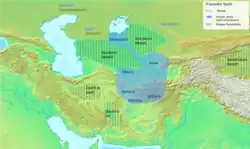
تورانیان در سوابق تاریخی هزاره اول قبل از میلاد گواهی نشدهاند.[۴] با وجود این، یک اجماع علمی وجود دارد که تورانیان مردمان ایرانیتبار عشایر کوچنشین اوراسیایی در استپ اوراسیا در شمال ایرانیان باستان زندگی میکردند.[۳][۱۱][۱۲]
این شناسایی مبتنی بر چند دلیل است. ابتدا در دوره اوستایی منطقه توران محل سکونت عشایر استپی ایرانی بود. علاوه بر این، تعدادی از نامهای شخصی تورانی مانند افراسیاب،[۱۳] آگراراتها،[۱۴] بیدرفش،[۱۵] و ارجاسپ،[۱۶] در اوستا آمده است. آنها توسط زبان شناسان مورد مطالعه قرار گرفتهاند و همه آنها ایرانی هستند.[۱۷] همچنین داستان پادشاه اساطیری فریدون که جهان را بین سه پسر خود تور (توریا)، سلم (شاهنامه) (سایریما) و ایرج (پسر فریدون) (آریا) تقسیم کرد، به رسمیت شناختن خویشاوندی باستانی ایرانیان و تورانیان تعبیر میشود.[۱۸] در نهایت، قومیت Sairimas به سرمتیها و فرهنگ سرمتی مرتبط شده است. [۱۹][۲۰]
جستارهای وابسته
پانویس
- ↑ Gnoli 1980, pp. 99–130.
- ↑ Yarshater 1983, p. 366.
- 1 2 Boyce 1996, p. 104: "In the Farvadin Yasht, 143-4, five divisions are recognized among the Iranians, namely the Airya (a term which the Avestan people appear to use of themselves), Tuirya, Sairima, Sainu and Dahi".
- ↑ Yarshater 2014, pp. 570-576: "The identification of the Turanians, a rival Iranian tribe, with the Turks, and Afrāsīāb with their king, is a late development, possibly made in the early 7th century, the Turks having first come into contact with the Iranians only in the 6th century.".
- ↑ Humbach 2000, "نام او به یاد تور، پدر تورانیان است".
- ↑ Humbach 1991, p. 12.
- ↑ Boyce 2012, : "The fravaši cult appears to represent the fusing of an ancient general one of the souls (urvan) of the dead with a particular one of those of warrior-heroes, the fravašis proper".
- ↑ Malandra 2018, p. 35: "Since our Yašt is divided into two basic parts, the one being sst. 1-95 dealing in a more general way with the Frawṛtis, the other being a long series of invocations of the Frawṛtis of individuals".
- ↑ Diakonoff 1999, p. 100: "Turan was one of the nomadic Iranian tribes mentioned in the Avesta. However, in Firdousi's poem, and in the later Iranian tradition generally, the term Turan is perceived as denoting 'lands inhabited by Turkic speaking tribes".
- ↑ Daniel 2012, p. 52: "They also included tales of the Kayanian kings, culminating in the reign of Kavi Vishtaspa (Goshtasp) and the warfare between the Iranians and their natural enemies, the Turanians (probably nomadic peoples to the north of Iran, later identified with the Turks).".
- ↑ Yarshater 2014.
- ↑ Khaleghi-Motlagh 2011.
- ↑ Tafażżolī 1989.
- ↑ Tafażżolī 2011.
- ↑ Mayrhofer 1979.
- ↑ Kuzmina 2007, p. 174 "In Iranian texts, the idea about the kinship of all Iranian-speaking languages is reflected in a legend of how the ancestor of the Iranians divided the land between three sons: Sairima, the forefather of Sauromatians (who dwelt in the historic period from the Don to the Urals), Tur, from whom the Turians originated (the northern part of Central Asia was called Turan), and the younger son Iraj, the ancestor of the Iranian population (Christensen 1934).".
- ↑ Bailey 1985, p. 65: "In the Scythian field there are two names to be mentioned. The Sarmatai are in the Avesta Sairima-, and there are also the Sauromatai. The etyma of these two names are somewhat complex. The Sarmatai survived in the Zor. Pahl. slm *salm (the -l- is marked for -l-, not -r-, Bundashin TD 2, 106.15).".
- ↑ Bailey 1959, p. 109: "A people called by the ethnic name Iran. daha-, now found in Old Persian daha placed before saka in an inscription of Xerxes (Persopolis h 26) has long been known. The Akkadian form is da-a-an for *daha-. The Avestan *daha- attested in the fem. dahi;- is an epithet of lands. Yasht 13.143-4 has the list airyanam … tūiryanam … sairimanam … saininam … dahinam … From this we get: Arya-, Turiya-, Sarima-, Saini-, Daha-, as names of peoples known to the early litany of Yasht 13.".
منابع
- Bailey, Harold Walter (1959). "Iranian Arya and Daha". Transactions of the Philological Society. 58: 71–115. doi:10.1111/j.1467-968X.1959.tb00300.x.
- Bailey, Harold Walter (1985). Khotanese Text. Cambridge University Press. ISBN 978-0-521-25779-4.
- Bailey, Harold W. (1987). "Arya". Encyclopædia Iranica. Vol. 2. Iranica Foundation.
- Boyce, Mary (1996). A History Of Zoroastrianism: The Early Period. Brill.
- Boyce, Mary (2012). "Frawardin Yašt". Encyclopædia Iranica. Vol. X. Iranica Foundation. pp. 199–201.
- Daniel, Elton L. (2012). The History of Iran. ABC-CLIO. ISBN 978-0-313-37509-5.
- Darmesteter, James (1882). The Zend-Avesta Part 2. Oxford at the Clarendon Press.
- Diakonoff, Igor M. (1999). The Paths of History. Cambridge University Press. ISBN 978-0-521-64348-1.
- Gnoli, Gherardo (1980). Zoroaster's Time and Homeland: A Study on the Origins of Mazdeism and Related Problems. Istituto universitario orientale.
- Great Britain Naval Intelligence Division (1920). A Manual on the Turanians and Pan-Turanianism (PDF). London: Geographical Section of the Naval Intelligence Division, Naval Staff, Admiralty. ISBN 978-1-332-15449-4.
- Hambartsumian, Arthur (2009). "The Sacred Aryan Forest in the Avestan and Pahlavi Texts". Iran and the Caucasus. 13 (1): 125–130. JSTOR 25597397.
- Hintze, Almut (2014). "Yašts". Encyclopædia Iranica. Iranica Foundation.
- Humbach, Helmut (2000). "Gathas i Texts". Encyclopædia Iranica. Vol. X. Iranica Foundation. pp. 321–327.
- Humbach, Helmut (1991). The Gathas of Zarathustra and the Other Old Avestan Texts. Carl Winter Universitätsverlag.
- Kuzmina, Elena E. (2007). J.P. Mallory (ed.). The Origin of the Indo-Iranians. Brill. ISBN 978-90-474-2071-2.
- Khaleghi-Motlagh, Djalal (2011). "AḠRĒRAṮ". Encyclopædia Iranica. Vol. I. Iranica Foundation.
- Malandra, William W. (2018). The Frawardin Yašt: Introduction, Translation, Text, Commentary, Glossary. Ancient Iran. Vol. 8. Brill Academic Pub. ISBN 978-1-949743-03-6.
- Mayrhofer, Manfred (1979). Iranisches Personennamenbuch I: Die Altiranischen Namen. Österreichische Akademie der Wissenschaften. ISBN 978-3-7001-0300-4.
- Nijssen, Daan (2024). "Kayanian history - How the Persians reinvented their past". Ancient History Magazine.
- Schwartz, Martin (1985). "The Old Eastern Iranian World View According to the Avesta". In Gershevitch, I. (ed.). The Cambridge History of Iran, Volume 2: The Median and Achaemenian Periods. Cambridge University Press. pp. 640–663. doi:10.1017/CHOL9780521200912.014. ISBN 978-1-139-05493-5.
- Tafażżolī, Aḥmad (1989). "Bīderafš". Encyclopædia Iranica. Vol. IV. Iranica Foundation.
- Tafażżolī, Aḥmad (2011). "Arjasp". Encyclopædia Iranica. Vol. II. Iranica Foundation.
- Yarshater, Ehsan (1983). "Part 3: Iranian Historical Tradition". In Bailey, Harold W. (ed.). The Cambridge History of Iran. Vol. 3 (1). Cambridge: Cambridge University Press.
- Yarshater, Ehsan (2014). "AFRĀSĪĀB". Encyclopædia Iranica. Vol. I. Iranica Foundation.