ردپای بومشناختی

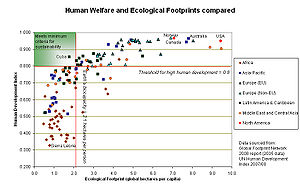
ردپای بومشناختی (به انگلیسی: Ecological footprint)، یا ردپای زیستمحیطی روشی است که توسط شبکه ردپای جهانی برای اندازهگیری تقاضای انسانی برای سرمایه طبیعی، یعنی مقدار طبیعتی که برای حمایت از مردم یا اقتصاد لازم است، ترویج میشود.[۱][۲][۳] این تقاضا را از طریق یک سیستم حسابداری زیستمحیطی دنبال میکند. این گزارشها منطقه تولید زیستشناختی را که مردم برای مصرف خود استفاده میکنند با منطقه تولید زیستشناختی موجود در یک منطقه یا جهان مقایسه میکند (گنجایش زیستی، منطقه تولیدی که میتواند آنچه مردم از طبیعت میخواهند را بازسازی کند). بهطور چکیده، معیاری برای سنجش تأثیر انسان بر محیط زیست است.
ردپای اکولوژیکی در سطح فردی
در یک مطالعه در سال ۲۰۱۲ در مورد مصرفکنندگانی که «سبز» در مقابل «قهوهای» عمل میکنند یعنی محلی که انتظار میرود افراد سبز «تأثیر اکولوژیکی بهطور قابلتوجهی کمتری نسبت به مصرفکنندگان «قهوهای» داشته باشند»، این تحقیق هیچ تفاوت معناداری بین ردپای کربن مصرفکنندگان سبز و قهوهای پیدا نکرده است.[۴][۵] یک مطالعه در سال ۲۰۱۳ نیز همین نتیجه را داشته است.[۶][۷]


جستارهای وابسته
منابع
- ↑ "Ecological Footprint: Overview". footprintnetwork.org. Global Footprint Network. Retrieved 16 April 2017.
- ↑ Wackernagel, Mathis; Lin, David; Evans, Mikel; Hanscom, Laurel; Raven, Peter (2019). "Defying the Footprint Oracle: Implications of Country Resource Trends". Sustainability (in English). 11 (7): 2164. doi:10.3390/su11072164.
- ↑ Yasin, Iftikhar; Ahmad, Nawaz; Chaudhary, M. Aslam (2019-07-22). "Catechizing the Environmental-Impression of Urbanization, Financial Development, and Political Institutions: A Circumstance of Ecological Footprints in 110 Developed and Less-Developed Countries". Social Indicators Research (in English). 147 (2): 621–649. doi:10.1007/s11205-019-02163-3. ISSN 0303-8300.
- ↑ Alden Wicker (1 March 2017). "Conscious consumerism is a lie. Here's a better way to help save the world". Quartz. Retrieved 13 February 2018.
A 2012 study compared footprints of "green" consumers who try to make eco-friendly choices to the footprints of regular consumers. And they found no meaningful difference between the two.
- ↑ Csutora, M. "The ecological footprint of green and brown consumers. Introducing the behaviour-impact-gap (BIG) problem" (PDF). European Round Table on Sustainable Consumption and Production (ERSCP) 2012. 15th European Roundtable on Sustainable Consumption and Production. Archived from the original (PDF) on 19 October 2019. Retrieved 13 February 2018.
The research found no significant difference between the carbon footprints of green and brown consumers suggesting that individual environmental behaviour does not always modify consumption patterns significantly.
- ↑ David Roberts (1 December 2017). "Wealthier people produce more carbon pollution — even the "green" ones". Vox. Retrieved 13 February 2018.
Environmental identity will lead to some relatively low-impact (high-signaling) pro-environmental behaviors, but it rarely drives serious reductions in the biggest sources of lifestyle emissions. Environmental self-identification rises with income, but so do emissions. (A 2012 study and a 2013 study, both based on a survey in Hungary, found roughly the same thing.)
- ↑ Tabi, Andrea (2013). "Does pro-environmental behaviour affect carbon emissions?". Energy Policy. 63: 972–981. Bibcode:2013EnPol..63..972T. doi:10.1016/j.enpol.2013.08.049.
no significant difference is found between the impacts of environmentally aware and environmentally unaware consumers, i.e. both 'Brown' and 'Supergreen' consumers consume approximately the same amount of energy and produce approximately the same amount of carbon emissions
- ↑ "Sustainable Development: Sustainable development is successful only when it improves citizens' well-being without degrading the environment". footprintnetwork.org. Global Footprint Network.
پیوند به بیرون
- WWF "Living Planet Report", a biannual calculation of national and global footprints
- Green Score City Index, a quarterly calculation of city footprints in Canada
- US Environmental Footprint Factsheet
- Interview with Bill Rees
| گرایشها |  | |
|---|---|---|
| مرتبط |
| |
| کاربردی |
| |
| ||


| Practices |
|
|---|---|
| Religious and spiritual |
|
| Secular movements |
|
| Notable writers |
|
| Modern-day adherents |
|
| Media |
|
| Related topics |
|

- اقتصاد بومشناختی
- بومشناسی انسان
- نشانگرهای اقتصادی
- کمینهسازی پسماند
- واژگان زیستمحیطی
- مفاهیم علوم اجتماعی محیط زیست
- پیامد انسان بر محیط زیست
- شاخصها و سنجههای پایداری