لوبوپودینها
| لوبوپودینها Fossil range: Cambrian Series ۲ تا Gzhelian[۱] ۰ ۵۲۱ ۲۹۹ |
|---|
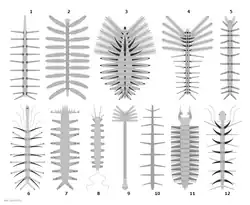 Reconstruction of various lobopodians. 1: Microdictyon sinicum, 2: Diania cactiformis, 3: Collinsovermis monstruosus, 4: Luolishania longicruris, 5: Onychodictyon ferox, 6: Hallucigenia sparsa, 7: Aysheaia pedunculata, 8: Antennacanthopodia gracilis, 9: Facivermis yunnanicus, 10: Paucipodia inermis, 11: Jianshanopodia decora, 12: Hallucigenia fortis |
| آرایهشناسی (زیستشناسی) |
|
|
| Included groups |
|
| شاخهبندی included but traditionally excluded groups |
|
| مترادف (زیستشناسی) |
|
لوبوپودینها اعضای گروه غیررسمی لوبوپودیا [۳] ( Lobopodia،از یونانی باستان λοβός [lobós] «lobe», and πόδα [póda] «foot» هستند )، یا شاخه رسمی Lobopoda هستند که در سال 1998 توسط کاوالیر-اسمیت پایهگذاری شد. [۴] آنها پانآرتروپودهایی با پاهایی کوتاه و ستبر موسوم به لوبوپودها هستند، [۵] اصطلاحی که ممکن است به عنوان نام رایج این گروه نیز استفاده شود. [۶] [۷] در حالی که تعریف لوبوپودینها ممکن است بین منابع مختلف متفاوت باشد، [۸] معمولاً به گروهی از پانآرتروپودهای فسیلی کرممانند نرمپیکر، دریایی (و یا ساکن آب شیرین) مانند Aysheaia و Hallucigenia اشاره دارد. با این حال، جنسهای دیگری مانند Kerygmachela و Pambdelurion (که ویژگیهایی مشابه سایر گروهها دارند) اغلب به عنوان "لوبوپودینهای آبششدار" شناخته میشوند. [۹] [۵] [۱۰]
قدیمیترین فسیلهای تقریباً کاملِ لوبوپودینها به کامبرین زیرین برمیگردند؛ برخی از آنها همچنین از لاگرشتاتنهای اوردویسین ، سیلورین و کربنیفر شناخته شدهاند. [۱۱] [۱۲] [۱۳] برخی دارای چنگالها، صفحات یا خارهای سفتشدهای هستند که معمولاً به صورت میکروفسیلهای کربنی یا معدنی در لایههای کامبرین حفظ شدهاند. [۱۴] [۱۵] این گروهبندی پارافیلتیک در نظر گرفته میشود، زیرا تصور میشود که سه گروه زندهی پانآرتروپادها ( آرتروپودا ، تاردیگرادا و اونیکوفورا ) از اجداد لوبوپودین تکامل یافتهاند.
تعاریف

مفهوم لوبوپودیا از نویسندهای به نویسنده دیگر متفاوت است. عمومیترین معنای آن به مجموعهای از گونههای عمدتاً کرممانند پانآرتروپاد کامبرین که دارای لوبوپود هستند؛ - به عنوان مثال، Aysheaia، Hallucigenia و Xenusion - اشاره دارد که به طور سنتی به عنوان "Xenusians" یا "Xenusiids" (رده Xenusia) خطاب میشدند. برخی از جنسهای داینوکاریدیدنها، مانند Opabinia، Pambdelurion و Kerygmachela، نیز ممکن است به عنوان لوبوپودین در نظر گرفته شوند، که گاهی به طور خاصتر به عنوان "لوبوپودینهای آبششدار" یا "لوبوپودهای آبششدار" نامیده میشوند. این کاربرد سنتی و غیررسمی از "لوبوپودیا" به عنوان یک گرید تکاملی در نظر گرفته میشود، که فقط شامل پانآرتروپادهای منقرض شده در نزدیکی پایه تاج پانآرتروپاد میشود. پانآرتروپودهای تاجی شامل سه شاخه پانآرتروپود زنده - اونیکوفورا (کرمهای مخملی)، تاردیگرادا (خرسهای آبی) و آرتروپودا (بندپایان) - و همچنین جدیدترین جد مشترک آنها و تمام فرزندان آن است. بنابراین، در این کاربرد، لوبوپودیا از پانآرتروپودهای پایهای مختلفی تشکیل شده است. این با "A" در تصویر سمت راست مطابقت دارد.
یک تعریف جایگزین و گستردهتر از لوبوپودیا، شامل اونیکوفورا و تاردیگرادا، [۱۷] [۱۸] [۱۹] دو شاخهی زندهی پانآرتروپاد که هنوز دارای اندامهای لوبوپود هستند، نیز میشود. این تعریف، که با "C" مطابقت دارد، یک تعریف ریختشناسی است که به شباهت سطحی زائدهها ("لوبوپودها") بستگی دارد. بنابراین، پارافیلتیک است و یوآرتروپودها را که از نوادگان برخی از لوبوپودینها هستند، بر اساس ریختشناسی اندامهای بسیار متفاوتشان، مستثنی میکند. [۲۰] "لوبوپودیا" همچنین برای اشاره به یک کلاد خواهر پیشنهادی برای آرتروپودا، متشکل از اونیکوفورا و تاردیگرادای موجود (و منقرضنشده)، و همچنین جدیدترین جد مشترک آنها و تمام نوادگان آن، استفاده شده است. این تعریف، اگر واقعاً معتبر باشد (یعنی اگر تاردیگرادا و اونیکوفورا به یکدیگر نزدیکتر از هر دو به بندپایان باشند)، لوبوپودیا را به یک تاکسون تکنیا تبدیل میکند، اما تمام تاکسونهای یوآرتروپود لاین را که بهطور سنتی لوبوپودیا در نظر گرفته میشوند، حذف میکند. با این حال، اعتبار آن نامشخص است، زیرا تعدادی فرضیه در مورد فیلوژنی داخلی پانآرتروپودا وجود دارد. [۲۱] گستردهترین تعریف، لوبوپودیا را به عنوان یک سوپرشاخهی تکنیا معادل در محدودهی پانآرتروپودا در نظر میگیرد. با این تعریف، که در تصویر با "D" نشان داده شده است، لوبوپودیا دیگر به عنوان یک گرید تکاملی در نظر گرفته نمیشود، بلکه به عنوان یک کلاد در نظر گرفته میشود که نه تنها شامل اشکال اولیه و ظاهراً "لوبوپودین" است، بلکه شامل تمام فرزندان آنها، از جمله تمام پانآرتروپودهای زنده یعنی بندپایان، کرمهای مخملی و خرسهای آبی نیز میشود. [۲۲] [۲۳]
از نظر تاریخی، لوبوپودیا گاهی شامل پنتاستومیدا ، [۲۴] گروهی از پانآرتروپودهای انگلی است که به طور سنتی به عنوان یک شاخه منحصر به فرد تصور میشدند، [۲۵] [۲۶] اما با مطالعات فیلوژنومیک و آناتومیکی بعدی مشخص شد که یک رده بسیار تخصصی از سخت پوستان هستند. [۲۷] [۲۸] [۲۹] [۳۰] [۳۱]
گونههای نماینده
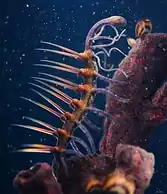
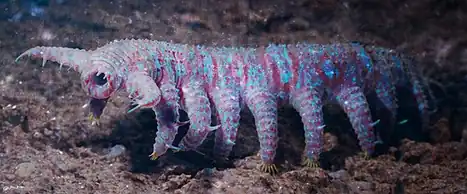

جنسهای شناختهشدهتر شامل Aysheaia ، که در شیل برگس کانادا کشف شد، و Hallucigenia ، که هم از شیل چنجیانگ مائوتیانشان و هم از شیل برگس شناخته شده است، میشوند. Aysheaia pedunculata ریختشناسیای دارد که ظاهراً برای لوبوپودینها، ریختشناسی پایهشان محسوب میشود [۳۲] - به عنوان مثال، یک کوتیکول حلقهدار قابل توجه، دهانه انتهایی، زائدههای نزدیک به پیشانی تخصصی و لوبوپودهای کوتاه با چنگالهای انتهایی. Hallucigenia sparsa به خاطر داشتن تاریخچه پیچیدهای از تفسیر مشهور است - در ابتدا با پاهای بلند و چوبمانند و برآمدگیهای پشتی گوشتی مرموز بازسازی شده بود، و مدتها به عنوان نمونهای برجسته از روشی که طبیعت در طول کامبرین با متنوعترین و عجیبترین طرحهای بدن آزمایش میکرد، در نظر گرفته میشد. [۳۳] با این حال، اکتشافات بیشتر نشان داد که این بازسازی، حیوان را وارونه قرار داده است: تفسیر «پاها» به عنوان خارهای پشتی، روشن کرد که برآمدگیهای گوشتی «پشتی» در واقع لوبوپودهای کشیده بودهاند. بازسازیهای جدیدتر حتی جای انتهای جلو و عقب حیوان را عوض کردند: مشخص شد که توده پیازیشکلی که قبلاً تصور میشد سر باشد، در واقع محتویات روده است که از مقعد خارج شدند. [۳۴] [۳۵]
میکرودیکتیون (Microdictyon) یکی دیگر از جنسهای کاریزماتیک و همچنین خاص از لوبوپودینها است که شبیه هالوسیژنیا (Hallucigenia ) است، اما به جای خار، جفت صفحات شبکهای مانند داشت که اغلب به صورت جدا از هم یافت میشوند و به عنوان نمونهای از فسیلهای کوچک صدفی (SSF) شناخته میشوند. زنوژیون (Xenusion) قدیمیترین سابقه فسیلی را در میان لوبوپودینهای توصیف شده دارد که ممکن است به مرحله کامبرین 2 بازگردد. [۳۶] [۳۷] لوولیشانیا (Luolishania) نمونهای نمادین از لوبوپودینها با چندین جفت زائده تخصصی است. [۳۸] لوبوپودینهای آبششدار Kerygmachela و Pambdelurion رابطه بین لوبوپودینها و بندپایان را روشن میکنند، زیرا آنها هم دارای قرابتهای لوبوپودینی و هم ویژگیهای مرتبط با ساقهگروه بندپایان هستند. [۳۹] [۴۰]
ریختشناسی
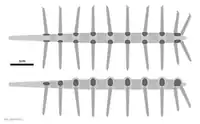
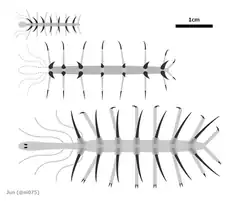 حداکثر اندازه سه گونه از هالوسیژنیا (از بالا، H. fortis ، H. hongmeia و H. sparsa ) در یک مقیاس.
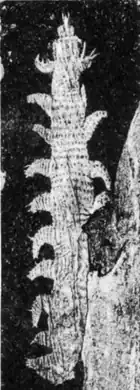
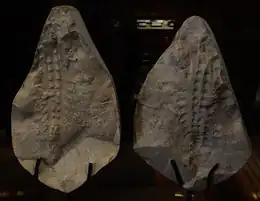 فسیلهای زنو'ژیون ، یک لوبوپودین که ممکن است تا ۲۰ سانت هم رشد میکرده است.
بیشتر لوبوپودینها تنها چند سانتیمتر طول داشتند، در حالی که برخی از جنسها تا بیش از ۲۰ سانتیمتر رشد میکردند. [۴۱] بدن آنها حلقوی است، اگرچه وجود حلقهها ممکن است در موقعیت قرارگیری یا گونهها متفاوت باشد و گاهی به دلیل فاصله نزدیک و برجستگی کم روی مواد فسیلی، تشخیص آن دشوار است. [۴۲] بدن و ضمائم در مقطع عرضی دایرهای هستند. [۴۲]
سر


به دلیل حفظ معمولاً ضعیف، بازسازیهای دقیق ناحیه سر فقط برای تعداد انگشتشماری از گونههای لوبوپودین در دسترس است. سر یک لوبوپودین کم و بیش پیازی شکل است و گاهی دارای یک جفت زائده پیشچشمی، احتمالاً پیشمغزی است - به عنوان مثال، شاخکهای اولیه یا زائدههای پیشانی توسعهیافته، که از لوبوپودهای تنه مجزا هستند (به استثنای Antennacanthopodia که به جای یک جفت زائده سر، دو جفت زائده سر دارند). قطعات دهانی ممکن است از ردیفهایی از دندان یا یک خرطوم مخروطی تشکیل شده باشند.چشمها ممکن است توسط یک اوسلوس واحد یا توسط جفت اوسلوسهای ساده زیادی نشان داده شوند، همانطور که در لولیشانیا، اوواتیوورمیس، اونیکودیکتیون، هالوسیژنیا، فاسیورمیس و با قطعیت کمتر نیز Aysheaia نشان داده شده است. با این حال، در لوبوپودینهای آبششدار مانند Kerygmachela، چشمها تکههای بازتابنده نسبتاً پیچیدهای هستند که ممکن است ماهیت مرکبی داشته باشند.
تنه و لوبوپودها

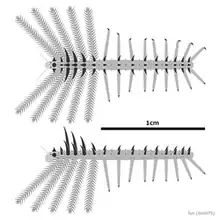
تنه کشیده و از بخشهای بدنی متعددی ( سومیتها ) تشکیل شده است که هر کدام دارای یک جفت پا به نام لوبوپود [۴۳] یا اندامهای لوبوپودوس است. [۴۴] مرزهای سگمنتال به اندازه مرزهای بندپایان از نظر ظاهری قابل توجه نیستند، اگرچه در برخی گونهها با حلقهبندیهای ناهمگون (یعنی تناوب تراکم حلقهبندی مربوط به موقعیت مرزهای سگمنتال) نشان داده میشوند. [۴۵] [۴۶] [۴۷] بخشهای تنه ممکن است دارای ساختارهای خارجی دیگری مانند گرهها (مثلاً هادراناکس ، [۴۸] کریگماچلا [۴۴] )، پاپیلاها (مثلاً اونیکودیکتیون [۴۹] )، اسکلریتهای خار/صفحه مانند (مثلاً لوبوپودینهای زرهدار [۴۳] ) یا بالچههای جانبی (مثلاً لوبوپودینهای آبششدار [۴۴] [۵۰] ) باشند. یکی از اعضای لوبوپودیا Palaeocampa ، دارای خارهایی است که به نظر میرسد سمی بودهاند، همانطور که از ترشحات حفظ شده در نوک آنها مشخص است، و FTIR (آنالیز طیفسنجی تبدیل فوریه) نشان میدهد که ترشحات احتمالاً حاوی آلدئیدها بودهاند. تنه ممکن است به یک جفت Lobopod (مثلاً Aysheaia ، Hallucigenia sparsa ) [۴۹] یا یک زائده دم مانند (مثلاً Paucipodia ، Siberion ، Jianshanopodia ) ختم شود. [۴۵] [۵۱] [۵۲] [۵۳]
لوبوپودها (پاها) انعطافپذیر و مخروطی شکل هستند و از بدن به سمت نوک باریک میشوند یا ممکن است [۵۴] [۵۵] که باریک نشوند [۵۶] [۵۷] [۵۸] . چنگالها، در صورت وجود، ساختارهای سختشدهای با شکلی شبیه قلاب یا خار با انحنای ملایم هستند. [۵۹] [۶۰] [۶۱] [۵۴] [۵۵] لوبوپودهای دارای چنگال معمولاً دو چنگال دارند، اما چنگالهای تکی نیز شناخته شدهاند (مثلاً لوبوپودهای خلفی لوولیشانیدها [۶۱] [۶۲] [۶۳] )، همچنین بسته به ارتباط سگمنتال یا طبقهبندی آنها، بیش از دو چنگال وجود دارد (مثلاً سه چنگال در تریتونیکوس ، [۶۴] هفت چنگال در آیشیا [۶۵] ). [۵۴] در برخی از جنسها، لوبوپودها ساختارهای اضافی مانند خار (مثلاً دیانیا [۵۷] )، برآمدگیهای گوشتی (مثلاً اونیکودیکتیون [۶۶] ) یا برآمدگیهای کوچک (مثلاً جیانشانوپودیا [۶۷] ) دارند. هیچ نشانهای از بندپاییشدن (ایجاد اسکلت خارجی سختشده و تقسیم قطعهای روی زائدههای پانآرتروپاد) در اعضای شناختهشدهی لوبوپودینها، حتی آنهایی که متعلق به ساقهگروه بندپایان هستند (مثلاً لوبوپودینهای آبششدار و سیبریدها) وجود ندارد، و مورد مشکوک بندپاییشدن روی اندامهای دیانیا [۶۸] یک تفسیر نادرست تلقی میشود. [۵۷] [۵۸]
تمایز (تاگموسیس) بین سومیتهای تنه به ندرت رخ میدهد، به جز در هالوسیژنییدها و لوولیشانییدها، که در آنها جفتهای متعددی از لوبوپودهای قدامی آنها در مقایسه با لوبوپودهای خلفی خود، به طور قابل توجهی باریک (هالوسیژنییدها) یا ستوز (لوولیشانییدها) هستند. [۶۹] [۷۰] [۷۱] [۷۲] [۷۳]
ساختار درونی
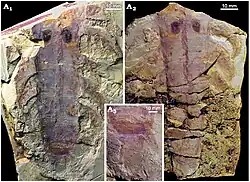
رودهی لوبوپودینها اغلب صاف و بدون تمایز است [۷۴] و گاهی در فسیلها به صورت سه بعدی حفظ شده است. در برخی نمونهها، روده پر از رسوب است. [۷۵] روده شامل یک لوله مرکزی است که تمام طول تنه لوبوپودین را اشغال میکند، [۷۶] که عرض آن تغییر زیادی نمیکند - حداقل نه به طور سیستماتیک. با این حال، در برخی گروهها، به ویژه لوبوپودینهای آبششدار و سیبریدها، روده توسط جفتهایی از دایورتیکولهای رودهای (غدد گوارشی) کلیوی شکل که به صورت سریالی تکرار میشوند، احاطه شده است. [۷۶] [۷۷] [۷۴] در برخی نمونهها، بخشهایی از رودهی لوبوپودینها را میتوان به صورت سه بعدی حفظ کرد. این نمیتواند ناشی از فسفاته شدن باشد، که معمولاً مسئول حفظ رودهی سه بعدی است، [۷۸] زیرا محتوای فسفات رودهها کمتر از 1٪ است؛ محتویات شامل کوارتز و مسکویت است. [۷۵] رودهی نمونه پاوسیپودیا از نظر عرض متغیر است و در مرکز بدن بیشترین عرض را دارد. موقعیت آن در حفره بدن فقط به صورت شل ثابت است، بنابراین انعطافپذیری امکانپذیر است.
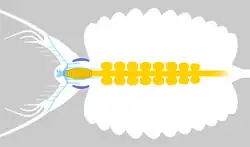
به دلیل شواهد فسیلی پراکنده و عمدتاً مبهم، اطلاعات زیادی در مورد آناتومی عصبی لوبوپودیاها وجود ندارد. آثار احتمالی سیستم عصبی در پاوسیپودیا ، مگادیکتیون و آنتناکانتوپودیا یافت شده است. [۷۹] [۸۰] [۸۱] اولین و تنها شواهد تأیید شده از ساختارهای عصبی لوبوپودین از لوبوپودین آبششی Kerygmachela در پژوهش پارک و همکاران در سال 2018 به دست آمده است - این نشان دهنده مغزی است که فقط از یک پروتوسربروم ( گانگلیون مغزی جلویی پانآرترودها ) تشکیل شده است که مستقیماً به اعصاب چشمها و زائدههای جلویی متصل است، که نشان دهنده اجدادی بودن پروتوسربرال سر لوبوپودینها و همچنین کل پانآرتروپودا است. [۸۲]
در برخی از اکدیسوزوئنهای موجود مانند پریاپولیدها و اونیکوفورانها ، یک لایه از بیرونیترین ماهیچههای حلقوی و یک لایه از درونیترین ماهیچههای طولی وجود دارد. اونیکوفورانها همچنین یک لایه سوم، میانی، از ماهیچههای مورب در هم تنیده دارند. ساختار عضلانی پامبدلوریونِ آبششدار، آناتومی مشابهی را نشان میدهد، [۸۳] اما ساختار عضلانی تریتونیکوسِ لوبوپودین، الگوی متضادی را نشان میدهد: بیرونیترین ماهیچهها طولی و درونیترین لایه از ماهیچههای حلقوی تشکیل شده است. [۸۴]
گروهها
بر اساس ریختشناسی خارجی، لوبوپودینها ممکن است در دستههای مختلفی قرار بگیرند - برای مثال، گونههای کرممانند عمومی به عنوان "xenusiid" یا "xenusian"؛ زنوژید با اسکلریت به عنوان "لوبوپودینهای زرهدار"؛ و گونههایی با هر دو زائدههای جلویی قوی و بالهای جانبی به عنوان "لوبوپودینهای آبششدار". برخی از آنها در ابتدا تحت یک مفهوم طبقهبندی تعریف شدند (مثلاً رده Xenusia)، اما هیچکدام از آنها در مطالعات بیشتر به طور کلی به عنوان تکتبار پذیرفته نشدند. [۸۵] [۸۶] [۸۷]
لوبوپودینهای زرهدار
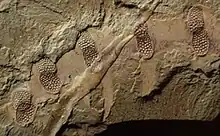
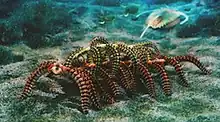
لوبوپودینهای زرهدار به لوبوپودینهای زنوژید اشاره داشتند که اسکلریتهای مکرری مانند ستون فقرات یا صفحات روی تنه خود (مثل هالوسیژنیا ، میکرودیکتیون ، لوولیشانیا ) یا لوبوپودهایشان (مثل دیانیا ) داشتند. در مقابل، لوبوپودینهای بدون اسکلریت ممکن است به عنوان "لوبوپودینهای بدون زره" شناخته شوند. [۸۸] [۸۹] عملکرد اسکلریتها به عنوان زره محافظ و/یا نقاط اتصال ماهیچه تفسیر شد. [۹۰] [۹۱] [۹۲] در برخی موارد، فقط اسکلریتهای جدا شده حیوان حفظ شده بودند که به عنوان جزئی از فسیلهای کوچک صدفدار (SSF) نشان داده میشدند. [۹۰] [۹۳] در برخی مطالعات قبلی، لوبوپودینهای زرهدار به عنوان مرتبط با اونیکوفوران پیشنهاد شده بودند و حتی ممکن است یک کلاد را نشان دهند، [۹۱] اما موقعیتهای فیلوژنتیکی آنها در مطالعات بعدی بحث برانگیز است.
لوبوپودینهای آبششدار
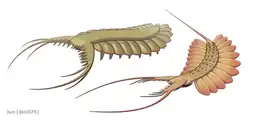
داینوکاریدیدنهایی که دارای قرابتهای لوبوپودینی هستند (به دلیل ویژگیهای مشترکی مانند حلقویبودن و لوبوپود داشتن) به عنوان "لوبوپودینهای آبششدار" [۹۴] [۹۵] [۹۶] یا "لوبوپودهای آبششدار" شناخته میشوند. [۹۷] این گونهها در هر بند تنه یک جفت بالچه دارند، اما هیچ نشانهای از بندپاییشدن ندارند، برخلاف داینوکاریدیدنهای مشتقشدهتر مانند رادیودونتها که دارای زائدههای جلویی قوی و اسکلروتیزه هستند. لوبوپودینهای آبششدار حداقل چهار جنس را پوشش میدهند: Pambdelurion ، Kerygmachela ، Utahnax و Mobulavermis . [۹۸] [۹۹] اوپابینیا نیز ممکن است به معنای وسیعتر در این دسته قرار گیرد، [۹۴] [۱۰۰] هرچند که وجود لوبوپودها در این جنس به طور قطعی اثبات نشده است. [۱۰۱] آمنیدنس ، جنسی شناخته شده فقط از قطعات دهانی شبیه به Pambdelurion و قسمتهای انتهایی زائدههای جلویی، ممکن است یک لوبوپودین آبششدار باشد. [۹۵] [۱۰۲] بالچههای بدن ممکن است هم به عنوان زائدههای شنا و هم به عنوان آبشش عمل میکردند، [۹۷] و احتمالاً با بالچههای پشتی رادیودونتها و بندپایان همساخت هستند. [۱۰۰] [۱۰۰] اینکه آیا این جنسها واقعاً لوبوپودین بودهاند یا خیر، هنوز توسط برخی مورد بحث است. [۱۰۳] با این حال، آنها به طور گسترده به عنوان بندپایان گروه ساقهای که دقیقا پایهای تر از رادیودونتها قرار دارند، پذیرفته شدهاند. [۹۴] [۱۰۴] [۱۰۵] [۱۰۶]
سیبریون و گونههای مشابه

سیبریون ، مگادیکتیون و جیانشانوپودیا ممکن است در برخی منابع به عنوان سیبریدها (راسته سیبریدا )، [۱۰۷] جیانشانوپودیانها [۱۰۸] یا "لوبوپودینهای غولپیکر" [۱۰۹] گروهبندی شوند. آنها عموماً بزرگ هستند - طول بدن آنها از ۷ تا ۲۲ سانتیمتر (۲٫۸ تا ۸٫۷ اینچ) متغیر است. [۱۰۷] [۱۱۰] - لوبوپودینهای زنوژید با تنه پهن، لوبوپودهای تنه محکم بدون شواهدی از چنگال، و به ویژه یک جفت زائده جلویی قوی. [۱۱۱] به استثنای احتمالی سیبریون ، [۱۰۷] [۱۰۸] آنها همچنین دارای غدد گوارشی مانند لوبوپودینهای آبششدار و یوآرتروپود پایه هستند. [۱۱۲] [۱۱۰] [۱۱۱] [۱۱۳] آناتومی آنها نشان دهنده اشکال انتقالی بین زنوژیدهای معمولی و لوبوپودینهای آبششدار است، [۱۰۷] در نهایت آنها را در پایینترین موقعیت ساقهگروه بندپایان قرار میدهد. [۱۱۲] [۱۱۰] [۱۱۱] [۱۱۴]
دیرینهاقلیمشناسی
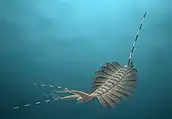
احتمالاً لوبوپودینها طیف وسیعی از کنامها را اشغال میکردند. [۱۱۵] اگرچه بیشتر آنها دارای زائدههای تمایز نیافته و روده مستقیم بودند که نشان دهنده یک سبک زندگی ساده تغذیه از رسوبات است، [۱۱۵] غدد گوارشی پیچیده و اندازه بزرگ لوبوپودینهای آبششدار و سیبریدها به آنها اجازه میداد تا مواد غذایی بزرگتری مصرف کنند، [۱۱۵] [۱۱۶] و زائدههای پیشانی قوی آنها حتی ممکن است نشان دهنده یک سبک زندگی شکارچی باشد. [۱۱۷] [۱۱۶] از سوی دیگر، لوولیشانیدهایی مانند لوولیشانیا و اوواتیوورمیس دارای لوبوپودهای پرمانند پیچیدهای هستند که احتمالاً "سبدهایی" برای صافیخواری تشکیل میدادند. [۱۱۸] [۱۱۹] لوبوپودها با چنگالهای انتهایی خمیده ممکن است به برخی از لوبوپودینها توانایی بالا رفتن از بسترهای سختتر مانند سنگها، اسفنجها یا لاشه حیوانات را داده باشند. [۱۱۵]
اطلاعات زیادی در مورد فیزیولوژی لوبوپودینها در دست نیست. شواهدی وجود دارد که نشان میدهد لوبوپودینها درست مانند سایر گونههای اکدیسوزوآ پوستاندازی میکنند ، اما طرح کلی و تزئینات اسکلریت سختشده در طول دوره رشد و نمو تغییر نکرده است. [۱۲۰] [۱۲۱] ساختارهای آبششمانند روی لبههای بدن لوبوپودینهای آبششدار و امتدادهای شاخهدار روی لوبوپودهای جیانشانوپودیا ممکن است عملکرد تنفسی ( آبششی ) را فراهم کنند. [۱۲۲] [۱۲۳] پامبدلوریون ممکن است حرکت لوبوپودهای خود را به روشی مشابه اونیکوفورانها کنترل کند. [۱۲۴]
توزیع و گسترش
در طول دوره کامبرین، لوبوپودینها گستره قابل توجهی از تنوع زیستی را نشان دادند. از هرکدام از دوره اردویسین و سیلورین، یک گونه شناخته شده است، [۱۲۵] [۱۲۶] و چند گونه دیگر از دوره کربنیفر (Mazon Creek) شناخته شده است - این نشان دهنده کمبود لاگرستاتن استثنایی در رسوبات پس از کامبرین است.
فیلوژنی
تفسیر کلی فیلوژنتیکی در مورد لوبوپودینها از زمان کشف و اولین توصیف آنها به طرز چشمگیری تغییر کرده است. [۱۲۷] این تغییر جایگاهها نه تنها بر اساس شواهد فسیلی جدید، بلکه بر اساس اطلاعات جدید جنینشناسی ، نوروآناتومی و ژنومی (مثلاً بیان ژن ، فیلوژنومیک ) مشاهده شده از گونههای زنده پانآرتروپاد نیز میباشد. [۱۲۷] [۱۲۸] [۱۲۹]
بر اساس مورفولوژی ظاهراً شبیه به اونیکوفورانها (مثلاً کوتیکول حلقهدار، زائده لوبوپودوس با چنگال)، در ابتدا تصور میشد که لوبوپودینها گروهی از اونیکوفورانهای پالئوزوئیک هستند. [۱۳۰] [۱۳۱] [۱۳۲] [۱۳۳] [۱۳۴] این تفسیر پس از کشف لوبوپودینهایی با ویژگیهای شبیه به بندپایان و خرسهای آبی به چالش کشیده شد، [۱۳۵] که نشان میدهد شباهت بین لوبوپودینها و اونیکوفورانها نشاندهنده ویژگیهای اجدادی عمیقتر پانآرتروپودی ( پلسیومورفیها ) به جای ویژگیهای منحصر به اونیکوفوران ( سیناپومورفیها ) است. [۱۳۶] برای مثال، گراهام باد ، دیرینهشناس بریتانیایی، لوبوپودینها را به عنوان یک رده پایه میبیند که از آن شاخه اونیکوفورا و بندپایان پدید آمدهاند، و آیشیایا که با طرح اجدادی قابل مقایسه است، و با اشکالی مانند کریگماچلا و پامبدلوریون نشان دهنده گذاری است که از طریق داینوکاریدیدنها ، به طرح بدنی بندپایان منجر میشود. [۱۳۷] تزئینات سطحی آیشیایا، اگر با اسکلریتهای پالئواسکولسیدها همولوگ باشد، ممکن است نشان دهنده پیوند عمیقتری باشد که آن را با گروههای بیرونی سایکلونورالینها مرتبط میکند. [۱۳۷] لوبوپودینها گروهی پارافیلتیک هستند و شامل آخرین جد مشترک بندپایان، اونیکوفورها و خرسهای آبی هستند. [۱۳۴]
فیلوژنی لوبوپودیا طبق گفتهی کنِشت و همکاران (2025) بهصورت زیر است؛ روابط فیلوژنتیکی لوبوپودیاها با عدم قطعیت زیادی مواجه بوده است، بنابراین این درخت باید به عنوان یک درخت آزمایشی در نظر گرفته شود.
|
لوبوپودینها | |||||||||||||||||||||||||||||||||||||||||||||||||||||||||||||||||||||||||||||||||||||||||||||||||||||||||||||||||||||||||||||||||||||








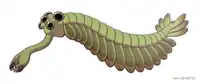
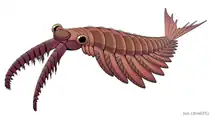
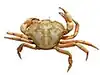
ساقهگروه بندپایان
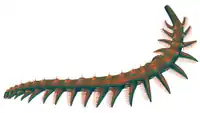
در مقایسه با سایر گروههای ساقهای پانآرتروپاد، پیشنهاد در مورد اعضای لوبوپودین ساقهگروه بندپایان نسبتاً ثابت است - سیبریدها مانند مگادیکتیون و جیانشانوپودیا در پایینترین موقعیت قرار دارند، لوبوپودینهای آبششدار پامبدلوریون و کریگماچلا در شاخه بعدی قرار میگیرند و در نهایت به یک کلاد از اوپابینیا ، رادیودونتها و یوآرتروپودا (بندپایان گروه تاج) منتهی میشوند. [۱۳۸] [۱۳۹] [۱۴۰] [۱۴۱] [۱۴۲] [۱۴۳] [۱۴۴] موقعیت آنها در گروه ساقه بندپایان توسط طرحهای زمینهای متعدد بندپایان و اشکال میانی نشان داده شده است (به عنوان مثال غدد گوارشی شبیه بندپایان، زائدههای پیشانی شبیه رادیودونت و ساختارهای زائدهای پشتی-شکمی که به زائدههای دوشاخه بندپایان مرتبط هستند). [۱۳۹] [۱۴۲] نسب لوبوپودینی بندپایان همچنان توسط مطالعات ژنومی روی گونههای موجود تقویت میشود - بیان ژن از هومولوژی بین زائدههای بندپایان و لوبوپودهای اونیکوفورها پشتیبانی میکند، نشان میدهد که زائدههای بندپایان کمتر بندبندی شده مدرن از اندامهای لوبوپود حلقوی تکامل یافتهاند. [۱۴۵] از سوی دیگر، شاخکهای اولیه و زائدههای پیشانی در لوبوپودینها و داینوکاریدیدنها ممکن است با کمپلکس لابروم /هیپوستوم در یوآرتروپودها همولوگ باشند، که این ایده با منشأ پیشمغزی آنها [۱۳۹] [۱۴۲] [۱۴۶] و الگوی رشد لابروم در بندپایان موجود، پشتیبانی میشود. [۱۴۵] [۱۴۲]
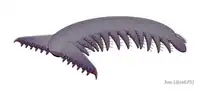
 رادیودونتها بندپایانی ساقهای هستند که دارای بالچههای بدنی آبششی مانند لوبوپودینها، زائدههای فرونتال بندپایان و چشمهای مرکب ساقهدار میباشند.
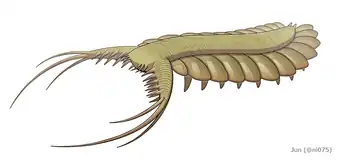 بازسازی پامبدلوریون، یک «لوبوپودین آبششدار» مرتبط با بندپایان، که هم جفت لوبوپود و هم بالچههای جانبی دارد.
دیانیا ، سردهای از لوبوپودینهای زرهدار با پاهای محکم و خاردار، در ابتدا تصور میشد که بر اساس زائدههای تنه ظاهراً بندپامانند (بندپایانهدار) آن، در ساقهگروه بندپایان قرار دارد. [۱۴۷] با این حال، این تفسیر جای سؤال دارد زیرا دادههای ارائه شده توسط توصیف اصلی با روابط فیلوژنتیکی مشکوک سازگار نیستند. [۱۴۸] [۱۴۹] بررسی مجدد بیشتر حتی نشان داد که بندپاییشدن مشکوک روی پاهای دیانیا یک تفسیر نادرست بوده است - اگرچه خارها ممکن است سخت شده باشد، اما کوتیکول باقی مانده پاهای دیانیا نرم بود (نه سخت شده و نه اسکلریت شده)، فاقد هیچ مدرکی از مفصل محوری و غشای بندپایان بود، که نشان میدهد پاها لوبوپودهایی با حلقههای بسیار فاصلهدار هستند. [۱۵۰] [۱۵۱] بنابراین، بررسی مجدد در نهایت شواهد بندپاییشدن (اسکلروتیزاسیون، قطعه قطعه شدن و مفصلبندی) روی زائدهها و همچنین رابطه اساسی بین دیانیا و بندپایان را رد میکند. [۱۵۰] [۱۵۱]
ساقهگروه اونیکوفورنها (کرمهای مخملی)
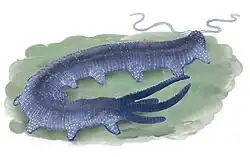
در حالی که Antennacanthopodia به طور گسترده به عنوان یک اونیکوفورن ساقهای پذیرفته شده است، [۱۵۲] [۱۵۳] [۱۵۴] [۱۵۵] [۱۵۶] [۱۵۷] جایگاه سایر جنسهای زنوژید که قبلاً تصور میشد مرتبط با اونیکوفورنها هستند، بحثبرانگیز است - در مطالعات بیشتر، اکثر آنها یا به عنوان اونیکوفورنهای ساقهای پیشنهاد شدند [۱۵۲] [۱۵۳] [۱۵۴] [۱۵۷] یا پانآرتروپودهای پایه، [۱۵۵] [۱۵۶] [۱۵۸] با چند گونه ( Aysheaia [۱۵۵] [۱۵۶] [۱۵۸] یا Onychodictyon ferox [۱۵۲] [۱۵۳] ) گاهی به عنوان اعضای ساقهای تاردیگرادها (خرسهای آبی) پیشنهاد میشوند. مطالعهای در سال 2014 نشان داد که Hallucigenia بر اساس چنگالهایشان، که ساختارهای داخلی همپوشانی دارند و شبیه به ساختارهای یک اونیکوفورن زنده هستند، از ساقهگروه اونیکوفورنها است. [۱۵۲] این تفسیر توسط مطالعات بعدی مورد سؤال قرار گرفت، زیرا این ساختارها ممکن است یک پلسیومورفی پانآرتروپاد باشند. [۱۵۶] [۱۵۸]
ساقهگروه تاردیگرادها (خرسهای آبی)
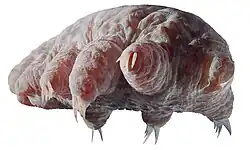
گونههای لوبوپودین ساقهگروه تاردیگرادها نامشخص هستند. [۱۶۰] Aysheaia [۱۶۱] [۱۶۲] [۱۶۳] یا Onychodictyon ferox [۱۶۴] [۱۶۵] بر اساس تعداد زیاد چنگال (در Aysheaia ) و/یا لوبوپودهای انتهایی با چنگالهای جلویی (در هر دو گونه) به عنوان عضو احتمالی پیشنهاد شدهاند. [۱۶۴] اگرچه به طور گسترده پذیرفته نشده است، اما حتی پیشنهادهایی وجود دارد که خود تاردیگرادها نمایانگر پایهترین پانآرتروپودها یا انشعابی میان ساقهگروه بندپایان هستند. [۱۶۶] با این حال، مقالهای در سال 2023 نشان داد که لوولیشانیدها با استفاده از ویژگیهای مورفولوژیکی مختلف، نزدیکترین خویشاوندان تاردیگرادها هستند. [۱۶۷]
ساقهگروه پانآرتروپودها
مشخص نیست که کدام لوبوپودینها نمایندهی اعضای ساقهای پانآرتروپادها هستند و کدامها درست قبل از آخرین جد مشترک شاخههای پانآرتروپاد موجود، منشعب شدهاند. آیشیا ممکن است این جایگاه را بر اساس مورفولوژی ظاهراً اساسی خود اشغال کرده باشد؛ [۱۶۸] [۱۶۹] [۱۷۰] [۱۷۱] در حالی که مطالعات دیگر لوولیشانیدها و هالوسیژنیدها را پیشنهاد میکنند، [۱۷۲] [۱۷۳] [۱۷۴] دو تاکسون لوبوپودین که به عنوان اعضای ساقهگروه اونیکوفوران نیز طبقهبندی شدهاند. [۱۷۵] [۱۶۹] [۱۷۰] [۱۷۶] [۱۷۱]
جنسهای توصیفشده
تا سال ۲۰۱۸، بیش از ۲۰ جنس از لوبوپودینها توصیف شدهاند. [۱۷۷] مواد فسیلی که به عنوان لوبوپودینهایی به نامهای Mureropodia apae و Aysheaia prolata توصیف میشوند، به ترتیب، زائدههای قدامی جدا شدهی رادیودونتهایی بنامهای Caryosyntrips و Stanleycaris در نظر گرفته میشوند. [۱۷۸] [۱۷۹] [۱۸۰] برخی مطالعات Miraluolishania را مترادف Luolishania پیشنهاد کردهاند. [۱۸۱] [۱۸۲] [۱۸۳] بعدها مشخص شد که Facivermis مرموز، یک جنس بسیار تخصصی از لوبوپودینهای luolishaniid است. [۱۸۴] [۱۸۵] [۱۸۳] Palaeocampa ، که قبلاً تصور میشد یک کرم آتشین است، نیز به عنوان یک لوبوپودین یافت شد.
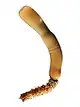
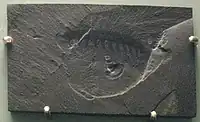 فسیلAysheaia pedunculata.
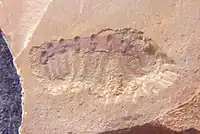 فسیل Microdictyon sinicum.
 فسیل «Mureropodia apae»، که در واقع ممکن است زائده جلویی Caryosyntrips camurus یا ... باشد.
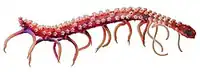
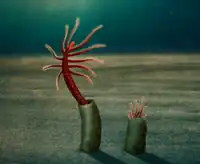 بازسازی فاسیورمیس، یک لوبوپودین غیرمعمول با ناحیه خلفی بدون اندام که مانند کرم لولهزی زندگی میکرد.


گونههای توصیفشده لوبوپودینها
| Genus | Species | Family | Notes | Age | Location | Image |
|---|---|---|---|---|---|---|
| Paucipodia |
|
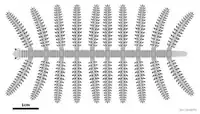
Paucipodiidae | An unarmoured lobopodian from the Chengjiang Biota. Probably a scavenger, it is equipped with paired claws at the end of each lobopod. Some are preserved alongside symbiotic epibionts. | Cambrian Stage 3 |  چین |
 |
| Lenisambulatrix |
|
(Unassigned) | An unarmoured lobopodian with highly elongate, clawless lobopod limbs. | Cambrian Stage 3 | چین |
 |
| Diania |
|
(Unassigned) | A long-legged lobopodian covered entirely with weakly sclerotized spines and papillae. | Cambrian Stage 3 | چین |
 |
| Cardiodictyon |
|
Cardiodictyidae | Lobopodian with extremely elongate body, with roughly 25 pairs of lobopod limbs, each associated with a saddle-shaped trunk sclerite. | Cambrian Stage 3 | چین |
 |
| Xenusion |
|
Xenusiidae | Originally discovered around the time of the first World War, this lobopodian is known from glacial erratics from the early Cambrian. | Cambrian Stage 2 |  آلمان |
 |
| Onychodictyon | Onychodictyidae | The body of this lobopodian was covered in numerous elongate papillae, each trunk segment bearing a pair of netted sclerites ending in a pointed tip. O. spiniferum (=Onychomicrodictyon spiniferum) is known from Greenland, it is considered by some to be a junior synonym. | Cambrian Stage 3 | چین  روسیه  گرینلند |
 | |
| Orstenotubulus |
|
(unassigned) | Known from microscopic, three-dimensionally preserved Orsten-type fossils, which show the detailed ornament of the cuticle, and retractable spines that protrude from the inner surface of the limbs. | Furongian |  سوئد |
 |
| Microdictyon |
|
Eoconchariidae | Globally distributed lobopodian, with most species known only from isolated sclerite plates, which are circular and net-like. Complete, soft-bodied fossils are found in the Chengjiang Biota, and the Kaili Biota. | Cambrian Stage 3 to Middle Cambrian | چین روسیه  بریتانیا سوئد  کانادا  ایالات متحده آمریکا  استرالیا گرینلند  مغولستان  ترکیه  مکزیک  ازبکستان  قزاقستان |
 |
| Quadratapora |
|
Eoconchariidae | Eoconchariid lobopodian similar to Microdictyon. Known only from isolated plates. | Cambrian Stage 3 | چین روسیه |
|
| Fusuchoncharium |
|
Eoconchariidae | Eoconchariid lobopodian similar to Microdictyon. Known only from isolated plates. | Cambrian Stage 3 | چین |
|
| Hallucigenia | Hallucigeniidae | One of the most famous fossil lobopodians, originally described from the Burgess Shale. Two other species have been described, but their placement within the genus remains uncertain. | Cambrian Stage 3 to Wuliuan | کانادا چین |
 | |
| Rhombocorniculum | Hallucigeniidae (Strictocorniculacea) | Only recently recognized as a lobopodian, this genus is known exclusively from isolated sclerites found around the world. The spines are flattened and twisting. | Cambrian Stage 3 | کانادا بریتانیا چین مغولستان روسیه قزاقستان  اسپانیا |
||
| Strictocorniculum |
|
Hallucigeniidae (Strictocorniculacea) | Recognized as a lobopodian sclerite in 2025, this species is known from deep-water Cambrian deposits in Nova Scotia, and is allied with Rhombocorniculum by its tightly organized rhomboidal scales. | Cambrian Stage 2 to Cambrian Stage 3 | کانادا |
|
| Carbotubulus |
|
Hallucigeniidae | The first marine lobopodian known from the Carboniferous, with three sets of differentiated legs, allying it with the hallucigeniids. | Moscovian | ایالات متحده آمریکا |
|
| Thanahita |
|
Hallucigeniidae? | The only currently named Silurian lobopodian. Trunk was covered with numerous large tufted papillae, which follow a complex distribution. | Wenlockian | بریتانیا |
 |
| Tritonychus |
|
Onychophora stem group? | A three-dimensionally preserved Orsten-type fossil from the Chengjiang Biota. | Cambrian Stage 3 | چین |
|
| Luolishania |
|
Luolishaniida | Considered synonymous with Miraluolishania haikouensis. | Cambrian Stage 3 | چین |
 |
| Ovatiovermis |
|
Luolishaniida | An unarmoured luolishaniid lobopodian from the Burgess Shale, with anchoring lobopods bearing large claws at its posterior, and filter-feeding lobopods anteriorly. | Wuliuan–Drumian | کانادا |
 |
| Facivermis |
|
Luolishaniida | A highly derived lobopodian which lacks any walking-lobopodians, bearing only 5 pairs of filter-feeding appendages anteriorly, with a long trunk terminating in a bulbous anchoring segment. Lived in constructed tubes buried in sediment, opening up to the water column. | Cambrian Stage 3 | چین |
 |
| Entothyreos |
|
Luolishaniida (Collinsovermidae) | A collinsovermid lobopodian with internal sclerite plates which acted similarly to arthropod tergites or vertebrae, reinforcing the body and allowing body erection for filter feeding. | Wuliuan–Drumian | کانادا |
 |
| Collinsovermis |
|
Luolishaniida (Collinsovermidae) | Known since 1983, this stout, highly armoured lobopodian (nicknamed "the Collins monster" after Desmond Collins, later lending this name to any collinsovermid lobopodian) did not receive a description until 2020. | Wuliuan–Drumian | کانادا |
 |
| Collinsium |
|
Luolishaniida (Collinsovermidae) | Collinsovermid lobopodian with an elongate body bearing 15 pairs of lobopod limbs and sclerite spine sets. | Cambrian Stage 3 | چین |
 |
| Acinocricus |
|
Luolishaniida (Collinsovermidae) | Highly armoured collinsovermid lobopodian with hundreds of spines borne on whorls, set between the limbs rather than above them. | Wuliuan | ایالات متحده آمریکا |
 |
| Aysheaia |
|
Aysheaiidae | Originally described as an annelid, entomologists quickly pointed out similarities between this Burgess Shale fossil and living velvet worms. | Wuliuan–Drumian | کانادا |
 |
| Hadranax |
|
Aysheaiidae | Known from only 3 specimens, this lobopodian was large, short-legged, and possessed incredibly elongate frontal appendages. It is found in the deep-sea deposits of Sirius Passet. | Wuliuan–Drumian | گرینلند |
 |
| Palaeocampa |
|
Aysheaiidae | Only known freshwater lobopodian. Originally described as a caterpillar, and later a polychaete, it was redescribed in 2025 as a lobopodian with venomous spines. | Moscovian to Stephanian | ایالات متحده آمریکا  فرانسه |
 |
| Antennacanthopodia |
|
Stem-Onychophora? | A rare lobopodian from the Chengjiang Biota, notable for its resemblance to modern onychophorans. As it was a marine species, the second pair of head appendages could not have functioned like the slime papillae of velvet worms. | Cambrian Stage 3 | چین |
 |
| Helenodora |
|
Onychophora | A putative velvet worm from Mazon Creek, whether or not it lived on land or in the ocean is debated. | Moscovian | ایالات متحده آمریکا |
 |
| Siberion |
|
Siberiidae | Known from only two fossils, the fossil site this species come from has since been destroyed. | Early Cambrian | روسیه |
 |
| Megadictyon |
|
Siberiidae | A siberiid lobopodian with a body up to 20 centimetres long, which remains poorly described. | Cambrian Stage 3 | چین |
 |
| Jianshanopodia |
|
Siberiidae | A siberiid lobopodian with a body up to 30 centimetres long. The trunk lobopods are lined with tree-like branching papillae on their posterior edge, probably a respiratory feature. | Cambrian Stage 3 | چین |
 |
| Kerygmachela |
|
Kerygmachelidae | A pelagic lobopodian from the Sirius Passet. It had a trunk lined with sets of small, sclerotized nodes, to which muscles attached. | Cambrian Stage 3 | گرینلند |
 |
| Mobulavermis |
|
Kerygmachelidae | A large pelagic kerygmachelid lobopodian with a high number of body flap pairs, known from two specimens from the Pioche Shale. | Cambrian Stage 4 | ایالات متحده آمریکا |
 |
| Utahnax |
|
Kerygmachelidae | A large pelagic lobopodian, probably related to Kerygmachela. Its lobopodous appendages are flattened as to form flaps. | Drumian | ایالات متحده آمریکا |
 |
| Pambdelurion |
|
(Unassigned) | A large, 50 centimetre long lobopodian from Sirius Passet. Possessing both legs and flaps (the latter of which apparently lack musculature), this was the apex predator of the ecosystem. | Cambrian Stage 3 | گرینلند |
 |
| Omnidens |
|
(Unassigned) | The largest known Cambrian animal, reaching an estimated ~1.7 metres in length, based on the closely related Pambdelurion. Known from large sclerotized jaws and the terminal, sclerotized talons of the frontal appendages. | Cambrian Stage 3 | چین |
 |
| Opabinia |
|
Opabiniidae | A "weird wonder" of the Cambrian with frontal appendages adapted into an elongate proboscis, and 5 eyes on the head. | Wuliuan–Drumian | کانادا |
 |
| Utaurora |
|
Opabiniidae | The first new opabiniid described since 1912, this species is known from a single specimen from the Wheeler Shale of Utah. | Drumian | ایالات متحده آمریکا |
 |
| Mieridduryn |
|
Opabiniidae | A probably opabiniid from the Ordovician of Wales, found at the Castle Bank Lagerstätte. This species apparently lacks eyes, with its head covered instead by a small cephalic sclerite, but does possess both flaps and lobopods, and a frontal proboscis. | Middle Ordovician | بریتانیا |
 |
| Youti? |
|
(Unassigned) | An embryonic panarthropod from the Yu'anshan Formation, preserved three-dimensionally in Orsten-style, this fossil provides a remarkable view into the internal anatomy of early panarthropods. | Cambrian Stage 3 | چین |
 |
منابع
- مشارکتکنندگان ویکیپدیا. «Lobopodia». در دانشنامهٔ ویکیپدیای انگلیسی، بازبینیشده در ۲۲ ژوئن ۲۰۲۶.
- ↑ Knecht, Richard J.; McCall, Christian R. A.; Tsai, Cheng-Chia; Rabideau Childers, Richard A.; Yu, Nanfang (23 July 2025). "Palaeocampa anthrax, an armored freshwater lobopodian with chemical defenses from the Carboniferous". Communications Biology. 8 (1) 1080: 1–18. doi:10.1038/s42003-025-08483-0. PMC 12287526. PMID 40702124.
- ↑ Chen, Zhe; Chen, Xiang; Zhou, Chuanming; Yuan, Xunlai; Xiao, Shuhai (6 June 2018). "Late Ediacaran trackways produced by bilaterian animals with paired appendages". Science Advances. 4 (6) eaao6691. Bibcode:2018SciA....4.6691C. doi:10.1126/sciadv.aao6691. hdl:10919/84444. PMC 5990303. PMID 29881773.
- ↑ Snodgrass, R.E. (1938). "Evolution of the Annelida, Onychophora, and Arthropoda". Smithsonian Miscellaneous Collections. 97 (6): 1–159.
- ↑ Cavalier-Smith, T. (1998). "A revised six-kingdom system of life". Biological Reviews (in English). 73 (3): 203–266. doi:10.1017/S0006323198005167 (inactive 9 August 2025). PMID 9809012.
{{cite journal}}: نگهداری یادکرد:doi غیرفعال از اوت 2025 (رده) - 1 2 Ortega-Hernández, Javier (2015-10-05). "Lobopodians". Current Biology (in English). 25 (19): R873–R875. Bibcode:2015CBio...25.R873O. doi:10.1016/j.cub.2015.07.028. ISSN 0960-9822. PMID 26439350.
- ↑ Budd, Graham; Peel, John (1998-12-01). "A new Xenusiid lobopod from the early Cambrian Sirius Passet fauna of North Greenland". Palaeontology. 41: 1201–1213.
- ↑ Jianni Liu; Degan Shu; Jian Han; Zhifei Zhang; Xingliang Zhang (2006). "A large xenusiid lobopod with complex appendages from the Lower Cambrian Chengjiang Lagerstätte" (PDF). Acta Palaeontol. Pol. 51 (2): 215–222. Archived from the original (PDF) on 2022-10-10. Retrieved 9 February 2011.
- ↑ Ortega-Hernández, Javier (December 2014). "Making sense of 'lower' and 'upper' stem-group Euarthropoda, with comments on the strict use of the name Arthropoda von Siebold, 1848". Biological Reviews of the Cambridge Philosophical Society. 91 (1): 255–273. doi:10.1111/brv.12168. ISSN 1469-185X. PMID 25528950.
- ↑ Liu, Jianni; Dunlop, Jason A. (2014-03-15). "Cambrian lobopodians: A review of recent progress in our understanding of their morphology and evolution". Palaeogeography, Palaeoclimatology, Palaeoecology (in English). 398: 4–15. Bibcode:2014PPP...398....4L. doi:10.1016/j.palaeo.2013.06.008. ISSN 0031-0182.
- ↑ Ou, Qiang; Mayer, Georg (2018-12-01). "A Cambrian unarmoured lobopodian, †Lenisambulatrix humboldti gen. et sp. nov., compared with new material of †Diania cactiformis". Scientific Reports. 8 (1): 13667. Bibcode:2018NatSR...813667O. doi:10.1038/s41598-018-31499-y. PMC 6147921. PMID 30237414.
- ↑ van Roy, P.; Orr, P.J.; Botting, J.P.; Muir, L.A.; Vinther, J.; Lefebvre, B.; Hariri, K.E.; Briggs, D.E.G. (2010). "Ordovician faunas of Burgess Shale type". Nature. 465 (7295): 215–218. Bibcode:2010Natur.465..215V. doi:10.1038/nature09038. PMID 20463737.
- ↑ von Bitter, P.H.; Purnell, M.A.; Tetreault, D.K.; Stott, C.A. (2007). "Eramosa Lagerstätte—Exceptionally preserved soft-bodied biotas with shallow-marine shelly and bioturbating organisms (Silurian, Ontario, Canada)". Geology. 35 (10): 879. Bibcode:2007Geo....35..879V. doi:10.1130/G23894A.1.
{{cite journal}}:|hdl-access=نیاز به|hdl=دارد (کمک) - ↑ Haug, J.T.; Mayer, G.; Haug, C.; Briggs, D.E.G. (2012). "A Carboniferous non-Onychophoran Lobopodian reveals long-term survival of a Cambrian morphotype". Current Biology. 22 (18): 1673–1675. Bibcode:2012CBio...22.1673H. doi:10.1016/j.cub.2012.06.066. PMID 22885062.
- ↑ Caron, J.-B.; Smith, M.R.; Harvey, T.H.P. (2013). "Beyond the Burgess Shale: Cambrian microfossils track the rise and fall of hallucigeniid lobopodians". Proceedings of the Royal Society B: Biological Sciences. 280 (1767). doi:10.1098/rspb.2013.1613. PMC 3735267. PMID 23902914.
- ↑ Topper, T.P.; Skovsted, C.B.; Peel, J.S.; Harper, D.A.T. (2013). "Moulting in the lobopodian Onychodictyon from the lower Cambrian of Greenland". Lethaia. 46 (4): 490–495. Bibcode:2013Letha..46..490T. doi:10.1111/let.12026.
- ↑ Ortega-Hernández, Javier (December 2014). "Making sense of 'lower' and 'upper' stem-group Euarthropoda, with comments on the strict use of the name Arthropoda von Siebold, 1848". Biological Reviews of the Cambridge Philosophical Society. 91 (1): 255–273. doi:10.1111/brv.12168. ISSN 1469-185X. PMID 25528950.
- ↑ Dzik, Jerzy; Krumbiegel, Günter (1989). "The oldest 'onychophoran' Xenusion: a link connecting phyla?". Lethaia (in English). 22 (2): 169–181. Bibcode:1989Letha..22..169D. doi:10.1111/j.1502-3931.1989.tb01679.x. ISSN 1502-3931.
- ↑ Budd, Graham E. (1998). "The morphology and phylogenetic significance of Kerygmachela kierkegaardi Budd (Buen Formation, Lower Cambrian, N Greenland)". Earth and Environmental Science Transactions of the Royal Society of Edinburgh (in English). 89 (4): 249–290. doi:10.1017/S0263593300002418. ISSN 1473-7116.
- ↑ Cavalier-Smith, T. (1998). "A revised six-kingdom system of life". Biological Reviews (in English). 73 (3): 203–266. doi:10.1017/S0006323198005167 (inactive 9 August 2025). PMID 9809012.
{{cite journal}}: نگهداری یادکرد:doi غیرفعال از اوت 2025 (رده) - ↑ Ortega-Hernández, Javier (2015-10-05). "Lobopodians". Current Biology (in English). 25 (19): R873–R875. Bibcode:2015CBio...25.R873O. doi:10.1016/j.cub.2015.07.028. ISSN 0960-9822. PMID 26439350.
- ↑ Smith, Frank W.; Goldstein, Bob (2017-05-01). "Segmentation in Tardigrada and diversification of segmental patterns in Panarthropoda". Arthropod Structure & Development. 46 (3, Evolution of Segmentation): 328–340. Bibcode:2017ArtSD..46..328S. doi:10.1016/j.asd.2016.10.005. ISSN 1467-8039. PMID 27725256.
- ↑
{{cite book}}: یادکرد خالی (کمک) - ↑ Budd, Graham; Peel, John (1998-12-01). "A new Xenusiid lobopod from the early Cambrian Sirius Passet fauna of North Greenland". Palaeontology. 41: 1201–1213.
- ↑ Dzik, Jerzy (2011-07-01). "The xenusian-to-anomalocaridid transition within the lobopodians" (PDF). Bollettino della Società Paleontologica Italiana. 50: 65–74. Archived from the original (PDF) on 2017-08-08.
- ↑ Pentastomida - Sociedad Entomológica Aragonesa
- ↑ Treatise on Zoology - Anatomy, Taxonomy, Biology.
- ↑ Riley, J.; Banaja, A. A.; James, J. L. (1978-08-01). "The phylogenetic relationships of the pentastomida: The case for their inclusion within the crustacea". International Journal for Parasitology (in English). 8 (4): 245–254. doi:10.1016/0020-7519(78)90087-5. ISSN 0020-7519.
- ↑ Lavrov, Dennis V.; Brown, Wesley M.; Boore, Jeffrey L. (2004-03-07). "Phylogenetic position of the Pentastomida and (pan)crustacean relationships". Proceedings of the Royal Society of London. Series B: Biological Sciences. 271 (1538): 537–544. doi:10.1098/rspb.2003.2631. PMC 1691615. PMID 15129965.
- ↑ Regier, Jerome C.; Shultz, Jeffrey W.; Zwick, Andreas; Hussey, April; Ball, Bernard; Wetzer, Regina; Martin, Joel W.; Cunningham, Clifford W. (2010). "Arthropod relationships revealed by phylogenomic analysis of nuclear protein-coding sequences". Nature (in English). 463 (7284): 1079–1083. Bibcode:2010Natur.463.1079R. doi:10.1038/nature08742. ISSN 1476-4687. PMID 20147900.
- ↑ Lozano-Fernandez, Jesus; Giacomelli, Mattia; Fleming, James F; Chen, Albert; Vinther, Jakob; Thomsen, Philip Francis; Glenner, Henrik; Palero, Ferran; Legg, David A (2019-08-01). "Pancrustacean Evolution Illuminated by Taxon-Rich Genomic-Scale Data Sets with an Expanded Remipede Sampling". Genome Biology and Evolution. 11 (8): 2055–2070. doi:10.1093/gbe/evz097. ISSN 1759-6653. PMC 6684935. PMID 31270537.
- ↑ Rabet, Nicolas (2021), "Crustaceans", Handbook of Marine Model Organisms in Experimental Biology, CRC Press: 271–287, doi:10.1201/9781003217503-15, ISBN 978-1-003-21750-3
{{یادکرد}}: نگهداری یادکرد:پارامتر اثر با شابک (رده) - ↑ Smith, Martin R.; Ortega-Hernández, Javier (2014). "Hallucigenia's onychophoran-like claws and the case for Tactopoda" (PDF). Nature. 514 (7522): 363–366. Bibcode:2014Natur.514..363S. doi:10.1038/nature13576. PMID 25132546. Archived from the original (PDF) on 2022-10-10.
- ↑
{{cite book}}: یادکرد خالی (کمک) - ↑ Caron, J.-B.; Smith, M.R.; Harvey, T.H.P. (2013). "Beyond the Burgess Shale: Cambrian microfossils track the rise and fall of hallucigeniid lobopodians". Proceedings of the Royal Society B: Biological Sciences. 280 (1767). doi:10.1098/rspb.2013.1613. PMC 3735267. PMID 23902914.
- ↑ Smith, Martin R.; Caron, Jean-Bernard (July 2015). "Hallucigenia's head and the pharyngeal armature of early ecdysozoans". Nature (in English). 523 (7558): 75–78. Bibcode:2015Natur.523...75S. doi:10.1038/nature14573. ISSN 0028-0836. PMID 26106857.
- ↑ Dzik, Jerzy; Krumbiegel, Günter (1989). "The oldest 'onychophoran' Xenusion: a link connecting phyla?". Lethaia (in English). 22 (2): 169–181. Bibcode:1989Letha..22..169D. doi:10.1111/j.1502-3931.1989.tb01679.x. ISSN 1502-3931.
- ↑ Ou, Qiang; Mayer, Georg (2018-12-01). "A Cambrian unarmoured lobopodian, †Lenisambulatrix humboldti gen. et sp. nov., compared with new material of †Diania cactiformis". Scientific Reports. 8 (1): 13667. Bibcode:2018NatSR...813667O. doi:10.1038/s41598-018-31499-y. PMC 6147921. PMID 30237414.
- ↑ Ma, Xiaoya; Hou, Xianguang; Bergström, Jan (2009). "Morphology of Luolishania longicruris (Lower Cambrian, Chengjiang Lagerstätte, SW China) and the phylogenetic relationships within lobopodians". Arthropod Structure & Development (in English). 38 (4): 271–291. Bibcode:2009ArtSD..38..271M. doi:10.1016/j.asd.2009.03.001. ISSN 1467-8039. PMID 19293001.
- ↑ Budd, Graham (August 1993). "A Cambrian gilled lobopod from Greenland". Nature (in English). 364 (6439): 709–711. Bibcode:1993Natur.364..709B. doi:10.1038/364709a0. ISSN 1476-4687.
- ↑
{{cite book}}: یادکرد خالی (کمک) - ↑ Jianni Liu; Degan Shu; Jian Han; Zhifei Zhang; Xingliang Zhang (2006). "A large xenusiid lobopod with complex appendages from the Lower Cambrian Chengjiang Lagerstätte" (PDF). Acta Palaeontol. Pol. 51 (2): 215–222. Archived from the original (PDF) on 2022-10-10. Retrieved 9 February 2011.
- 1 2 Hou, Xian-Guang; Ma, Xiao-Ya; Zhao, Jie; Bergström, Jan (2004). "The lobopodian Paucipodia inermis from the Lower Cambrian Chengjiang fauna, Yunnan, China". Lethaia. 37 (3): 235–244. Bibcode:2004Letha..37..235H. doi:10.1080/00241160410006555.
- 1 2 Ortega-Hernández, Javier (2015-10-05). "Lobopodians". Current Biology (in English). 25 (19): R873–R875. Bibcode:2015CBio...25.R873O. doi:10.1016/j.cub.2015.07.028. ISSN 0960-9822. PMID 26439350.
- 1 2 3 Budd, Graham E. (1998). "The morphology and phylogenetic significance of Kerygmachela kierkegaardi Budd (Buen Formation, Lower Cambrian, N Greenland)". Earth and Environmental Science Transactions of the Royal Society of Edinburgh (in English). 89 (4): 249–290. doi:10.1017/S0263593300002418. ISSN 1473-7116.
- 1 2 Chen, J.Y., Zhou, G.Q., Ramsköld, L. (1995a).
- ↑ Ma, Xiaoya; Hou, Xianguang; Bergström, Jan (2009). "Morphology of Luolishania longicruris (Lower Cambrian, Chengjiang Lagerstätte, SW China) and the phylogenetic relationships within lobopodians". Arthropod Structure & Development (in English). 38 (4): 271–291. Bibcode:2009ArtSD..38..271M. doi:10.1016/j.asd.2009.03.001. ISSN 1467-8039. PMID 19293001.
- ↑ Smith, Martin R.; Ortega-Hernández, Javier (2014). "Hallucigenia's onychophoran-like claws and the case for Tactopoda" (PDF). Nature. 514 (7522): 363–366. Bibcode:2014Natur.514..363S. doi:10.1038/nature13576. PMID 25132546. Archived from the original (PDF) on 2022-10-10.
- ↑ Budd, Graham; Peel, John (1998-12-01). "A new Xenusiid lobopod from the early Cambrian Sirius Passet fauna of North Greenland". Palaeontology. 41: 1201–1213.
- 1 2 Ou, Qiang; Shu, Degan; Mayer, Georg (2012-12-11). "Cambrian lobopodians and extant onychophorans provide new insights into early cephalization in Panarthropoda". Nature Communications (in English). 3 (1): 1261. Bibcode:2012NatCo...3.1261O. doi:10.1038/ncomms2272. ISSN 2041-1723. PMC 3535342. PMID 23232391.
- ↑ Vinther, Jakob; Porras, Luis; Young, Fletcher; Budd, Graham; Edgecombe, Gregory (2016-09-01). "The mouth apparatus of the Cambrian gilled lobopodian Pambdelurion whittingtoni". Palaeontology. 59 (6): 841–849. Bibcode:2016Palgy..59..841V. doi:10.1111/pala.12256.
{{cite journal}}:|hdl-access=نیاز به|hdl=دارد (کمک) - ↑ Hou, Xian-Guang; Ma, Xiao-Ya; Zhao, Jie; Bergström, Jan (2004). "The lobopodian Paucipodia inermis from the Lower Cambrian Chengjiang fauna, Yunnan, China". Lethaia. 37 (3): 235–244. Bibcode:2004Letha..37..235H. doi:10.1080/00241160410006555.
- ↑ Jianni Liu; Degan Shu; Jian Han; Zhifei Zhang; Xingliang Zhang (2006). "A large xenusiid lobopod with complex appendages from the Lower Cambrian Chengjiang Lagerstätte" (PDF). Acta Palaeontol. Pol. 51 (2): 215–222. Archived from the original (PDF) on 2022-10-10. Retrieved 9 February 2011.
- ↑ Dzik, Jerzy (2011-07-01). "The xenusian-to-anomalocaridid transition within the lobopodians" (PDF). Bollettino della Società Paleontologica Italiana. 50: 65–74. Archived from the original (PDF) on 2017-08-08.
- 1 2 3 Smith, Martin R.; Ortega-Hernández, Javier (2014). "Hallucigenia's onychophoran-like claws and the case for Tactopoda" (PDF). Nature. 514 (7522): 363–366. Bibcode:2014Natur.514..363S. doi:10.1038/nature13576. PMID 25132546. Archived from the original (PDF) on 2022-10-10.
- 1 2 Ortega-Hernández, Javier (2015-10-05). "Lobopodians". Current Biology (in English). 25 (19): R873–R875. Bibcode:2015CBio...25.R873O. doi:10.1016/j.cub.2015.07.028. ISSN 0960-9822. PMID 26439350.
- ↑ Ou, Qiang; Liu, Jianni; SHU, DEGAN; Han, Jian; Zhang, Zhifei; Wan, Xiaoqiao; Lei, Qianping (2011-05-01). "A Rare Onychophoran-Like Lobopodian from the Lower Cambrian Chengjiang Lagerstätte, Southwestern China, and its Phylogenetic Implications". Journal of Paleontology. 85 (3): 587–594. Bibcode:2011JPal...85..587O. doi:10.1666/09-147R2.1. JSTOR 23020193.
- 1 2 3 Ma, Xiaoya; Edgecombe, Gregory; Legg, David; Hou, Xianguang (2013-05-08). "The morphology and phylogenetic position of the Cambrian lobopodian Diania cactiformis". Journal of Systematic Palaeontology. 12 (4): 445–457. doi:10.1080/14772019.2013.770418.
- 1 2 Ou, Qiang; Mayer, Georg (2018-12-01). "A Cambrian unarmoured lobopodian, †Lenisambulatrix humboldti gen. et sp. nov., compared with new material of †Diania cactiformis". Scientific Reports. 8 (1): 13667. Bibcode:2018NatSR...813667O. doi:10.1038/s41598-018-31499-y. PMC 6147921. PMID 30237414.
- ↑ Hou, Xian-Guang; Ma, Xiao-Ya; Zhao, Jie; Bergström, Jan (2004). "The lobopodian Paucipodia inermis from the Lower Cambrian Chengjiang fauna, Yunnan, China". Lethaia. 37 (3): 235–244. Bibcode:2004Letha..37..235H. doi:10.1080/00241160410006555.
- ↑ Steiner, M.; Hu, S.X.; Liu, J.; Keupp, H. (2012-02-02). "A new species of Hallucigenia from the Cambrian Stage 4 Wulongqing Formation of Yunnan (South China) and the structure of sclerites in lobopodians". Bulletin of Geosciences: 107–124. doi:10.3140/bull.geosci.1280. ISSN 1802-8225.
- 1 2 Ma, Xiaoya; Hou, Xianguang; Bergström, Jan (2009). "Morphology of Luolishania longicruris (Lower Cambrian, Chengjiang Lagerstätte, SW China) and the phylogenetic relationships within lobopodians". Arthropod Structure & Development (in English). 38 (4): 271–291. Bibcode:2009ArtSD..38..271M. doi:10.1016/j.asd.2009.03.001. ISSN 1467-8039. PMID 19293001.
- ↑ Caron, Jean-Bernard; Aria, Cédric (2017-01-31). "Cambrian suspension-feeding lobopodians and the early radiation of panarthropods". BMC Evolutionary Biology. 17 (1): 29. Bibcode:2017BMCEE..17...29C. doi:10.1186/s12862-016-0858-y. ISSN 1471-2148. PMC 5282736. PMID 28137244.
- ↑ Caron, Jean-Bernard; Aria, Cédric (2020). "The Collins' monster, a spinous suspension-feeding lobopodian from the Cambrian Burgess Shale of British Columbia". Palaeontology (in English). 63 (6): 979–994. Bibcode:2020Palgy..63..979C. doi:10.1111/pala.12499. ISSN 1475-4983.
- ↑ Zhang, Xi-Guang; Smith, Martin R.; Yang, Jie; Hou, Jin-Bo (2016). "Onychophoran-like musculature in a phosphatized Cambrian lobopodian". Biology Letters (in English). 12 (9). doi:10.1098/rsbl.2016.0492. ISSN 1744-9561. PMC 5046927. PMID 27677816.
- ↑ Whittington, Harry Blackmore (1978-11-16). "The Lobopod Animal Aysheaia Pedunculata Walcott, Middle Cambrian, Burgess Shale, British Columbia". Philosophical Transactions of the Royal Society of London. B, Biological Sciences. 284 (1000): 165–197. Bibcode:1978RSPTB.284..165W. doi:10.1098/rstb.1978.0061.
- ↑ Ou, Qiang; Shu, Degan; Mayer, Georg (2012-12-11). "Cambrian lobopodians and extant onychophorans provide new insights into early cephalization in Panarthropoda". Nature Communications (in English). 3 (1): 1261. Bibcode:2012NatCo...3.1261O. doi:10.1038/ncomms2272. ISSN 2041-1723. PMC 3535342. PMID 23232391.
- ↑ Jianni Liu; Degan Shu; Jian Han; Zhifei Zhang; Xingliang Zhang (2006). "A large xenusiid lobopod with complex appendages from the Lower Cambrian Chengjiang Lagerstätte" (PDF). Acta Palaeontol. Pol. 51 (2): 215–222. Archived from the original (PDF) on 2022-10-10. Retrieved 9 February 2011.
- ↑ Liu, Jianni; Steiner, Michael; Dunlop, Jason A.; Keupp, Helmut; Shu, Degan; Ou, Qiang; Han, Jian; Zhang, Zhifei; Zhang, Xingliang (February 2011). "An armoured Cambrian lobopodian from China with arthropod-like appendages". Nature (in English). 470 (7335): 526–530. Bibcode:2011Natur.470..526L. doi:10.1038/nature09704. ISSN 1476-4687. PMID 21350485.
- ↑ Ortega-Hernández, Javier (2015-10-05). "Lobopodians". Current Biology (in English). 25 (19): R873–R875. Bibcode:2015CBio...25.R873O. doi:10.1016/j.cub.2015.07.028. ISSN 0960-9822. PMID 26439350.
- ↑ Smith, Martin R.; Caron, Jean-Bernard (July 2015). "Hallucigenia's head and the pharyngeal armature of early ecdysozoans". Nature (in English). 523 (7558): 75–78. Bibcode:2015Natur.523...75S. doi:10.1038/nature14573. ISSN 0028-0836. PMID 26106857.
- ↑ Caron, Jean-Bernard; Aria, Cédric (2017-01-31). "Cambrian suspension-feeding lobopodians and the early radiation of panarthropods". BMC Evolutionary Biology. 17 (1): 29. Bibcode:2017BMCEE..17...29C. doi:10.1186/s12862-016-0858-y. ISSN 1471-2148. PMC 5282736. PMID 28137244.
- ↑ Siveter, Derek J.; Briggs, Derek E. G.; Siveter, David J.; Sutton, Mark D.; Legg, David (2018). "A three-dimensionally preserved lobopodian from the Herefordshire (Silurian) Lagerstätte, UK". Royal Society Open Science. 5 (8). Bibcode:2018RSOS....572101S. doi:10.1098/rsos.172101. PMC 6124121. PMID 30224988.
- ↑ Caron, Jean-Bernard; Aria, Cédric (2020). "The Collins' monster, a spinous suspension-feeding lobopodian from the Cambrian Burgess Shale of British Columbia". Palaeontology (in English). 63 (6): 979–994. Bibcode:2020Palgy..63..979C. doi:10.1111/pala.12499. ISSN 1475-4983.
- 1 2 Vannier, Jean; Liu, Jianni; Lerosey-Aubril, Rudy; Vinther, Jakob; Daley, Allison C. (2014-05-02). "Sophisticated digestive systems in early arthropods". Nature Communications (in English). 5 (1): 3641. Bibcode:2014NatCo...5.3641V. doi:10.1038/ncomms4641. ISSN 2041-1723. PMID 24785191.
- 1 2 Hou, Xian-Guang; Ma, Xiao-Ya; Zhao, Jie; Bergström, Jan (2004). "The lobopodian Paucipodia inermis from the Lower Cambrian Chengjiang fauna, Yunnan, China". Lethaia. 37 (3): 235–244. Bibcode:2004Letha..37..235H. doi:10.1080/00241160410006555.
- 1 2 Jianni Liu; Degan Shu; Jian Han; Zhifei Zhang; Xingliang Zhang (2006). "A large xenusiid lobopod with complex appendages from the Lower Cambrian Chengjiang Lagerstätte" (PDF). Acta Palaeontol. Pol. 51 (2): 215–222. Archived from the original (PDF) on 2022-10-10. Retrieved 9 February 2011.
- ↑ Liu, J.; Shu, D.; Han, J.; Zhang, Z.; Zhang, X. (2007). "Morpho-anatomy of the lobopod Magadictyon cf. Haikouensis from the Early Cambrian Chengjiang Lagerstätte, South China". Acta Zoologica. 88 (4): 279–288. doi:10.1111/j.1463-6395.2007.00281.x.
- ↑ Butterfield, N. J. (2002). "Leanchoilia guts and the interpretation of three-dimensional structures in Burgess Shale-type fossils". Paleobiology. 28 (1): 155–171. Bibcode:2002Pbio...28..155B. doi:10.1666/0094-8373(2002)028<0155:LGATIO>2.0.CO;2. ISSN 0094-8373.
- ↑ Liu, J.; Shu, D.; Han, J.; Zhang, Z.; Zhang, X. (2007). "Morpho-anatomy of the lobopod Magadictyon cf. Haikouensis from the Early Cambrian Chengjiang Lagerstätte, South China". Acta Zoologica. 88 (4): 279–288. doi:10.1111/j.1463-6395.2007.00281.x.
- ↑ Hou, Xian-Guang; Ma, Xiao-Ya; Zhao, Jie; Bergström, Jan (2004). "The lobopodian Paucipodia inermis from the Lower Cambrian Chengjiang fauna, Yunnan, China". Lethaia. 37 (3): 235–244. Bibcode:2004Letha..37..235H. doi:10.1080/00241160410006555.
- ↑ Ou, Qiang; Liu, Jianni; SHU, DEGAN; Han, Jian; Zhang, Zhifei; Wan, Xiaoqiao; Lei, Qianping (2011-05-01). "A Rare Onychophoran-Like Lobopodian from the Lower Cambrian Chengjiang Lagerstätte, Southwestern China, and its Phylogenetic Implications". Journal of Paleontology. 85 (3): 587–594. Bibcode:2011JPal...85..587O. doi:10.1666/09-147R2.1. JSTOR 23020193.
- ↑ Park, Tae-Yoon S.; Kihm, Ji-Hoon; Woo, Jusun; Park, Changkun; Lee, Won Young; Smith, M. Paul; Harper, David A. T.; Young, Fletcher; Nielsen, Arne T. (2018-03-09). "Brain and eyes of Kerygmachela reveal protocerebral ancestry of the panarthropod head". Nature Communications (in English). 9 (1): 1019. Bibcode:2018NatCo...9.1019P. doi:10.1038/s41467-018-03464-w. ISSN 2041-1723. PMC 5844904. PMID 29523785.
- ↑ Young, Fletcher J.; Vinther, Jakob (2017). "Onychophoran-like myoanatomy of the Cambrian gilled lobopodian Pambdelurion whittingtoni" (PDF). Palaeontology (in English). 60 (1): 27–54. Bibcode:2017Palgy..60...27Y. doi:10.1111/pala.12269. ISSN 1475-4983. Archived from the original (PDF) on 2022-10-10.
- ↑ Zhang, Xi-Guang; Smith, Martin R.; Yang, Jie; Hou, Jin-Bo (2016). "Onychophoran-like musculature in a phosphatized Cambrian lobopodian". Biology Letters (in English). 12 (9). doi:10.1098/rsbl.2016.0492. ISSN 1744-9561. PMC 5046927. PMID 27677816.
- ↑ Smith, Martin R.; Ortega-Hernández, Javier (2014). "Hallucigenia's onychophoran-like claws and the case for Tactopoda" (PDF). Nature. 514 (7522): 363–366. Bibcode:2014Natur.514..363S. doi:10.1038/nature13576. PMID 25132546. Archived from the original (PDF) on 2022-10-10.
- ↑ Ortega-Hernández, Javier (December 2014). "Making sense of 'lower' and 'upper' stem-group Euarthropoda, with comments on the strict use of the name Arthropoda von Siebold, 1848". Biological Reviews of the Cambridge Philosophical Society. 91 (1): 255–273. doi:10.1111/brv.12168. ISSN 1469-185X. PMID 25528950.
- ↑ Ortega-Hernández, Javier; Janssen, Ralf; Budd, Graham E. (2017-05-01). "Origin and evolution of the panarthropod head – A palaeobiological and developmental perspective". Arthropod Structure & Development. 46 (3, Evolution of Segmentation): 354–379. Bibcode:2017ArtSD..46..354O. doi:10.1016/j.asd.2016.10.011. ISSN 1467-8039. PMID 27989966.
- ↑ Ou, Qiang; Liu, Jianni; SHU, DEGAN; Han, Jian; Zhang, Zhifei; Wan, Xiaoqiao; Lei, Qianping (2011-05-01). "A Rare Onychophoran-Like Lobopodian from the Lower Cambrian Chengjiang Lagerstätte, Southwestern China, and its Phylogenetic Implications". Journal of Paleontology. 85 (3): 587–594. Bibcode:2011JPal...85..587O. doi:10.1666/09-147R2.1. JSTOR 23020193.
- ↑ Ou, Qiang; Mayer, Georg (2018-12-01). "A Cambrian unarmoured lobopodian, †Lenisambulatrix humboldti gen. et sp. nov., compared with new material of †Diania cactiformis". Scientific Reports. 8 (1): 13667. Bibcode:2018NatSR...813667O. doi:10.1038/s41598-018-31499-y. PMC 6147921. PMID 30237414.
- 1 2 Chen, J.Y., Zhou, G.Q., Ramsköld, L. (1995a).
- 1 2 Budd, G. E. (2001). "Why are arthropods segmented?". Evolution and Development. 3 (5): 332–42. doi:10.1046/j.1525-142X.2001.01041.x. PMID 11710765.
- ↑ Ortega-Hernández, Javier (2015-10-05). "Lobopodians". Current Biology (in English). 25 (19): R873–R875. Bibcode:2015CBio...25.R873O. doi:10.1016/j.cub.2015.07.028. ISSN 0960-9822. PMID 26439350.
- ↑ Caron, J.-B.; Smith, M.R.; Harvey, T.H.P. (2013). "Beyond the Burgess Shale: Cambrian microfossils track the rise and fall of hallucigeniid lobopodians". Proceedings of the Royal Society B: Biological Sciences. 280 (1767). doi:10.1098/rspb.2013.1613. PMC 3735267. PMID 23902914.
- 1 2 3 Ortega-Hernández, Javier (December 2014). "Making sense of 'lower' and 'upper' stem-group Euarthropoda, with comments on the strict use of the name Arthropoda von Siebold, 1848". Biological Reviews of the Cambridge Philosophical Society. 91 (1): 255–273. doi:10.1111/brv.12168. ISSN 1469-185X. PMID 25528950.
- 1 2 Vinther, Jakob; Porras, Luis; Young, Fletcher; Budd, Graham; Edgecombe, Gregory (2016-09-01). "The mouth apparatus of the Cambrian gilled lobopodian Pambdelurion whittingtoni". Palaeontology. 59 (6): 841–849. Bibcode:2016Palgy..59..841V. doi:10.1111/pala.12256.
{{cite journal}}:|hdl-access=نیاز به|hdl=دارد (کمک) - ↑ Young, Fletcher J.; Vinther, Jakob (2017). "Onychophoran-like myoanatomy of the Cambrian gilled lobopodian Pambdelurion whittingtoni" (PDF). Palaeontology (in English). 60 (1): 27–54. Bibcode:2017Palgy..60...27Y. doi:10.1111/pala.12269. ISSN 1475-4983. Archived from the original (PDF) on 2022-10-10.
- 1 2 Budd, Graham (August 1993). "A Cambrian gilled lobopod from Greenland". Nature (in English). 364 (6439): 709–711. Bibcode:1993Natur.364..709B. doi:10.1038/364709a0. ISSN 1476-4687.
- ↑ Ou, Qiang; Mayer, Georg (2018-12-01). "A Cambrian unarmoured lobopodian, †Lenisambulatrix humboldti gen. et sp. nov., compared with new material of †Diania cactiformis". Scientific Reports. 8 (1): 13667. Bibcode:2018NatSR...813667O. doi:10.1038/s41598-018-31499-y. PMC 6147921. PMID 30237414.
- ↑ McCall, C. R. A. (2023). "A large pelagic lobopodian from the Cambrian Pioche Shale of Nevada". Journal of Paleontology. 97 (5): 1009–1024. Bibcode:2023JPal...97.1009M. doi:10.1017/jpa.2023.63.
- 1 2 3 Van Roy, Peter; Daley, Allison C.; Briggs, Derek E. G. (2015). "Anomalocaridid trunk limb homology revealed by a giant filter-feeder with paired flaps". Nature (in English). 522 (7554): 77–80. Bibcode:2015Natur.522...77V. doi:10.1038/nature14256. ISSN 1476-4687. PMID 25762145.
- ↑ Budd, Graham E.; Daley, Allison C. (January 2012). "The lobes and lobopods of Opabinia regalis from the middle Cambrian Burgess Shale: The lobes of Opabinia". Lethaia (in English). 45 (1): 83–95. doi:10.1111/j.1502-3931.2011.00264.x.
- ↑ Li, Wei; Yang, Jie; Yang, Xiaoyu; Dhungana, Alavya; Wang, Yu; Zhang, Xiguang; Smith, Martin R. (November 2024). "Omnidens appendages and the origin of radiodont mouthparts". Papers in Palaeontology (in English). 10 (6). Bibcode:2024PPal...10E1600L. doi:10.1002/spp2.1600. ISSN 2056-2799.
- ↑ Chen, J.-y; Ramskold, L.; Zhou, G.-q (1994). "Evidence for Monophyly and Arthropod Affinity of Cambrian Giant Predators". Science (in English). 264 (5163): 1304–1308. Bibcode:1994Sci...264.1304C. doi:10.1126/science.264.5163.1304. ISSN 0036-8075. PMID 17780848.
- ↑ Smith, Martin R.; Ortega-Hernández, Javier (2014). "Hallucigenia's onychophoran-like claws and the case for Tactopoda" (PDF). Nature. 514 (7522): 363–366. Bibcode:2014Natur.514..363S. doi:10.1038/nature13576. PMID 25132546. Archived from the original (PDF) on 2022-10-10.
- ↑ Smith, Martin R.; Caron, Jean-Bernard (July 2015). "Hallucigenia's head and the pharyngeal armature of early ecdysozoans". Nature (in English). 523 (7558): 75–78. Bibcode:2015Natur.523...75S. doi:10.1038/nature14573. ISSN 0028-0836. PMID 26106857.
- ↑ Ortega-Hernández, Javier; Janssen, Ralf; Budd, Graham E. (2017-05-01). "Origin and evolution of the panarthropod head – A palaeobiological and developmental perspective". Arthropod Structure & Development. 46 (3, Evolution of Segmentation): 354–379. Bibcode:2017ArtSD..46..354O. doi:10.1016/j.asd.2016.10.011. ISSN 1467-8039. PMID 27989966.
- 1 2 3 4 Dzik, Jerzy (2011-07-01). "The xenusian-to-anomalocaridid transition within the lobopodians" (PDF). Bollettino della Società Paleontologica Italiana. 50: 65–74. Archived from the original (PDF) on 2017-08-08.
- 1 2 Smith, Martin R.; Ortega-Hernández, Javier (2014). "Hallucigenia's onychophoran-like claws and the case for Tactopoda" (PDF). Nature. 514 (7522): 363–366. Bibcode:2014Natur.514..363S. doi:10.1038/nature13576. PMID 25132546. Archived from the original (PDF) on 2022-10-10.
- ↑ Edgecombe, Gregory D. (2020-11-02). "Arthropod Origins: Integrating Paleontological and Molecular Evidence". Annual Review of Ecology, Evolution, and Systematics. 51 (1): 1–25. doi:10.1146/annurev-ecolsys-011720-124437. ISSN 1543-592X.
- 1 2 3 Liu, J.; Shu, D.; Han, J.; Zhang, Z.; Zhang, X. (2007). "Morpho-anatomy of the lobopod Magadictyon cf. Haikouensis from the Early Cambrian Chengjiang Lagerstätte, South China". Acta Zoologica. 88 (4): 279–288. doi:10.1111/j.1463-6395.2007.00281.x.
- 1 2 3 Ortega-Hernández, Javier (December 2014). "Making sense of 'lower' and 'upper' stem-group Euarthropoda, with comments on the strict use of the name Arthropoda von Siebold, 1848". Biological Reviews of the Cambridge Philosophical Society. 91 (1): 255–273. doi:10.1111/brv.12168. ISSN 1469-185X. PMID 25528950.
- 1 2 Jianni Liu; Degan Shu; Jian Han; Zhifei Zhang; Xingliang Zhang (2006). "A large xenusiid lobopod with complex appendages from the Lower Cambrian Chengjiang Lagerstätte" (PDF). Acta Palaeontol. Pol. 51 (2): 215–222. Archived from the original (PDF) on 2022-10-10. Retrieved 9 February 2011.
- ↑ Vannier, Jean; Liu, Jianni; Lerosey-Aubril, Rudy; Vinther, Jakob; Daley, Allison C. (2014-05-02). "Sophisticated digestive systems in early arthropods". Nature Communications (in English). 5 (1): 3641. Bibcode:2014NatCo...5.3641V. doi:10.1038/ncomms4641. ISSN 2041-1723. PMID 24785191.
- ↑ Ortega-Hernández, Javier; Janssen, Ralf; Budd, Graham E. (2017-05-01). "Origin and evolution of the panarthropod head – A palaeobiological and developmental perspective". Arthropod Structure & Development. 46 (3, Evolution of Segmentation): 354–379. Bibcode:2017ArtSD..46..354O. doi:10.1016/j.asd.2016.10.011. ISSN 1467-8039. PMID 27989966.
- 1 2 3 4 Ortega-Hernández, Javier (2015-10-05). "Lobopodians". Current Biology (in English). 25 (19): R873–R875. Bibcode:2015CBio...25.R873O. doi:10.1016/j.cub.2015.07.028. ISSN 0960-9822. PMID 26439350.
- 1 2 Vannier, Jean; Liu, Jianni; Lerosey-Aubril, Rudy; Vinther, Jakob; Daley, Allison C. (2014-05-02). "Sophisticated digestive systems in early arthropods". Nature Communications (in English). 5 (1): 3641. Bibcode:2014NatCo...5.3641V. doi:10.1038/ncomms4641. ISSN 2041-1723. PMID 24785191.
- ↑ Jianni Liu; Degan Shu; Jian Han; Zhifei Zhang; Xingliang Zhang (2006). "A large xenusiid lobopod with complex appendages from the Lower Cambrian Chengjiang Lagerstätte" (PDF). Acta Palaeontol. Pol. 51 (2): 215–222. Archived from the original (PDF) on 2022-10-10. Retrieved 9 February 2011.
- ↑ Ma, Xiaoya; Hou, Xianguang; Bergström, Jan (2009). "Morphology of Luolishania longicruris (Lower Cambrian, Chengjiang Lagerstätte, SW China) and the phylogenetic relationships within lobopodians". Arthropod Structure & Development (in English). 38 (4): 271–291. Bibcode:2009ArtSD..38..271M. doi:10.1016/j.asd.2009.03.001. ISSN 1467-8039. PMID 19293001.
- ↑ Caron, Jean-Bernard; Aria, Cédric (2017-01-31). "Cambrian suspension-feeding lobopodians and the early radiation of panarthropods". BMC Evolutionary Biology. 17 (1): 29. Bibcode:2017BMCEE..17...29C. doi:10.1186/s12862-016-0858-y. ISSN 1471-2148. PMC 5282736. PMID 28137244.
- ↑ Chen, J.Y., Zhou, G.Q., Ramsköld, L. (1995a).
- ↑ Topper, T.P.; Skovsted, C.B.; Peel, J.S.; Harper, D.A.T. (2013). "Moulting in the lobopodian Onychodictyon from the lower Cambrian of Greenland". Lethaia. 46 (4): 490–495. Bibcode:2013Letha..46..490T. doi:10.1111/let.12026.
- ↑ Budd, Graham (August 1993). "A Cambrian gilled lobopod from Greenland". Nature (in English). 364 (6439): 709–711. Bibcode:1993Natur.364..709B. doi:10.1038/364709a0. ISSN 1476-4687.
- ↑ Jianni Liu; Degan Shu; Jian Han; Zhifei Zhang; Xingliang Zhang (2006). "A large xenusiid lobopod with complex appendages from the Lower Cambrian Chengjiang Lagerstätte" (PDF). Acta Palaeontol. Pol. 51 (2): 215–222. Archived from the original (PDF) on 2022-10-10. Retrieved 9 February 2011.
- ↑ Young, Fletcher J.; Vinther, Jakob (2017). "Onychophoran-like myoanatomy of the Cambrian gilled lobopodian Pambdelurion whittingtoni" (PDF). Palaeontology (in English). 60 (1): 27–54. Bibcode:2017Palgy..60...27Y. doi:10.1111/pala.12269. ISSN 1475-4983. Archived from the original (PDF) on 2022-10-10.
- ↑ von Bitter, P.H.; Purnell, M.A.; Tetreault, D.K.; Stott, C.A. (2007). "Eramosa Lagerstätte—Exceptionally preserved soft-bodied biotas with shallow-marine shelly and bioturbating organisms (Silurian, Ontario, Canada)". Geology. 35 (10): 879. Bibcode:2007Geo....35..879V. doi:10.1130/G23894A.1.
{{cite journal}}:|hdl-access=نیاز به|hdl=دارد (کمک) - ↑ Whittle, R. J.; Gabbott, S. E.; Aldridge, R. J.; Theron, J. (2009). "An Ordovician Lobopodian from the Soom Shale Lagerstätte, South Africa". Palaeontology. 52 (3): 561–567. Bibcode:2009Palgy..52..561W. doi:10.1111/j.1475-4983.2009.00860.x.
{{cite journal}}:|hdl-access=نیاز به|hdl=دارد (کمک) - 1 2 Ortega-Hernández, Javier (2015-10-05). "Lobopodians". Current Biology (in English). 25 (19): R873–R875. Bibcode:2015CBio...25.R873O. doi:10.1016/j.cub.2015.07.028. ISSN 0960-9822. PMID 26439350.
- ↑ Ortega-Hernández, Javier; Janssen, Ralf; Budd, Graham E. (2017-05-01). "Origin and evolution of the panarthropod head – A palaeobiological and developmental perspective". Arthropod Structure & Development. 46 (3, Evolution of Segmentation): 354–379. Bibcode:2017ArtSD..46..354O. doi:10.1016/j.asd.2016.10.011. ISSN 1467-8039. PMID 27989966.
- ↑ Edgecombe, Gregory D. (2009-06-01). "Palaeontological and Molecular Evidence Linking Arthropods, Onychophorans, and other Ecdysozoa". Evolution: Education and Outreach (in English). 2 (2): 178–190. doi:10.1007/s12052-009-0118-3. ISSN 1936-6434.
- ↑ Robison, R. A. (1985). "Affinities of Aysheaia (Onychophora), with Description of a New Cambrian Species". Journal of Paleontology. 59 (1): 226–235. JSTOR 1304837.
- ↑ Ramsköld, L.; Xianguang, Hou (1991). "New early Cambrian animal and onychophoran affinities of enigmatic metazoans". Nature. 351 (6323): 225–228. Bibcode:1991Natur.351..225R. doi:10.1038/351225a0. ISSN 1476-4687.
- ↑ HOU, XIANGUANG; BERGSTRÖM, JAN (1995-05-01). "Cambrian lobopodians-ancestors of extant onychophorans?". Zoological Journal of the Linnean Society. 114 (1): 3–19. doi:10.1111/j.1096-3642.1995.tb00110.x. ISSN 0024-4082.
- ↑ Bergström, J.; Hou, Xian-Guang (2001-12-01). "Cambrian Onychophora or Xenusians". Zoologischer Anzeiger. 240 (3–4): 237–245. Bibcode:2001ZooAn.240..237B. doi:10.1078/0044-5231-00031.
- 1 2 Ortega-Hernández, Javier (2015-10-05). "Lobopodians". Current Biology (in English). 25 (19): R873–R875. Bibcode:2015CBio...25.R873O. doi:10.1016/j.cub.2015.07.028. ISSN 0960-9822. PMID 26439350.
- ↑ Budd, Graham E. (2001-01-01). "Tardigrades as 'Stem-Group Arthropods': The Evidence from the Cambrian Fauna". Zoologischer Anzeiger - A Journal of Comparative Zoology. 240 (3): 265–279. Bibcode:2001ZooAn.240..265B. doi:10.1078/0044-5231-00034. ISSN 0044-5231.
- ↑ Siveter, Derek J.; Briggs, Derek E. G.; Siveter, David J.; Sutton, Mark D.; Legg, David (2018). "A three-dimensionally preserved lobopodian from the Herefordshire (Silurian) Lagerstätte, UK". Royal Society Open Science. 5 (8). Bibcode:2018RSOS....572101S. doi:10.1098/rsos.172101. PMC 6124121. PMID 30224988.
- 1 2 Budd, G. E. (2001). "Why are arthropods segmented?". Evolution and Development. 3 (5): 332–42. doi:10.1046/j.1525-142X.2001.01041.x. PMID 11710765.
- ↑ Smith, Martin R.; Ortega-Hernández, Javier (2014). "Hallucigenia's onychophoran-like claws and the case for Tactopoda" (PDF). Nature. 514 (7522): 363–366. Bibcode:2014Natur.514..363S. doi:10.1038/nature13576. PMID 25132546. Archived from the original (PDF) on 2022-10-10.
- 1 2 3 Ortega-Hernández, Javier (December 2014). "Making sense of 'lower' and 'upper' stem-group Euarthropoda, with comments on the strict use of the name Arthropoda von Siebold, 1848". Biological Reviews of the Cambridge Philosophical Society. 91 (1): 255–273. doi:10.1111/brv.12168. ISSN 1469-185X. PMID 25528950.
- ↑ Smith, Martin R.; Caron, Jean-Bernard (July 2015). "Hallucigenia's head and the pharyngeal armature of early ecdysozoans". Nature (in English). 523 (7558): 75–78. Bibcode:2015Natur.523...75S. doi:10.1038/nature14573. ISSN 0028-0836. PMID 26106857.
- ↑ Van Roy, Peter; Daley, Allison C.; Briggs, Derek E. G. (2015). "Anomalocaridid trunk limb homology revealed by a giant filter-feeder with paired flaps". Nature (in English). 522 (7554): 77–80. Bibcode:2015Natur.522...77V. doi:10.1038/nature14256. ISSN 1476-4687. PMID 25762145.
- 1 2 3 4 Ortega-Hernández, Javier; Janssen, Ralf; Budd, Graham E. (2017-05-01). "Origin and evolution of the panarthropod head – A palaeobiological and developmental perspective". Arthropod Structure & Development. 46 (3, Evolution of Segmentation): 354–379. Bibcode:2017ArtSD..46..354O. doi:10.1016/j.asd.2016.10.011. ISSN 1467-8039. PMID 27989966.
- ↑ Caron, Jean-Bernard; Aria, Cédric (2017-01-31). "Cambrian suspension-feeding lobopodians and the early radiation of panarthropods". BMC Evolutionary Biology. 17 (1): 29. Bibcode:2017BMCEE..17...29C. doi:10.1186/s12862-016-0858-y. ISSN 1471-2148. PMC 5282736. PMID 28137244.
- ↑ Siveter, Derek J.; Briggs, Derek E. G.; Siveter, David J.; Sutton, Mark D.; Legg, David (2018). "A three-dimensionally preserved lobopodian from the Herefordshire (Silurian) Lagerstätte, UK". Royal Society Open Science. 5 (8). Bibcode:2018RSOS....572101S. doi:10.1098/rsos.172101. PMC 6124121. PMID 30224988.
- 1 2 Jockusch, Elizabeth L. (2017-09-01). "Developmental and Evolutionary Perspectives on the Origin and Diversification of Arthropod Appendages". Integrative and Comparative Biology (in English). 57 (3): 533–545. doi:10.1093/icb/icx063. ISSN 1540-7063. PMID 28957524.
- ↑ Park, Tae-Yoon S.; Kihm, Ji-Hoon; Woo, Jusun; Park, Changkun; Lee, Won Young; Smith, M. Paul; Harper, David A. T.; Young, Fletcher; Nielsen, Arne T. (2018-03-09). "Brain and eyes of Kerygmachela reveal protocerebral ancestry of the panarthropod head". Nature Communications (in English). 9 (1): 1019. Bibcode:2018NatCo...9.1019P. doi:10.1038/s41467-018-03464-w. ISSN 2041-1723. PMC 5844904. PMID 29523785.
- ↑ Liu, Jianni; Steiner, Michael; Dunlop, Jason A.; Keupp, Helmut; Shu, Degan; Ou, Qiang; Han, Jian; Zhang, Zhifei; Zhang, Xingliang (February 2011). "An armoured Cambrian lobopodian from China with arthropod-like appendages". Nature (in English). 470 (7335): 526–530. Bibcode:2011Natur.470..526L. doi:10.1038/nature09704. ISSN 1476-4687. PMID 21350485.
- ↑ Mounce, Ross C. P.; Wills, Matthew A. (August 2011). "Phylogenetic position of Diania challenged". Nature. 476 (7359): E1, discussion E3–4. Bibcode:2011Natur.476E...1M. doi:10.1038/nature10266. ISSN 1476-4687. PMID 21833044.
- ↑ Legg, David; Ma, Xiaoya; Wolfe, Joanna; Ortega-Hernández, Javier; Edgecombe, Gregory; Sutton, Mark (2011-08-11). "Lobopodian phylogeny reanalysed". Nature. 476 (7359): E2–3, discussion E3. Bibcode:2011Natur.476Q...1L. doi:10.1038/nature10267. PMID 21833046.
- 1 2 Ma, Xiaoya; Edgecombe, Gregory; Legg, David; Hou, Xianguang (2013-05-08). "The morphology and phylogenetic position of the Cambrian lobopodian Diania cactiformis". Journal of Systematic Palaeontology. 12 (4): 445–457. doi:10.1080/14772019.2013.770418.
- 1 2 Ou, Qiang; Mayer, Georg (2018-12-01). "A Cambrian unarmoured lobopodian, †Lenisambulatrix humboldti gen. et sp. nov., compared with new material of †Diania cactiformis". Scientific Reports. 8 (1): 13667. Bibcode:2018NatSR...813667O. doi:10.1038/s41598-018-31499-y. PMC 6147921. PMID 30237414.
- 1 2 3 4 Smith, Martin R.; Ortega-Hernández, Javier (2014). "Hallucigenia's onychophoran-like claws and the case for Tactopoda" (PDF). Nature. 514 (7522): 363–366. Bibcode:2014Natur.514..363S. doi:10.1038/nature13576. PMID 25132546. Archived from the original (PDF) on 2022-10-10.
- 1 2 3 Smith, Martin R.; Caron, Jean-Bernard (July 2015). "Hallucigenia's head and the pharyngeal armature of early ecdysozoans". Nature (in English). 523 (7558): 75–78. Bibcode:2015Natur.523...75S. doi:10.1038/nature14573. ISSN 0028-0836. PMID 26106857.
- 1 2 Zhang, Xi-Guang; Smith, Martin R.; Yang, Jie; Hou, Jin-Bo (2016). "Onychophoran-like musculature in a phosphatized Cambrian lobopodian". Biology Letters (in English). 12 (9). doi:10.1098/rsbl.2016.0492. ISSN 1744-9561. PMC 5046927. PMID 27677816.
- 1 2 3 Caron, Jean-Bernard; Aria, Cédric (2017-01-31). "Cambrian suspension-feeding lobopodians and the early radiation of panarthropods". BMC Evolutionary Biology. 17 (1): 29. Bibcode:2017BMCEE..17...29C. doi:10.1186/s12862-016-0858-y. ISSN 1471-2148. PMC 5282736. PMID 28137244.
- 1 2 3 4 Siveter, Derek J.; Briggs, Derek E. G.; Siveter, David J.; Sutton, Mark D.; Legg, David (2018). "A three-dimensionally preserved lobopodian from the Herefordshire (Silurian) Lagerstätte, UK". Royal Society Open Science. 5 (8). Bibcode:2018RSOS....572101S. doi:10.1098/rsos.172101. PMC 6124121. PMID 30224988.
- 1 2 Howard, Richard J.; Hou, Xianguang; Edgecombe, Gregory D.; Salge, Tobias; Shi, Xiaomei; Ma, Xiaoya (2020-02-27). "A Tube-Dwelling Early Cambrian Lobopodian". Current Biology (in English). 30 (8): 1529–1536.e2. Bibcode:2020CBio...30E1529H. doi:10.1016/j.cub.2020.01.075. ISSN 0960-9822. PMID 32109391.
{{cite journal}}:|hdl-access=نیاز به|hdl=دارد (کمک) - 1 2 3 Caron, Jean-Bernard; Aria, Cédric (2020). "The Collins' monster, a spinous suspension-feeding lobopodian from the Cambrian Burgess Shale of British Columbia". Palaeontology (in English). 63 (6): 979–994. Bibcode:2020Palgy..63..979C. doi:10.1111/pala.12499. ISSN 1475-4983.
- ↑ Maas, Andreas; Waloszek, Dieter (2001-01-01). "Cambrian Derivatives of the Early Arthropod Stem Lineage, Pentastomids, Tardigrades and Lobopodians An 'Orsten' Perspective". Zoologischer Anzeiger - A Journal of Comparative Zoology (in English). 240 (3): 451–459. Bibcode:2001ZooAn.240..451M. doi:10.1078/0044-5231-00053. ISSN 0044-5231.
- ↑ Ortega-Hernández, Javier (2015-10-05). "Lobopodians". Current Biology (in English). 25 (19): R873–R875. Bibcode:2015CBio...25.R873O. doi:10.1016/j.cub.2015.07.028. ISSN 0960-9822. PMID 26439350.
- ↑ Caron, Jean-Bernard; Aria, Cédric (2017-01-31). "Cambrian suspension-feeding lobopodians and the early radiation of panarthropods". BMC Evolutionary Biology. 17 (1): 29. Bibcode:2017BMCEE..17...29C. doi:10.1186/s12862-016-0858-y. ISSN 1471-2148. PMC 5282736. PMID 28137244.
- ↑ Siveter, Derek J.; Briggs, Derek E. G.; Siveter, David J.; Sutton, Mark D.; Legg, David (2018). "A three-dimensionally preserved lobopodian from the Herefordshire (Silurian) Lagerstätte, UK". Royal Society Open Science. 5 (8). Bibcode:2018RSOS....572101S. doi:10.1098/rsos.172101. PMC 6124121. PMID 30224988.
- ↑ Caron, Jean-Bernard; Aria, Cédric (2020). "The Collins' monster, a spinous suspension-feeding lobopodian from the Cambrian Burgess Shale of British Columbia". Palaeontology (in English). 63 (6): 979–994. Bibcode:2020Palgy..63..979C. doi:10.1111/pala.12499. ISSN 1475-4983.
- 1 2 Smith, Martin R.; Ortega-Hernández, Javier (2014). "Hallucigenia's onychophoran-like claws and the case for Tactopoda" (PDF). Nature. 514 (7522): 363–366. Bibcode:2014Natur.514..363S. doi:10.1038/nature13576. PMID 25132546. Archived from the original (PDF) on 2022-10-10.
- ↑ Smith, Martin R.; Caron, Jean-Bernard (July 2015). "Hallucigenia's head and the pharyngeal armature of early ecdysozoans". Nature (in English). 523 (7558): 75–78. Bibcode:2015Natur.523...75S. doi:10.1038/nature14573. ISSN 0028-0836. PMID 26106857.
- ↑ Budd, Graham E. (2001-01-01). "Tardigrades as 'Stem-Group Arthropods': The Evidence from the Cambrian Fauna". Zoologischer Anzeiger - A Journal of Comparative Zoology. 240 (3): 265–279. Bibcode:2001ZooAn.240..265B. doi:10.1078/0044-5231-00034. ISSN 0044-5231.
- ↑ Kihm, Ji-Hoon; Smith, Frank W.; Kim, Sanghee; Rho, Hyun Soo; Zhang, Xingliang; Liu, Jianni; Park, Tae-Yoon S. (2023). "Cambrian lobopodians shed light on the origin of the tardigrade body plan". Proceedings of the National Academy of Sciences. 120 (28). Bibcode:2023PNAS..12011251K. doi:10.1073/pnas.2211251120. PMC 10334802. PMID 37399417.
- ↑ Budd, G. E. (2001). "Why are arthropods segmented?". Evolution and Development. 3 (5): 332–42. doi:10.1046/j.1525-142X.2001.01041.x. PMID 11710765.
- 1 2 Smith, Martin R.; Ortega-Hernández, Javier (2014). "Hallucigenia's onychophoran-like claws and the case for Tactopoda" (PDF). Nature. 514 (7522): 363–366. Bibcode:2014Natur.514..363S. doi:10.1038/nature13576. PMID 25132546. Archived from the original (PDF) on 2022-10-10.
- 1 2 Smith, Martin R.; Caron, Jean-Bernard (July 2015). "Hallucigenia's head and the pharyngeal armature of early ecdysozoans". Nature (in English). 523 (7558): 75–78. Bibcode:2015Natur.523...75S. doi:10.1038/nature14573. ISSN 0028-0836. PMID 26106857.
- 1 2 Howard, Richard J.; Hou, Xianguang; Edgecombe, Gregory D.; Salge, Tobias; Shi, Xiaomei; Ma, Xiaoya (2020-02-27). "A Tube-Dwelling Early Cambrian Lobopodian". Current Biology (in English). 30 (8): 1529–1536.e2. Bibcode:2020CBio...30E1529H. doi:10.1016/j.cub.2020.01.075. ISSN 0960-9822. PMID 32109391.
{{cite journal}}:|hdl-access=نیاز به|hdl=دارد (کمک) - ↑ Caron, Jean-Bernard; Aria, Cédric (2017-01-31). "Cambrian suspension-feeding lobopodians and the early radiation of panarthropods". BMC Evolutionary Biology. 17 (1): 29. Bibcode:2017BMCEE..17...29C. doi:10.1186/s12862-016-0858-y. ISSN 1471-2148. PMC 5282736. PMID 28137244.
- ↑ Siveter, Derek J.; Briggs, Derek E. G.; Siveter, David J.; Sutton, Mark D.; Legg, David (2018). "A three-dimensionally preserved lobopodian from the Herefordshire (Silurian) Lagerstätte, UK". Royal Society Open Science. 5 (8). Bibcode:2018RSOS....572101S. doi:10.1098/rsos.172101. PMC 6124121. PMID 30224988.
- ↑ Caron, Jean-Bernard; Aria, Cédric (2020). "The Collins' monster, a spinous suspension-feeding lobopodian from the Cambrian Burgess Shale of British Columbia". Palaeontology (in English). 63 (6): 979–994. Bibcode:2020Palgy..63..979C. doi:10.1111/pala.12499. ISSN 1475-4983.
- ↑ Ortega-Hernández, Javier (2015-10-05). "Lobopodians". Current Biology (in English). 25 (19): R873–R875. Bibcode:2015CBio...25.R873O. doi:10.1016/j.cub.2015.07.028. ISSN 0960-9822. PMID 26439350.
- ↑ Zhang, Xi-Guang; Smith, Martin R.; Yang, Jie; Hou, Jin-Bo (2016). "Onychophoran-like musculature in a phosphatized Cambrian lobopodian". Biology Letters (in English). 12 (9). doi:10.1098/rsbl.2016.0492. ISSN 1744-9561. PMC 5046927. PMID 27677816.
- ↑ Ou, Qiang; Mayer, Georg (2018-12-01). "A Cambrian unarmoured lobopodian, †Lenisambulatrix humboldti gen. et sp. nov., compared with new material of †Diania cactiformis". Scientific Reports. 8 (1): 13667. Bibcode:2018NatSR...813667O. doi:10.1038/s41598-018-31499-y. PMC 6147921. PMID 30237414.
- ↑ Pates, Stephen; Daley, Allison C. (2017). "Caryosyntrips: a radiodontan from the Cambrian of Spain, USA and Canada". Papers in Palaeontology (in English). 3 (3): 461–470. Bibcode:2017PPal....3..461P. doi:10.1002/spp2.1084. ISSN 2056-2802.
- ↑ "Aysheaia prolata from the Utah Wheeler Formation (Drumian, Cambrian) is a frontal appendage of the radiodontan Stanleycaris - Acta Palaeontologica Polonica". www.app.pan.pl (in English). Retrieved 2020-01-08.
- ↑ "Reply to Comment on "Aysheaia prolata from the Utah Wheeler Formation (Drumian, Cambrian) is a frontal appendage of the radiodontan Stanleycaris" with the formal description of Stanleycaris - Acta Palaeontologica Polonica". www.app.pan.pl (in English). Retrieved 2020-01-08.
- ↑ Ma, Xiaoya; Hou, Xianguang; Bergström, Jan (2009). "Morphology of Luolishania longicruris (Lower Cambrian, Chengjiang Lagerstätte, SW China) and the phylogenetic relationships within lobopodians". Arthropod Structure & Development (in English). 38 (4): 271–291. Bibcode:2009ArtSD..38..271M. doi:10.1016/j.asd.2009.03.001. ISSN 1467-8039. PMID 19293001.
- ↑ Liu, Jianni; Shu, DeGan; Han, Jian; Zhang, Zhifei (2008-05-01). "Comparative study of Cambrian lobopods Miraluolishania and Luolishania". Chinese Science Bulletin. 53 (1): 87–93. Bibcode:2008ChSBu..53...87L. doi:10.1007/s11434-007-0428-1.
- 1 2 Howard, Richard J.; Hou, Xianguang; Edgecombe, Gregory D.; Salge, Tobias; Shi, Xiaomei; Ma, Xiaoya (2020-02-27). "A Tube-Dwelling Early Cambrian Lobopodian". Current Biology (in English). 30 (8): 1529–1536.e2. Bibcode:2020CBio...30E1529H. doi:10.1016/j.cub.2020.01.075. ISSN 0960-9822. PMID 32109391.
{{cite journal}}:|hdl-access=نیاز به|hdl=دارد (کمک) - ↑ Dzik, Jerzy (2011-07-01). "The xenusian-to-anomalocaridid transition within the lobopodians" (PDF). Bollettino della Società Paleontologica Italiana. 50: 65–74. Archived from the original (PDF) on 2017-08-08.
- ↑ Caron, Jean-Bernard; Aria, Cédric (2017-01-31). "Cambrian suspension-feeding lobopodians and the early radiation of panarthropods". BMC Evolutionary Biology. 17 (1): 29. Bibcode:2017BMCEE..17...29C. doi:10.1186/s12862-016-0858-y. ISSN 1471-2148. PMC 5282736. PMID 28137244.
- ↑ Jun-yuan, Chen; Gui-qing, Zhou; Ramsköld, Lars (1994). "A new Early Cambrian onychophoran-like animal, Paucipodia gen. nov., from the Chengjiang fauna, China". Earth and Environmental Science Transactions of the Royal Society of Edinburgh (in English). 85 (4): 275–282. doi:10.1017/S0263593300002042. ISSN 1473-7116.
- ↑ Ou, Qiang; Mayer, Georg (2018-12-01). "A Cambrian unarmoured lobopodian, †Lenisambulatrix humboldti gen. et sp. nov., compared with new material of †Diania cactiformis". Scientific Reports. 8 (1): 13667. Bibcode:2018NatSR...813667O. doi:10.1038/s41598-018-31499-y. PMC 6147921. PMID 30237414.
- ↑ Liu, Jianni; Steiner, Michael; Dunlop, Jason A.; Keupp, Helmut; Shu, Degan; Ou, Qiang; Han, Jian; Zhang, Zhifei; Zhang, Xingliang (February 2011). "An armoured Cambrian lobopodian from China with arthropod-like appendages". Nature (in English). 470 (7335): 526–530. Bibcode:2011Natur.470..526L. doi:10.1038/nature09704. ISSN 1476-4687. PMID 21350485. S2CID 4324509.
- 1 2 Xianguang, Hou; Ramsköld, Lars; Bergström, Jan (1991). "Composition and preservation of the Chengjiang fauna –a Lower Cambrian soft-bodied biota". Zoologica Scripta (in English). 20 (4): 395–411. doi:10.1111/j.1463-6409.1991.tb00303.x. ISSN 1463-6409.
- ↑ Dzik, Jerzy; Krumbiegel, Günter (1989). "The oldest 'onychophoran' Xenusion: a link connecting phyla?". Lethaia (in English). 22 (2): 169–181. Bibcode:1989Letha..22..169D. doi:10.1111/j.1502-3931.1989.tb01679.x. ISSN 1502-3931.
- ↑ Demidenko, Yu. E. (2006-05-01). "New Cambrian lobopods and chaetognaths of the Siberian Platform". Paleontological Journal (in English). 40 (3): 234–243. Bibcode:2006PalJ...40..234D. doi:10.1134/S0031030106030026. ISSN 1555-6174.
- ↑ Maas, Andreas; Mayer, Georg; Kristensen, Reinhardt M.; Waloszek, Dieter (2007-12-01). "A Cambrian micro-lobopodian and the evolution of arthropod locomotion and reproduction". Chinese Science Bulletin (in English). 52 (24): 3385–3392. Bibcode:2007ChSBu..52.3385M. doi:10.1007/s11434-007-0515-3. ISSN 1861-9541.
- ↑ Chen, J.Y., Zhou, G.Q., Ramsköld, L. (1995a).
- 1 2 Zhang, Xi-Guang; Aldridge, Richard J. (2007). "Development and Diversification of Trunk Plates of the Lower Cambrian Lobopodians". Palaeontology (in English). 50 (2): 401–415. Bibcode:2007Palgy..50..401Z. doi:10.1111/j.1475-4983.2006.00634.x. hdl:2381/27135. ISSN 1475-4983.
- ↑ Ramsköld, L.; Xianguang, Hou (1991). "New early Cambrian animal and onychophoran affinities of enigmatic metazoans". Nature. 351 (6323): 225–228. Bibcode:1991Natur.351..225R. doi:10.1038/351225a0. ISSN 1476-4687. S2CID 4309565.
- 1 2 HOU, XIANGUANG; BERGSTRÖM, JAN (1995-05-01). "Cambrian lobopodians-ancestors of extant onychophorans?". Zoological Journal of the Linnean Society. 114 (1): 3–19. doi:10.1111/j.1096-3642.1995.tb00110.x. ISSN 0024-4082.
- ↑ Steiner, M.; Hu, S.X.; Liu, J.; Keupp, H. (2012-02-02). "A new species of Hallucigenia from the Cambrian Stage 4 Wulongqing Formation of Yunnan (South China) and the structure of sclerites in lobopodians". Bulletin of Geosciences: 107–124. doi:10.3140/bull.geosci.1280. ISSN 1802-8225.
- 1 2 Caron, J.-B.; Smith, M.R.; Harvey, T.H.P. (2013). "Beyond the Burgess Shale: Cambrian microfossils track the rise and fall of hallucigeniid lobopodians". Proceedings of the Royal Society B: Biological Sciences. 280 (1767) 20131613. doi:10.1098/rspb.2013.1613. PMC 3735267. PMID 23902914.
- ↑ Haug, J.T.; Mayer, G.; Haug, C.; Briggs, D.E.G. (2012). "A Carboniferous non-Onychophoran Lobopodian reveals long-term survival of a Cambrian morphotype". Current Biology. 22 (18): 1673–1675. Bibcode:2012CBio...22.1673H. doi:10.1016/j.cub.2012.06.066. PMID 22885062.
- ↑ Siveter, Derek J.; Briggs, Derek E. G.; Siveter, David J.; Sutton, Mark D.; Legg, David (2018). "A three-dimensionally preserved lobopodian from the Herefordshire (Silurian) Lagerstätte, UK". Royal Society Open Science. 5 (8) 172101. Bibcode:2018RSOS....572101S. doi:10.1098/rsos.172101. PMC 6124121. PMID 30224988.
- ↑ Zhang, Xi-Guang; Smith, Martin R.; Yang, Jie; Hou, Jin-Bo (2016). "Onychophoran-like musculature in a phosphatized Cambrian lobopodian". Biology Letters (in English). 12 (9) 20160492. doi:10.1098/rsbl.2016.0492. ISSN 1744-9561. PMC 5046927. PMID 27677816.
- ↑ Caron, Jean-Bernard; Aria, Cédric (2017-01-31). "Cambrian suspension-feeding lobopodians and the early radiation of panarthropods". BMC Evolutionary Biology. 17 (1): 29. Bibcode:2017BMCEE..17...29C. doi:10.1186/s12862-016-0858-y. ISSN 1471-2148. PMC 5282736. PMID 28137244.
- ↑ Howard, Richard J.; Hou, Xianguang; Edgecombe, Gregory D.; Salge, Tobias; Shi, Xiaomei; Ma, Xiaoya (2020-02-27). "A Tube-Dwelling Early Cambrian Lobopodian". Current Biology (in English). 30 (8): 1529–1536.e2. Bibcode:2020CBio...30E1529H. doi:10.1016/j.cub.2020.01.075. hdl:10141/623115. ISSN 0960-9822. PMID 32109391.
- ↑ Aria, Cédric; Caron, Jean-Bernard (2024-12-31). "Deep origin of articulation strategies in panarthropods: evidence from a new luolishaniid lobopodian (Panarthropoda) from the Tulip Beds, Burgess Shale". Journal of Systematic Palaeontology. 22 (1) 2356090. Bibcode:2024JSPal..2256090A. doi:10.1080/14772019.2024.2356090. ISSN 1477-2019.
- ↑ Caron, Jean-Bernard; Aria, Cédric (2020). "The Collins' monster, a spinous suspension-feeding lobopodian from the Cambrian Burgess Shale of British Columbia". Palaeontology (in English). 63 (6): 979–994. Bibcode:2020Palgy..63..979C. doi:10.1111/pala.12499. ISSN 1475-4983. S2CID 225593728.
- ↑ Yang, Jie; Ortega-Hernández, Javier; Gerber, Sylvain; Butterfield, Nicholas J.; Hou, Jin-Bo; Lan, Tian; Zhang, Xi-guang (2015-07-14). "A superarmored lobopodian from the Cambrian of China and early disparity in the evolution of Onychophora". Proceedings of the National Academy of Sciences of the United States of America. 112 (28): 8678–8683. Bibcode:2015PNAS..112.8678Y. doi:10.1073/pnas.1505596112. ISSN 1091-6490. PMC 4507230. PMID 26124122.
- ↑ Conway Morris, S.; Robison, Richard A. (1988). "More soft-bodied animals and algae from the Middle Cambrian of Utah and British Columbia". University of Kansas Paleontological Contributions (in American English). 122: 1–48. hdl:1808/3691. ISSN 0075-5052.
- ↑ Whittington, Harry Blackmore (1978-11-16). "The Lobopod Animal Aysheaia Pedunculata Walcott, Middle Cambrian, Burgess Shale, British Columbia". Philosophical Transactions of the Royal Society of London. B, Biological Sciences. 284 (1000): 165–197. Bibcode:1978RSPTB.284..165W. doi:10.1098/rstb.1978.0061.
- ↑ Budd, Graham; Peel, John (1998-12-01). "A new Xenusiid lobopod from the early Cambrian Sirius Passet fauna of North Greenland". Palaeontology. 41: 1201–1213.
- ↑ Ou, Qiang; Liu, Jianni; SHU, DEGAN; Han, Jian; Zhang, Zhifei; Wan, Xiaoqiao; Lei, Qianping (2011-05-01). "A Rare Onychophoran-Like Lobopodian from the Lower Cambrian Chengjiang Lagerstätte, Southwestern China, and its Phylogenetic Implications". Journal of Paleontology. 85 (3): 587–594. Bibcode:2011JPal...85..587O. doi:10.1666/09-147R2.1. JSTOR 23020193. S2CID 53056128.
- ↑ Thompson, I.; Jones, D. S. (May 1980). "A Possible Onychophoran from the Middle Pennsylvanian Mazon Creek Beds of Northern Illinois" (PDF). Journal of Paleontology. 54 (3): 588–596. Bibcode:1974JPal...48..524M. JSTOR 1304204.
- ↑ Dzik, Jerzy (1 ژوئیه 2011). "The xenusian-to-anomalocaridid transition within the lobopodians" (PDF). Bollettino della Società Paleontologica Italiana. 50: 65–74. Archived from the original on 8 اوت 2017.
- ↑ Liu, J.; Shu, D.; Han, J.; Zhang, Z.; Zhang, X. (2007). "Morpho-anatomy of the lobopod Magadictyon cf. Haikouensis from the Early Cambrian Chengjiang Lagerstätte, South China". Acta Zoologica. 88 (4): 279–288. doi:10.1111/j.1463-6395.2007.00281.x.
- ↑ Jianni Liu; Degan Shu; Jian Han; Zhifei Zhang & Xingliang Zhang (2006). "A large xenusiid lobopod with complex appendages from the Lower Cambrian Chengjiang Lagerstätte" (PDF). Acta Palaeontol. Pol. 51 (2): 215–222. Archived (PDF) from the original on 2022-10-10. Retrieved 9 February 2011.
- ↑ Budd, Graham (August 1993). "A Cambrian gilled lobopod from Greenland". Nature (in English). 364 (6439): 709–711. Bibcode:1993Natur.364..709B. doi:10.1038/364709a0. ISSN 1476-4687. S2CID 4341971.
- ↑ McCall, C. R. A. (2023). "A large pelagic lobopodian from the Cambrian Pioche Shale of Nevada". Journal of Paleontology. 97 (5): 1009–1024. Bibcode:2023JPal...97.1009M. doi:10.1017/jpa.2023.63.
- ↑ Lerosey-Aubril, Rudy; Ortega-Hernández, Javier (2022). "A new lobopodian from the middle Cambrian of Utah: did swimming body flaps convergently evolve in stem-group arthropods?". Papers in Palaeontology (in English). 8 (3) e1450. Bibcode:2022PPal....8E1450L. doi:10.1002/spp2.1450. ISSN 2056-2802.
- ↑ Fortey, Richard A.; Thomas, Richard H. (1997-12-31). Arthropod Relationships (in English). Springer Science & Business Media. ISBN 978-0-412-75420-3.
- ↑ Xianguang, Hou; Bergström, Jan; Jie, Yang (2006). "Distinguishing anomalocaridids from arthropods and priapulids". Geological Journal (in German). 41 (3–4): 259–269. Bibcode:2006GeolJ..41..259X. doi:10.1002/gj.1050. ISSN 1099-1034.
- ↑ Budd, Graham E.; Daley, Allison C. (January 2012). "The lobes and lobopods of Opabinia regalis from the middle Cambrian Burgess Shale: The lobes of Opabinia". Lethaia (in English). 45 (1): 83–95. doi:10.1111/j.1502-3931.2011.00264.x.
- ↑ Pates, Stephen; Wolfe, Joanna M.; Lerosey-Aubril, Rudy; Daley, Allison C.; Ortega-Hernández, Javier (2022-02-09). "New opabiniid diversifies the weirdest wonders of the euarthropod stem group". Proceedings of the Royal Society B: Biological Sciences. 289 (1968) 20212093. doi:10.1098/rspb.2021.2093. PMC 8826304. PMID 35135344.
- ↑ Pates, Stephen; Botting, Joseph P.; Muir, Lucy A.; Wolfe, Joanna M. (2022-11-15). "Ordovician opabiniid-like animals and the role of the proboscis in euarthropod head evolution". Nature Communications (in English). 13 (1): 6969. Bibcode:2022NatCo..13.6969P. doi:10.1038/s41467-022-34204-w. ISSN 2041-1723. PMC 9666559. PMID 36379946.
- ↑ Smith, Martin R.; Long, Emma J.; Dhungana, Alavya; Dobson, Katherine J.; Yang, Jie; Zhang, Xiguang (2024). "Organ systems of a Cambrian euarthropod larva". Nature. 633 (8028): 120–126. Bibcode:2024Natur.633..120S. doi:10.1038/s41586-024-07756-8. ISSN 1476-4687. PMC 11374701. PMID 39085610.
پیوند به بیرون

- پهنپاتباران
- جانوران پیشاتاریخ
- دهاننخستیان پیشاتاریخ
- گروههای پیراتباری
- همهبندپایان