تابنیت
| تابنیت یکم | |
|---|---|
 تابوتدان کتیبهدار تابنیت از شهر مردگان سلطنتی آیا در صیدا، که در موزه باستانشناسی استانبول به نمایش درآمده است. | |
| سلطنت | ح. ۵۴۹ – c. ۵۳۹ پ.م |
| پیشین | اشمونعازار یکم |
| جانشین | اشمونعازار دوم |
| آرامگاه | شهر مردگان سلطنتی آیا، صیدا |
| همسر(ان) | آموآشتارت (خواهرش) |
| فرزند(ان) | اشمونعازار دوم |
| زبان فنیقی | 𐤕𐤁𐤍𐤕 |
| دودمان | دودمان اشمونعازار یکم |

تابنیت (فنیقی: 𐤕𐤁𐤍𐤕 TBNT) فنیقی و پادشاه صیدا در حدود ۵۴۹–۵۳۹ پ.م. بود.[۱] او پدر شاه اشمونعازار دوم بود.
او بهخاطر تابوتدانش شناخته میشود که با دو کتیبهٔ جداگانه و بیربط – یکی به هیروگلیف مصری و دیگری به خط فنیقی – تزئین شده است. این تابوتدان در سدهٔ ششم پ.م. ساخته شد و در ۱۸۸۷ توسط عثمان حمدیبیگ در گورستان آیا در نزدیکی صیدا همراه با تابوت اسکندر و دیگر تابوتدانهای مرتبط از خاک بیرون آورده شد. جسد تابنیت در مایع مومیاییکنندهٔ اصلی شناور بود و تقریباً بهطور کامل سالم مانده بود، بهجز صورت و گردن که در مایع فرو نرفته بودند؛ اما افراد بیگ همهٔ مایع را ریختند و جسد را زیر آفتاب بیابان رها کردند تا بگندد و در نتیجه بهسرعت به استخوانها و احشای پژمرده تجزیه شد.[۲][۳] هم تابوتدان و هم اسکلت تجزیهشدهٔ تابنیت اکنون در موزههای باستانشناسی استانبول هستند.[۴]
این تابوتدان همراه با تابوتدان اشمونعازار دوم احتمالاً پس از شرکت صیدونیها در نبرد پلوزیوم (۵۲۵ پیش از میلاد) به دست آمده است،[۵] و بهعنوان الگویی برای تابوتدانهای فنیقی بعدی عمل کرده است.[۶]
تاریخگذاری
گمان میرود که هم تابوتدان تابنیت و هم تابوتدان اشمونعازار دوم در اصل به دودمان بیست و ششم مصر تعلق دارند که پایتختش در سائیس بود.[۶] این تا حدی به دلیل شباهت آنها به تابوتدانهای مشابه مانند تابوتدان هورخِبیت مربوط به دوران پسامتیک دوم از سقاره است که اکنون در موزه هنر متروپولیتن نگهداری میشود.
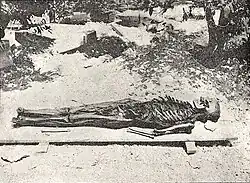 اسکلت شاه تابنیت
 سر شاه تابنیت
| دودمان اشمونعازار یکم | |||||||||||||||||||||||||||||||||||||||||||||||||||||||||||||||||||||||||||||||||||||||||||||||||||||||||||||||||||||||||||||||||||||||||||||||||||||||||||||||||||||||||||||||||||||||||||||||||||||||||||||||||||||||||||||||||||||||||||||||||||||||||||||||||||||||||||||||||||||||||||||||||||||||||||||||||||||||||||||||||||||||||||||||||||||||||||||||||||||||||||||||||||||||||||||||||
|---|---|---|---|---|---|---|---|---|---|---|---|---|---|---|---|---|---|---|---|---|---|---|---|---|---|---|---|---|---|---|---|---|---|---|---|---|---|---|---|---|---|---|---|---|---|---|---|---|---|---|---|---|---|---|---|---|---|---|---|---|---|---|---|---|---|---|---|---|---|---|---|---|---|---|---|---|---|---|---|---|---|---|---|---|---|---|---|---|---|---|---|---|---|---|---|---|---|---|---|---|---|---|---|---|---|---|---|---|---|---|---|---|---|---|---|---|---|---|---|---|---|---|---|---|---|---|---|---|---|---|---|---|---|---|---|---|---|---|---|---|---|---|---|---|---|---|---|---|---|---|---|---|---|---|---|---|---|---|---|---|---|---|---|---|---|---|---|---|---|---|---|---|---|---|---|---|---|---|---|---|---|---|---|---|---|---|---|---|---|---|---|---|---|---|---|---|---|---|---|---|---|---|---|---|---|---|---|---|---|---|---|---|---|---|---|---|---|---|---|---|---|---|---|---|---|---|---|---|---|---|---|---|---|---|---|---|---|---|---|---|---|---|---|---|---|---|---|---|---|---|---|---|---|---|---|---|---|---|---|---|---|---|---|---|---|---|---|---|---|---|---|---|---|---|---|---|---|---|---|---|---|---|---|---|---|---|---|---|---|---|---|---|---|---|---|---|---|---|---|---|---|---|---|---|---|---|---|---|---|---|---|---|---|---|---|---|---|---|---|---|---|---|---|---|---|---|---|---|---|---|---|---|---|---|---|---|---|---|---|---|---|---|---|---|---|---|---|---|---|---|---|---|---|---|---|---|---|---|---|---|---|---|---|---|---|---|---|---|---|---|---|---|---|---|---|---|---|---|---|---|---|---|---|---|---|
| |||||||||||||||||||||||||||||||||||||||||||||||||||||||||||||||||||||||||||||||||||||||||||||||||||||||||||||||||||||||||||||||||||||||||||||||||||||||||||||||||||||||||||||||||||||||||||||||||||||||||||||||||||||||||||||||||||||||||||||||||||||||||||||||||||||||||||||||||||||||||||||||||||||||||||||||||||||||||||||||||||||||||||||||||||||||||||||||||||||||||||||||||||||||||||||||||
پانویس
- ↑ Elayi 2006.
- ↑ Torrey 1902, pp. 168–9 (footnote): "When the sarcophagus of Tabnit was exhumed, in the year 1887, and the lid was removed, the body of the king was found to be in a very good state of preservation. It was lying in a brownish-colored, somewhat "oily" fluid, which nearly filled the sarcophagus. The eyes were gone; the nose, lips, and the most prominent part of the thorax, which had not been covered by the liquid, had decayed away; in other respects, however, the corpse was like that of a man only recently buried. It was but slightly emaciated; plenty of flesh remained on both face and limbs, and the skin was soft to the touch. The vital organs and viscera had not been removed (a note-worthy circumstance), and were perfectly preserved. Dr. Shibly Abela, of Sidon, a physician of education and experience, remarked that the face showed traces of small-pox; it was not apparent, however, that the king had died of that disease. The color of the skin was described as somewhat "coppery," the tinge being perhaps due to the influence of some substance, or substances, held in solution by the enveloping fluid. The fluid itself may have been partly, or even wholly, rain-water, which finds its way into most of the tombs about Sidon; but in any case it is evident, from the facts just given, that the body of the king had been skilfully embalmed. I do not know that any similar case has ever been observed and reported. After the body had been removed from the sarcophagus and exposed to the sun. it decomposed and shrunk to withered skin and bones in a very short time. My chief authority for these facts is the Rev. William K. Eddy, of Sidon, a keen observer and cautious reporter, who was one of the few who saw and touched the body of Tabnit when it was first exposed to view. Mr. Eddy was positive in his opinion that the king, at the time of his death, had not passed middle life; the face, he thought, was that of a man of less than fifty years of age."
- ↑ Gubel, Eric (2003), "Phönizische Anthropoide Sarkophage by Katja Lembke", Bulletin of the American Schools of Oriental Research, 332: 98–100, doi:10.2307/1357812, JSTOR 1357812
- ↑ İstanbul Archaeological Museums
- ↑ Nitschke 2007, p. 71: "Three of these Egyptian sarcophagi manufactured during the twenty-sixth dynasty were apparently acquired by the Sidonians, perhaps as a result of Phoenician participation in Cambyses’ conquest of Egypt in 525 B.C."
- 1 2 Nitschke 2007, p. 72.
منابع

- Elayi، Josette (۲۰۰۶). «An updated chronology of the reigns of Phoenician kings during the Persian period (539–333 BCE)» (PDF). Digitorient. Collège de France – UMR۷۹۱۲. بایگانیشده از اصلی (PDF) در ۲۰۲۰-۰۷-۳۰.
{{cite journal}}: نگهداری یادکرد:تاریخ بهطور خودکار ترجمهشده (رده) - Hamdi Bey, Osman; Reinach, Théodore (1892). Une nécropole royale à Sidon [A royal necropolis in Sidon] (in French). (چاپ نخست)
- Hamdi Bey, Osman; Reinach, Théodore (1892). Une nécropole royale à Sidon: fouilles: Planches [A royal necropolis in Sidon: excavations] (in French). (صفحات)
- Jessup، Henry Harris (۱۹۱۰). Fifty-Three Years In Syria. ج. ۲. Fleming H. Revell Company. ص. ۵۰۷.
{{cite book}}: نگهداری یادکرد:تاریخ بهطور خودکار ترجمهشده (رده) - Gottheil، Richard (۱۸۸۹). «The Inscription of Tabnit». Hebraica. ۵ (۲): ۱۹۷. doi:10.1086/369051. جیاستور 527253.
{{cite journal}}: نگهداری یادکرد:تاریخ بهطور خودکار ترجمهشده (رده) - Bommas، Martin (۲۰۰۶). «Die hieroglyphischen Texte auf dem Sarg des Tabnit» [The hieroglyphic texts on the Sarcophagi of Tabnit]. Orientalia. ۷۵ (۱): ۱۵.
{{cite journal}}: نگهداری یادکرد:تاریخ بهطور خودکار ترجمهشده (رده) - Assmann، Jan. «Zur Baugeschichte der Königsgruft von Sidon» [The construction history of the royal tomb of Sidon] (PDF). Archäologischer Anzeiger: ۶۹۰–۷۱۶.
- Nitschke، Jessica (۲۰۰۷). «Perceptions of Culture:Interpreting Greco-Near Eastern Hybridity in the Phoenician Homeland» (Ph.D.). University of California, Berkeley.
{{cite journal}}: یادکرد journal نیازمند|journal=است (کمک)نگهداری یادکرد:تاریخ بهطور خودکار ترجمهشده (رده) - Torrey، Charles (۱۹۰۲). «A Phoenician Royal Inscription». Journal of the American Oriental Society. ۲۳: ۱۵۶–۱۷۳. doi:10.2307/592387. جیاستور 592387.
{{cite journal}}: نگهداری یادکرد:تاریخ بهطور خودکار ترجمهشده (رده)
حاکمان در قلمرو شاهنشاهی هخامنشی | ||
|---|---|---|
| شاه شاهان شاهنشاهی هخامنشیان |  | |
| ساتراپهای اسپاردا |
| |
| ساتراپهای فریگیه هلسپونت | ||
| ساتراپهای کاپادوکیه |
| |
| حاکمان یونانی شهرهای آسیای کوچک |
| |
| خاندان لیکیه |
| |
| خاندان کاریا |
| |
| پادشاهان مقدونیه | ||
| شاهان صور |
| |
| شاهان صیدا |
| |
| ساتراپهای ارمنستان | ||
| ساتراپهای مصر |
| |
| ساتراپهای باختریش | ||
| ساتراپهای ماد | ||
| ساتراپهای کیلیکیه | ||
| ساتراپهای بابیروش | ||
از سال ۳۳۰ پ. م در بیشتر مناطق، حاکمان هلنی جایگزین حاکمان هخامنشی شدند. | ||