امیرخسرو دهلوی
امیرخسرو دهلوی | |
|---|---|
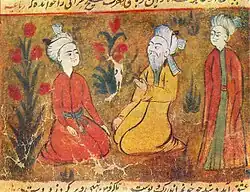 امیرخسرو توسط مردان جوان احاطه شده است. مینیاتوری از یک نسخه خطی مجلس العشاق سروده حسین بایقرا | |
| نام اصلی | حکیم ابوالحسن یمینالدین بن سیفالدین محمود |
| زاده | ۱۲۵۳ میلادی۶۵۱ هجری پتیالی، سلطاننشین دهلی (اکنون در اوتار پرادش) |
| درگذشته | اکتبر ۱۳۲۵ ۷۲۵ هجری دهلی، سلطاننشین دهلی |
| آرامگاه | در مجموعه درگاه نظامالدین اولیاء، دهلی |
| لقب | «سلطانی»، «طوطی» |
| پیشه |
|
| سبک(های) نوشتاری | غزل، قوالی، رباعی |
| کار(های) برجسته | ثمانیهٔ خسرویه |
حکیم ابوالحسن یمینالدین بن سیفالدین محمود (۱۲۵۳ – اکتبر ۱۳۲۵)، معروف به امیرخسرو دهلوی،[۱] خوانندهٔ صوفی، موسیقیدان، شاعر و اندیشمند ترکنژاد از طایفه هزاره لاچین بود که طی دورهٔ سلطاننشین دهلی میزیست.[۲][۳][۴][۵][۶]
او یکی از دو شاعر مهم اوایل قرن هشتم است که سایر سخنوران پارسیگوی هند را تحتالشعاع قرار دادند و در ادوار بعد هم نفوذی دامنهدار در میان شعرای ایران و هند داشتند. آن دو امیرخسرو، و حسن دهلوی بودند.[۷] امیرخسرو به زبانهای فارسی، عربی و سانسکریت چیرگی داشت و به «سعدی هند» معروف بود و او در اوایل حال به «سلطانی»[۸] و سپس به «طوطی» تخلص میکرد.
امیرخسرو در بسیاری از سبکهای شعر فارسی که در ایران قرون میانه شکل گرفته بودند، از قصیده خاقانی تا خمسه نظامی گنجوی، مهارت داشت. او از ۱۱ وزن شعری با ۳۵ بخش متفاوت بهره برد و در قالبهای گوناگون از جمله غزل، مثنوی، قطعه، رباعی، دوبیتی و ترکیببند شعر سرود. سهم او در گسترش و تکامل غزل بسیار چشمگیر بود.[۹]
او را اساس گذار ادبیات اردو میدانند. امیر خسرو در موسیقی نیز مشهور است و ایجاد سبک قوالی را به او نسبت میدهند.[۱۰] به یک احتمال بسیار قوی، امتیاز ابداع «طبله[۱۱]» نیز از آنِ امیر خسرو است. شاید به همین دلیل، بر آرامگاهش که در جوار پیر و مرادش نظامالدین اولیا در دهلی قرار دارد، همیشه گروههای قوالی به غزلخوانی و طبلهنوازی میپردازند. البته ایجاد آلهٔ معروف موسیقی «سهتار یا سیتار»[۱۲] و تصنیفها و سبکهای دیگر موسیقی را نیز به او نسبت دادهاند.
زندگی
ابوالحسن امیرخسرو دهلوی شاعر و عارف نامدار هندوستان در سال ۶۳۲ خورشیدی (۶۵۱ قمری) در پتیالی هند زاده شد و به سال ۷۰۳ خورشیدی (۷۲۵ قمری) در دهلی درگذشت. او ترکتبارِ هندیزاد بود و کلمات ترکی و هندی در اشعار وی بسیارند.[۱۳][۱۴] پدرش امیر سیفالدین محمود یکی از امرا،[۱۵][۱۶] میرزاده[۵] از اعضای طایفهٔ ترکتبار «هزاره لاچین» از ماوراءالنهر[۱۷] و افسران اهالی لاچینِ در نواحی بلخ بود که هنگام یورش مغولان به هندوستان گریخت و به دربار شمسالدین التتمش، پادشاه دهلی راه یافت. امیر سیفالدین با بیبی دولت ناز ازدواج کرد؛ او دختر راوت ارز، یکی از اشراف هندی و وزیر جنگ غیاث الدین بلبن، نهمین سلطان دهلی بود.[۹][۱۸][۱۹]
امیرخسرو مانند پدر که سمت امیرالامرایی داشت در دربار، بزرگی و سروری یافته بود و زمانی در درگاه جلالالدین فیروز شاه جایگاهی داشت و لقب امیری گرفت.[۶][۴][۲۰][۲۱]
وی دوران کودکی و نوجوانی را با فراگرفتن زبان و ادب فارسی در دهلی گذراند و پس از چندی در محضر یکی از بزرگترین و مشهورترین مشایخ و عارفان دوران، یعنی شیخ نظامالدین محمد بن احمد دهلوی معروف به نظام الدین اولیا، شاگردی کرد. امیرخسرو برای پیر و مراد خود احترام فراوان قایل بود و با وجود این که دایم در خدمت پادشاهان و فرمانروایان بود، هیچگاه از میزان ارادت و توجه او نسبت به شیخ کاسته نشد. امیر نیز مانند استاد خود پیرو سلسلهٔ عرفان چشتیه بود. شیخ نیز خسرو را گرامی میداشت. با حسن دهلوی شاعر نامدار پارسیزبان هند از طریق همین شیخ آشنا شد و بین آن دو دوستی عمیقی برقرار بود.
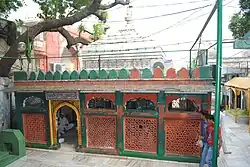
مدت کوتاهی پس از درگذشتِ نظامالدین اولیاء، امیر خسرو نیز در سال ۷۰۴ (۷۲۵ قمری) درگذشت و نزدیک آرامگاه شیخ به خاک سپرده شد. آرامگاه او در یکی از محلههای شلوغ و پرتراکم دهلی که بنام نظامالدین اولیاء معروف است و نزدیک به ایستگاه قطار شهری دهلی به نام ایستگاه قطار نظامالدین و در نزدیکی آرامگاه همایون واقع شده میزبان جمع کثیری از مردم و زیارتگاه مسلمانان و اهل تصوف است.
تأثیر و تأثرات
امیرخسرو به سبب آشنایی با زبانهای فارسی، ترکی، عربی و هندی اطلاعات نسبتاً خوبی داشت و اشعار فراوانی در زمینههای مختلف سروده است. موسیقی هندی و ایرانی را بهخوبی میشناخت. شعرش لحن و لطافتی خاص دارد و چون ترکنژاد و هندیزاد بود کلمات ترکی و هندی نیز در شعر او دیده میشود[۲۲] و میتوان «سبک وی را طلیعهٔ سبک هندی بهشمار آورد».[۲۳]
وی در غزلسرایی پیرو سعدی بود و غالباً مضامین عشقی و مسایل عرفانی را به زبان ساده و پرسوز در بحرهای کوتاه و لطیف بیان کرده[۲۴] و از الفاظ و معانی شاعران متصوف ایرانی سود میجست. خمسهاش از خمسههای تمام مقلدین نظامی نسبتاً بهتر و برتر است[۲۵][۲۶] و او در اشعارش نظامی را بهعنوان استادی مسلط به فن ستوده است:
| نظامی کهاستاد این فن وی است | در این بزمگه شمع روشن وی است | |
| ز ویرانهٔ گنجه شد گنج سنج | رسانید گنج سخن را به پنج | |
| چو خسرو به آن پنج همپنجه شد | وز آن بازوی فکرتش رنجه شد |
امیرخسرو با سنایی و خاقانی نیز الفتی داشته است و در قصاید که از غزلهایش متینتر است[۲۷] از سخنگویان بزرگ مانند کمالالدین اسماعیل و خاقانی و انوری پیروی کرده است.[۲۸] بهعنوان نمونه به اقتفای «مرآه النظر» خاقانی قصیدهٔ «مرآه الصفا» را ساخته است که از همان روزها در میان اهل ادب شهرتی یافته و بعضی از دیگر شاعران هم از آن پیروی کردهاند. قصیدهٔ خاقانی چنین آغاز میشود:[۲۹]
| دل من پیر تعلیم است و من طفل زباندانش | دم تسلیم سرعشر و سر زانو دبستانش |
و مطلع «مرآه الصّفا» ی امیرخسرو:
| دلم طفل است و پیر عشق استاد زباندانش | سواد الوجه سَبق و مسکنت کنج دبستانش |
شاعران فراوانی از سبک و شیوه و بهخصوص ابداعات و نوآوریهای امیرخسرو پیروی کردهاند. در میان شعرای ایران نیز نفوذ داشته و بسیاری از آنها مخصوصاً در حکایات و مثنویات عشقانگیز سبک او را تقلید کردهاند.[۳۰] با توجه به بعضی از غزلهای حافظ، مشخص میشود که وی با اشعار و غزلیات خسرو آشنایی داشته و تا حدی تحت تأثیر او بوده است. آوردهاند که نورالدین عبدالرحمان جامی (درگذشته ۸۹۸ هـ. ق) بیش از دیگر شاعران ایرانی، با امیرخسرو دهلوی و آثار او انس و الفت داشته و «همیشه آرزوی جامی آن بوده است که به پای او برسد».[۳۱] در کار و حال هر دو مشابهتها و همانندیهای قابلملاحظه است که عبارتند از:
- هر دو در حیات هنری خود، معطوف به گذشتهاند.
- هر دو دیوان خود را به چند بخش تقسیم کردهاند.
- امیرخسرو در منظومهٔ قران السعدین عناوین فصول و ابواب کتاب را به صورت قصیدهای موزون مرتب نموده، جامی نیز بسیاری از عناوین قصاید خود را موزون کرده است.
- هر دو اثر منثور پدیدآوردهاند.
- هر دو با تصوّف رابطه دارند.
جامی معتقد است: «امیرخسرو دهلوی در شعر متفنّن است و قصیده و غزل و مثنوی را ورزیده و همه را به کمال رسانیده، تتبع خاقانی میکند؛ هر چند به قصیدهٔ او نرسیده، اما غزل را از وی درگذرانیده. غزلهای او به واسطهٔ معانی آشنا که ارباب عشق و محبت برحسب ذوق و وجدان خود آن را درمییابند، مقبول همهکس افتاده است. خمسهٔ نظامی را کسی به از وی جواب نداده است؛ و ورای آن مثنویهای دیگر دارد.»[۳۲] هرچند ممکن است سخن جامی با توجه به بعضی از معیارهای امروزین نقد ادبی، سخن کلی تلقی شود و بعضی از اجزای آن بهخصوص آنچه دربارهٔ غزل امیرخسرو و خاقانی است، قابل تأمّل باشد.
یان ریپکا دربارهٔ خمسه امیرخسرو معتقد است: اهمیت آثار امیرخسرو در ادبیات فارسی از این جهت چشمگیر است که در خمسهٔ او داستانهای رمانتیک برجسته و اشعار حماسی ممتازی دیده میشود که موضوعهای آنها را از نظامی اقتباس کرده است. شاعر کم و بیش، رویدادها را به شکلهای گوناگون تصویر کرده و چنان با سخنوری و بلاغت موضوعها را پرورانده که گویی در مهارت و استادی دست کمی از نظامی نداشته است؛ اما او به ژرفای فلسفه زندگی و مسایل حاد اجتماعی توجهی نکرده در عین حال تردیدی نیست که این تنزل سطح با سلیقهٔ مردم زمان خسرو هماهنگ بوده است.
میراث
امیر خسرو شاعر کلاسیک پرکاری بود که با دربار بیش از هفت فرمانروای سلطنت دهلی ارتباط داشت. او معماها، ترانهها و افسانههای بسیاری نوشت که بخشی از فرهنگ عامه در جنوب آسیا شدهاند. معماهای او یکی از محبوبترین گونههای شعر هندوستانی بهشمار میروند؛ گونهای که بر پایه ایهام و بازی با واژهها شکل گرفته است.[۳۳] شمار بیشماری از این معماها طی هفت قرن از راه سنت شفاهی منتقل شدهاند.[۳۳] آثار خسرو او را بهعنوان یکی از نخستین شخصیتهای ثبتشدهٔ هندی با هویت چندفرهنگی و کثرتگرا معرفی میکنند. موسیقیدانان خلق شش سبک موسیقی شامل قول، قلبانه، نقش، گل، ترانه و خیال را به او نسبت میدهند، هرچند شواهد کافی برای این ادعا وجود ندارد.[۳۴][۳۵]
توسعهٔ هنداوی
خسرو عمدتاً به زبان فارسی مینوشت. بسیاری از اشعار هندوستانی (هندی-اردو) به او نسبت داده شدهاند، اما هیچ مدرکی برای سرایش آنها پیش از قرن هجدهم وجود ندارد و زبان این اشعار نسبتاً مدرن به نظر میرسد.[۳۶][۳۷] او اصطلاح «هنداوی» (به معنای «از هند، یعنی متعلق به هند یا هندیان» در فارسی) را برای زبان هندوستانی به کار برد[۳۸] و آن را در ادبیات اسلامی شکل داد.
او همچنین یک بالاد جنگی به زبان پنجابی سرود[۳۹] و علاوه بر آن به زبانهای عربی و سانسکریت نیز سخن میگفت.[۱۸][۴۰][۱۹][۴۱][۴۱][۴۲][۴۱] شعرهای او هنوز هم در زیارتگاههای صوفیانه در سراسر هند و پاکستان خوانده میشوند.[۹]
آثار
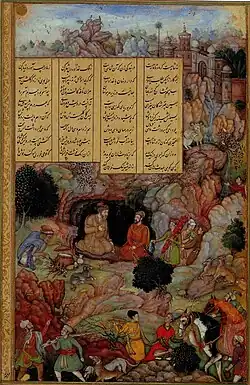
در تذکرهها دربارهٔ تعداد آثار امیر خسرو روایتهای اغراقآمیزی نقل کردهاند و از قول او نوشتهاند که شمار اشعارش از چهارصدهزار بیت بیشتر است. آثار منظوم فارسی او عبارت است از:
- دیوان امیر خسرو، شامل پنج دفتر، هر یک دارای دیباچهای متضمّن سوانح عمر و نکاتی در اسلوب شعری او به قلم خود شاعر؛ بدین قرار:
- تحفةالصّغر: سرودههای شانزده تا نوزده سالگی، شامل قصیدهها، غزلها، ترجیعبندها و زندگینامهٔ مشروح شاعر؛
- وسطالحیوة: سرودههای شاعر از بیست تا حدود ۳۲ سالگی، شامل قصیدهها، ترجیعبندها، قطعهها، غزلها و رباعیها. قصیدههای این دیوان در ستایش و مراثی «نظامالدین اولیاء»، «علاء الدّین محمّد» و «معزّالدّین کیقباد» است؛
- غرّةالکمال: سرودههای ۳۴ تا ۴۳ سالگی او، شامل قصیدهها، ترجیعبندها و قطعهها، با مقدمهای مبسوط که در آن شرح زندگانی او به تفصیل آمده است؛
- بقیة نقیّه: سرودههای دوران پیری شاعر، شامل قصیدهها، ترجیعبندها، رباعیها و یک مثنوی کوتاه. این دیوان حاوی مدایحی است دربارهٔ «علاءالدّین محمدشاه»، پسر او، بعضی امیران دیگر و نیز مرثیهای در مرگ محمدشاه؛
- نهایةالکمال: سرودههای واپسین سالهای حیات شاعر، مشتمل بر ترجیعبند، مثنوی، رباعی، غزل و نیز قصیدههایی در مدح «سلطان غیاثالدین» و مرثیهٔ «سلطان قطبالدین مبارکشاه».
- دیوان غزلیات، که چند بار جمعآوری شده و در هند و پاکستان به چاپ رسیده است. نخستین چاپ آن در ۱۸۷۱ م؛ و بار دوم در ۱۳۹۲ هجری در لاهور منتشر شد. دیوان امیر خسرو بارها در هند و ایران تصحیح و چاپ شده است.
- ثمانیهٔ خسرویه: امیر خسرو دهلوی بزرگترین نمایندهٔ ادبیات فارسیزبان هند و نخستین ادامهدهندهٔ مکتب ادبی نظامی گنجوی است. او به نظامی گنجوی اعتقادی تام داشت و به تقلید و در جواب خمسهٔ نظامی خمسهای ساخته است شامل:
- مطلعالانوار: بر وزن و شیوهٔ مخزنالأسرار
- شیرین و خسرو
- مجنون و لیلی: مجنون و لیلی سومین منظومه امیر خسرو است که شاعر در سال ۱۲۹۹ نوشته و یکی از بهترین منظومههایی است که تحت تأثیر لیلی و مجنون نظامی آمده است.
- آیینهٔ سکندری: بر وزن و شیوهٔ اسکندرنامه
- هشت بهشت: به تقلید از هفت پیکر
- امیرخسرو دارای تصنیفها و منظومههای دیگری نیز به شرح زیر است:
- قرانالسعدین: مجموعهای از یک سلسله تشبیهات عالی قلمی است که مسایل و موضوعات مختلف را مجسم میسازد. بهعلاوه، دو نکتهٔ کاملاً بکر را از اشعار امیر خسرو برای ما روشن میکند:
- اشعاری با یکوزن و قافیه که برای عنوان فصول مختلف بسیار مناسبند و میتوان آنها را به صورت قصیده به یکدیگر مرتبط ساخت.
- تعدادی غزل که احساسات فصول را قبل از ذکر آن منعکس میسازد و در عین حال دارای حالت یکنواختی وزن مثنوی نیست.[۴۳]
- نه سپهر: اثریست با نه بخش که در بحرهای مختلف سروده شده است. از آن جمله بحر رجز مسدس مطوی (مفتعلن مفتعلن مفتعلن) که ابتکار خسروست.[۴۴]
- مفتاحالفتوح
- مثنوی دولرانی و خضرخان: عشقهای خضرخان پسر علاءالدین با دولرانی دختر امیر گجرات که گذشته از مزایای ادبی، ارزش تاریخی و اجتماعی هم دارند.[۴۵]
- سه شاهزاده سرندیپ: افسانهای است ایرانی که لغت رایج سرندیپیتی در زبانهای غربی از آن سرچشمه گرفته.
- اشعار زیر را هم بدو نسبت دادهاند:
- قصیدهٔ شکوائیه
- ماتم غم
- آینهداری دل
نمونه اشعار
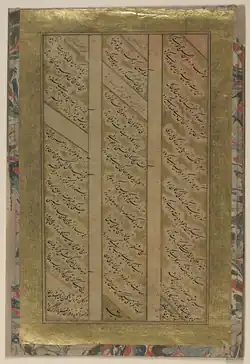
| ای زلف چلیپای تو غارتگر دینها | وی کرده گمانِ دهنت دفع یقینها | |
| زینسان که بکشتی به شکر خنده جهانی | خواهم که به دندان کشم از لعل تو کینها | |
| گر مهر گیا بایدت ای دوست طلب کن | هر جا که چکد آب دو چشمم به زمینها | |
| دشوار رود مهر تو از سینهٔ خسرو | مانده است چو نقشی که بماند به نگینها | |
*** | ||
| بیم است که سودایت دیوانه کند ما را | در شهر به بدنامی افسانه کند ما را | |
| من میزدهٔ دوشم شاید که خیال تو | امروز به یک ساغر مستانه کند ما را | |
*** | ||
| کدام سنگدلت شیوه جفا آموخت؟ | که ناز و شوخیت از بهر جان ما آموخت؟ | |
| جراحت جگر خستگان چه میپرسی؟ | ز غمزه پرس که این شوخی از کجا آموخت؟ | |
*** | ||
| بشکافت غم این جان جگرخواره ما را | یا رب، چه وبال آمده سیاره ما را | |
| رفتند رفیقان دل صدپاره ببردند | کردند رها دامن صدپارهٔ ما را | |
*** | ||
| آوردهام شفیع دل زار خویش را | پندی بده دو نرگس خونخوار خویش را | |
| ای دوستی که هست خراش دلم از تو | مرهم نمیدهی دلافکار خویش را | |
| آزاد بندهای که به پایت فتاد و مرد | وآزاد کرد جان گرفتار خویش را | |
| بنمای قد خویش که از بهر دیدنت | تربر کنیم بخت نگونساز خویش را | |
| سرها بسی زدی سر من هم زن از طفیل | از سر رواج ده روش کار خویش را | |
| دشنام از زبان توأم میکند هوس | تعظیم کن به این قدری یار خویش را | |
*** | ||
| ابر میبارد و من میشوم از یار جدا | چون کنم دل به چنین روز ز دلدار جدا | |
| ابر و باران و من و یار ستاده به وداع | من جدا گریه کنان، ابر جدا، یار جدا | |
جستارهای وابسته
پینوشت
- ↑ سدارنگانی، پارسیگویان هند و سند.
- ↑ Habib, Mohammad (2004). Hazrat Amir Khusrau of Delhi (in English). Cosmo Publications. ISBN 978-81-7755-901-9.
- ↑ سدارنگانی، پارسیگویان هند و سند.
- 1 2 نرگس جهان، شخصیت امیر خسرو دهلوی در نظر تذکرهنویسان و دیگران (قند پارسی، شمارهٔ ۲۲، تابستان ۱۳۸۲دهلی)، ص۷۸.
- 1 2 ذبیحالله صفا، تاریخ ادبیات در ایران (ج۳ بخش۲) تهران، ۱۳۶۹، ص۷۷۳
- 1 2 سید نورالحسن عابدی، احوال و آثار امیر خسرو (مقدمهٔ کلیات غزلیات خسرو)، لاهور، ۱۹۷۲، ص۵۷.
- ↑ سدارنگانی، پارسیگویان هند و سند.
- ↑ خود شاعر در تحفة الصغر گوید:نیز رجوع شود به فهرست نسخ فارسی موزهٔ بریتانی تألیف ریو (ج۲، ص۶۰۹)
گرچه این از قضای یزدانی است پتیالی چه جای سلطانی است - 1 2 3 Schimmel, A. "Amīr Ḵosrow Dehlavī". Encyclopaedia Iranica. Eisenbrauns Inc. Archived from the original on 17 May 2016. Retrieved 30 December 2023.
- ↑ «qawwali».
- ↑ «Tabla».
- ↑ ادبیات دری صنف نهم، ص ۲۸.
- ↑ روز، اطلاعات (۲۰۱۹-۰۴-۲۳). «در جستوجویشناسنامهٔ اصلی امیر خسرو». اطلاعات روز. دریافتشده در ۲۰۲۳-۰۹-۲۹.
{{cite web}}: نگهداری یادکرد:تاریخ بهطور خودکار ترجمهشده (رده) - ↑ سدارنگانی، پارسیگویان هند و سند.
- ↑ محمد صادق دهلوی کشمیری همدانی، کلمات الصادقین (تذکرهٔ صوفیان مدفون در دهلی تا سال ۱۰۲۳)، ص۸۱.
- ↑ توفیق سبحانی، تاریخ ادبیات ایران، انتشارات پیام نور، ص ۱۴۴.
- ↑ Tsygankov, Alexander S. (2018-10). "History of Philosophy. 2018, Vol. 23, No. 2 TABLE OF CONTENTS Theory and Methodology of History of Philosophy Rodion V. Savinov. Philosophy of Antiquity in Scholasticism This article examines the forms of understanding ancient philosophy in medieval and post-medieval scholasticism. Using the comparative method the author identifies the main approaches to the philosophical heritage of Antiquity, and to the problem of reviving the doctrines of the past. The Patristics (Epiphanius of Cyprus, Filastrius of Brixia, Lactantius, Augustine) saw the ancient cosmological doctrines as heresies. The early Middle Ages (e.g., Isidore of Seville) assimilated the content of these heresiographic treatises, which became the main source of information about ancient philosophy. Scholasticism of the 13th–14th cent. remained cautious to ancient philosophy and distinguished, on the one hand, the doctrinal content discussed in the framework of the exegetic problems at universities (Albert the Great, Thomas Aquinas, etc.), and, on the other hand, information on ancient philosophers integrated into chronological models of medieval chronicles (Peter Comestor, Vincent de Beauvais, Walter Burleigh). Finally, the post-medieval scholasticism (Pedro Fonseca, Conimbricenses, Th. Stanley, and others) raised the questions of the «history of ideas», thereby laying the foundation of the history of philosophy in its modern sense. Keywords: history of philosophy, Patristic, Scholasticism, reflection, critic DOI: 10.21146/2074-5869-2018-23-2-5-17 World Philosophy: the Past and the Present Mariya A. Solopova. The Chronology of Democritus and the Fall of Troy The article considers the chronology of Democritus of Abdera. In the times of Classical Antiquity, three different birth dates for Democritus were known: c. 495 BC (according to Diodorus of Sicily), c. 470 BC (according to Thrasyllus), and c. 460 BC (according to Apollodorus of Athens). These dates must be coordinated with the most valuable doxographic evidence, according to which Democritus 1) "was a young man during Anaxagoras's old age" and that 2) the Lesser World-System (Diakosmos) was compiled 730 years after the Fall of Troy. The article considers the argument in favor of the most authoritative datings belonging to Apollodorus and Thrasyllus, and draws special attention to the meaning of the dating of Democritus' work by himself from the year of the Fall of Troy. The question arises, what prompted Democritus to talk about the date of the Fall of Troy and how he could calculate it. The article expresses the opinion that Democritus indicated the date of the Fall of Troy not with the aim of proposing its own date, different from others, but in order to date the Lesser World-System in the spirit of intellectual achievements of his time, in which, perhaps, the history of the development of mankind from the primitive state to the emergence of civilization was discussed. The article discusses how to explain the number 730 and argues that it can be the result of combinations of numbers 20 (the number of generations that lived from the Fall of Troy to Democritus), 35 – one of the constants used for calculations of generations in genealogical research, and 30. The last figure perhaps indicates the age of Democritus himself, when he wrote the Lesser Diakosmos: 30 years old. Keywords: Ancient Greek philosophy, Democritus, Anaxagoras, Greek chronography, doxographers, Apollodorus, Thrasyllus, capture of Troy, ancient genealogies, the length of a generation DOI: 10.21146/2074-5869-2018-23-2-18-31 Bembya L. Mitruyev. "Yogācārabhumi-Śāstra" as a Historical and Philosophical Source The article deals with "Yogācārabhūmi-Śāstra" – a treatise on the Buddhist Yogācāra school. Concerning the authorship of this text, the Indian and Chinese traditions diverge: in the first, the treatise is attributed to Asanga, and in the second tradition to Maitreya. Most of the modern scholars consider it to be a compilation of many texts, and not the work of one author. Being an important monument for both the Yogacara tradition and Mahayana Buddhism in general, Yogācārabhūmi-Śāstra is an object of scientific interest for the researchers all around the world. The text of the treatise consists of five parts, which are divided into chapters. The contents of the treatise sheds light on many concepts of Yogācāra, such as ālayavijñāna, trisvabhāva, kliṣṭamanas, etc. Having briefly considered the textological problems: authorship, dating, translation, commenting and genre of the text, the author suggests the reconstruction of the content of the entire monument, made on the basis of his own translation from the Tibetan and Sanskrit. This allows him to single out from the whole variety of topics those topics, the study of which will increase knowledge about the history of the formation of the basic philosophical concepts of Yogācāra and thereby allow a deeper understanding of the historical and philosophical process in Buddhism and in other philosophical movements of India. Keywords: Yogācārabhūmi-śāstra, Asaṅga, Māhāyana, Vijñānavāda, Yogācāra, Abhidharma, ālayavijñāna citta, bhūmi, mind, consciousness, meditation DOI: 10.21146/2074-5869-2018-23-2-32-43 Tatiana G. Korneeva. Knowledge in Nāșir Khusraw's Philosophy The article deals with the concept of "knowledge" in the philosophy of Nāșir Khusraw. The author analyzes the formation of the theory of knowledge in the Arab-Muslim philosophy. At the early stages of the formation of the Arab-Muslim philosophy the discussion of the question of cognition was conducted in the framework of ethical and religious disputes. Later followers of the Falsafa introduced the legacy of ancient philosophers into scientific circulation and began to discuss the problems of cognition in a philosophical way. Nāșir Khusraw, an Ismaili philosopher of the 11th century, expanded the scope of knowledge and revised the goals and objectives of the process of cognition. He put knowledge in the foundation of the world order, made it the cause and ultimate goal of the creation of the world. In his philosophy knowledge is the link between the different levels of the universe. The article analyzes the Nāșir Khusraw's views on the role of knowledge in various fields – metaphysics, cosmogony, ethics and eschatology. Keywords: knowledge, cognition, Ismailism, Nāșir Khusraw, Neoplatonism, Arab-Muslim philosophy, kalām, falsafa DOI: 10.21146/2074-5869-2018-23-2-44-55 Vera Pozzi. Problems of Ontology and Criticism of the Kantian Formalism in Irodion Vetrinskii's "Institutiones Metaphysicae" (Part II) This paper is a follow-up of the paper «Irodion Vetrinskii's "Institutiones Metaphysicae" and the St. Petersburg Theological Academy» (Part I). The issue and the role of "ontology" in Vetrinskii's textbook is analyzed in detail, as well as the author's critique of Kantian "formalism": in this connection, the paper provides a description of Vetrinskii's discussion about Kantian theory of the a priori forms of sensible intuition and understanding. To sum up, Vetrinskii was well acquainted not only with Kantian works – and he was able to fully evaluate their innovative significance – but also with late Scholastic textbooks of the German area. Moreover, he relied on the latters to build up an eclectic defense of traditional Metaphysics, avoiding at the same time to refuse Kantian perspective in the sake of mere reaffirming a "traditional" perspective. Keywords: Philosophizing at Russian Theological Academies, Russian Enlightenment, Russian early Kantianism, St. Petersburg Theological Academy, history of Russian philosophy, history of metaphysics, G.I. Wenzel, I. Ya. Vetrinskii DOI: 10.21146/2074-5869-2018-23-2-56-67 Alexey E. Savin. Criticism of Judaism in Hegel's Early "Theological" Writings The aim of the article is to reveal the nature of criticism of Judaism by the "young" Hegel and underlying intuitions. The investigation is based on the phenomenological approach. It seeks to explicate the horizon of early Hegel's thinking. The revolutionary role of early Hegel's ideas reactivation in the history of philosophy is revealed. The article demonstrates the fundamental importance of criticism of Judaism for the development of Hegel's thought. The sources of Hegelian thematization and problematization of Judaism – his Protestant theological background within the framework of supranaturalism and the then discussion about human rights and political emancipation of Jews – are discovered. Hegel's interpretation of the history of the Jewish people and the origin of Judaism from the destruction of trust in nature, the fundamental mood of distrust and fear of the world, leading to the development of alienation, is revealed. The falsity of the widespread thesis about early Hegel's anti-Semitism is demonstrated. The reasons for the transition of early Hegel from "theology" to philosophy are revealed. Keywords: Hegel, Judaism, history, criticism, anti-Semitism, trust, nature, alienation, tyranny, philosophy DOI: 10.21146/2074-5869-2018-23-2-68-80 Evgeniya A. Dolgova. Philosophy at the Institute of Red Professors (1921–1938): Institutional Forms, Methods of Teaching, Students, Lecturers The article explores the history of the Institute of the Red Professors in philosophy (1921–1938). Referring to the unpublished documents in the State Archives of the Russian Federation and the Archive of the Russian Academy of Sciences, the author explores its financial and infrastructure support, information sphere, characterizes students and teachers. The article illustrates the practical experience of the functioning of philosophy within the framework of one of the extraordinary "revolutionary" projects on the renewal of the scientific and pedagogical sphere, reflects a vivid and ambiguous picture of the work of the educational institution in the 1920s and 1930s and corrects some of historiographical judgments (about the politically and socially homogeneous composition of the Institute of Red Professors, the specifics of state support of its work, privileges and the social status of the "red professors"). Keywords: Institute of the Red Professors in Philosophy, Philosophical Department, soviet education, teachers, students, teaching methods DOI: 10.21146/2074-5869-2018-23-2-81-94 Vladimir V. Starovoitov. K. Horney about the Consequences of Neurotic Development and the Ways of Its Overcoming This article investigates the views of Karen Horney on psychoanalysis and neurotic development of personality in her last two books: "Our Inner Conflicts" (1945) and "Neurosis and Human Grows" (1950), and also in her two articles "On Feeling Abused" (1951) and "The Paucity of Inner Experiences" (1952), written in the last two years of her life and summarizing her views on clinical and theoretical problems in her work with neurotics. If in her first book "The Neurotic Personality of Our Time" (1937) neurosis was a result of disturbed interpersonal relations, caused by conditions of culture, then the concept of the idealized Self open the gates to the intrapsychic life. Keywords: Neo-Freudianism, psychoanalysis, neurotic development of personality, real Self, idealized image of Self DOI: 10.21146/2074-5869-2018-23-2-95-102 Publications and Translations Victoria G. Lysenko. Dignāga on the Definition of Perception in the Vādaviddhi of Vasubandhu. A Historical and Philosophical Reconstruction of Dignāga's Pramāṇasamuccayavṛtti (1.13-16) The paper investigates a fragment from Dignāga's magnum opus Pramāṇasamuccayavṛtti ("Body of tools for reliable knowledge with a commentary", 1, 13-16) where Dignāga challenges Vasubandhu's definition of perception in the Vādaviddhi ("Rules of the dispute"). The definition from the Vādaviddhi is being compared in the paper with Vasubandhu's ideas of perception in Abhidharmakośabhāṣya ("Encyclopedia of Abhidharma with the commentary"), and with Dignāga's own definition of valid perception in the first part of his Pramāṇasamuccayavṛtti as well as in his Ālambanaparīkśavṛtti ("Investigation of the Object with the commentary"). The author puts forward the hypothesis that Dignāga criticizes the definition of perception in Vādaviddhi for the reason that it does not correspond to the teachings of Vasubandhu in his Abhidharmakośabhāṣya, to which he, Dignāga, referred earlier in his magnum opus. This helps Dignāga to justify his statement that Vasubandhu himself considered Vādaviddhi as not containing the essence of his teaching (asāra). In addition, the article reconstructs the logical sequence in Dignāga's exegesis: he criticizes the Vādaviddhi definition from the representational standpoint of Sautrāntika school, by showing that it does not fulfill the function prescribed by Indian logic to definition, that of distinguishing perception from the classes of heterogeneous and homogeneous phenomena. Having proved the impossibility of moving further according to the "realistic logic" based on recognizing the existence of an external object, Dignāga interprets the Vādaviddhi's definition in terms of linguistic philosophy, according to which the language refers not to external objects and not to the unique and private sensory experience (svalakṣaṇa-qualia), but to the general characteristics (sāmānya-lakṣaṇa), which are mental constructs (kalpanā). Keywords: Buddhism, linguistic philosophy, perception, theory of definition, consciousness, Vaibhashika, Sautrantika, Yogacara, Vasubandhu, Dignaga DOI: 10.21146/2074-5869-2018-23-2-103-117 Elizaveta A. Miroshnichenko. Talks about Lev N. Tolstoy: Reception of the Writer's Views in the Public Thought of Russia at the End of the 19th Century (Dedicated to the 190th Anniversary of the Great Russian Writer and Thinker) This article includes previously unpublished letters of Russian social thinkers such as N.N. Strakhov, E.M. Feoktistov, D.N. Tsertelev. These letters provide critical assessment of Lev N. Tolstoy's teachings. The preface to publication includes the history of reception of Tolstoy's moral and aesthetic philosophy by his contemporaries, as well as influence of his theory on the beliefs of Russian idealist philosopher D.N. Tsertelev. The author offers a rational reconstruction of the dialogue between two generations of thinkers representative of the 19th century – Lev N. Tolstoy and N.N. Strakhov, on the one hand, and D.N. Tsertelev, on the other. The main thesis of the paper: the "old" and the "new" generations of the 19th-century thinkers retained mutual interest and continuity in setting the problems and objectives of philosophy, despite the numerous worldview contradictions. Keywords: Russian philosophy of the nineteenth century, L.N. Tolstoy, N.N. Strakhov, D.N. Tsertelev, epistolary heritage, ethics, aesthetics DOI: 10.21146/2074-5869-2018-23-2-118-130 Reviews Nataliya A. Tatarenko. History of Philosophy in a Format of Lecture Notes (on Hegel G.W.F. Vorlesungen zur Ästhetik. Vorlesungsmitschrift Adolf Heimann (1828/1829). Hrsg. von A.P. Olivier und A. Gethmann-Siefert. München: Wilhelm Fink, 2017. XXXI + 254 S.) Released last year, the book "G.W.F. Hegel. Vorlesungen zur Ästhetik. Vorlesungsmitschrift Adolf Heimann (1828/1829)" in German is a publication of one of the student's manuskript of Hegel's lectures on aesthetics. Adolf Heimann was a student of Hegel in 1828/29. These notes open for us imaginary doors into the audience of the Berlin University, where Hegel read his fourth and final course on the philosophy of art. A distinctive feature of this course is a new structure of lectures in comparison with three previous courses. This three-part division was took by H.G. Hotho as the basis for the edited by him text "Lectures on Aesthetics", included in the first collection of Hegel's works. The content of that publication was mainly based on the lectures of 1823 and 1826. There are a number of differences between the analyzed published manuskript and the students' records of 1820/21, 1823 and 1826, as well as between the manuskript and the editorial version of H.G. Hotho. These features show that Hegel throughout all four series of Berlin lectures on the philosophy of art actively developed and revised the structure and content of aesthetics. But unfortunately this evidence of the permanent development was not taken into account by the first editor of Hegel's lectures on aesthetics. Keywords: G.W.F. Hegel, H.G. Hotho, philosophy of art, aesthetics, forms of art, idea of beauty, ideal DOI: 10.21146/2074-5869-2018-23-2-131-138 Alexander S. Tsygankov. On the Way to the Revival of Metaphysics: S.L. Frank and E. Coreth Readers are invited to review the monograph of the modern German researcher Oksana Nazarova "The problem of the renaissance and new foundation of metaphysics through the example of Christian philosophical tradition. Russian religious philosophy (Simon L. Frank) and German neosholastics (Emerich Coreth)", which was published in 2017 in Munich. In the paper, the author offers a comparative analysis of the projects of a new, "post-dogmatic" metaphysics, which were developed in the philosophy of Frank and Coreth. This study addresses the problems of the cognitive-theoretical and ontological foundation of the renaissance of metaphysics, the methodological tools of the new metaphysics, as well as its anthropological component. O. Nazarova's book is based on the comparative analysis of Frank's religious philosophy and Coreth's neo-cholastic philosophy from the beginning to the end. This makes the study unique in its own way. Since earlier in the German reception of the heritage of Russian thinker, the comparison of Frank's philosophy with the Catholic theology of the 20th century was realized only fragmentarily and did not act as a fundamental one. Along with a deep and meaningful analysis of the metaphysical projects of both thinkers, this makes O. Nazarova's book relevant to anyone who is interested in the philosophical dialogue of Russia and Western Europe and is engaged in the work of Frank and Coreth. Keywords: the renaissance of metaphysics, post-Kantian philosophy, Christian philosophy, S.L. Frank, E. Coreth DOI: 10.21146/2074-5869-2018-23-2-139-147". History of Philosophy. 23 (2): 139–147. doi:10.21146/2074-5869-2018-23-2-139-147. ISSN 2074-5869.
{{cite journal}}: تاریخ وارد شده در|date=|title=در موقعیت 45 (کمک) - 1 2 Iraj Bashiri. "Amir Khusrau Dihlavi profile". Angelfire. Archived from the original on 20 May 2008. Retrieved 30 December 2023.
- 1 2 Pickthall & Asad 1930, p. .
- ↑ شریف حسین قاسمی، عرفا و شعرای چند از بلخ در هند (قند پارسی، شمارهٔ ۳۲، زمستان ۱۳۸۴ دهلی)، ص ۱۳.
- ↑ ذبیحالله صفا، تاریخ ادبیات در ایران (ج۳ بخش۲) تهران، ۱۳۶۹، ص۷۷۳.
- ↑ سدارنگانی، پارسیگویان هند و سند.
- ↑ محمد معین، «امیرخسرو دهلوی»، ص۱۲.
- ↑ سدارنگانی، پارسیگویان هند و سند.
- ↑ سدارنگانی، پارسیگویان هند و سند.
- ↑ محمد معین، «امیرخسرو دهلوی، ص۱۹. بایسنغر خمسهاش را بر خمسهٔ نظامی تفضیل داده است (تذکرهٔ دولتشاه، ص۳۴۰)
- ↑ محمد معین، «امیرخسرو دهلوی»، ص۱۳.
- ↑ سدارنگانی، پارسیگویان هند و سند.
- ↑ خاقانی، دیوان خاقانی، ۲۰۹.
- ↑ سدارنگانی، پارسیگویان هند و سند.
- ↑ سعید نفیسی، مجلهٔ ارمغان شمارهٔ ۸–۹، سال ۱۳۰۸، ص۵۷۴.
- ↑ جامی، بهارستان، ۱۰۶.
- 1 2 Sharma 2005, p. 79.
- ↑ Saeed, Yousuf. "Amir Khusrau and the Indo-Muslim Identity in the Art Music Practices of Pakistan". academia.edu website. Archived from the original on 2 July 2023. Retrieved 30 December 2023.
- ↑ Majumdar, Abhik (30 June 2013). "Amir Khusro & His Influence on Indian Classical Music". Archived from the original on 3 February 2022. Retrieved 26 January 2018.
- ↑ Dihlavī 2011, p. .
- ↑ Khusrau's Hindvi Poetry, An Academic Riddle? Yousuf Saeed, 2003
- ↑ Keith Brown; Sarah Ogilvie (2008). Concise Encyclopedia of Languages of the World. Elsevier. ISBN 978-0-08-087774-7.
Apabhramsha seemed to be in a state of transition from Middle Indo-Aryan to the New Indo-Aryan stage. Some elements of Hindustani appear … the distinct form of the lingua franca Hindustani appears in the writings of Amir Khusro (1253–1325), who called it Hindwi[.]
- ↑ Tariq, Rahman. "Punjabi Language during British Rule" (PDF). Journal of Punjab Studies. 14 (1). Archived from the original (PDF) on 15 September 2012.
- ↑ Habib 2018, p. .
- 1 2 3 Dihlavī 1975, p. .
- ↑ Devy 2018, p. .
- ↑ سدارنگانی، پارسیگویان هند و سند.
- ↑ سدارنگانی، پارسیگویان هند و سند.
- ↑ سدارنگانی، پارسیگویان هند و سند.
منابع
- سدارنگانی، هرومل (۱۳۴۵). پارسیگویان هند و سند. تهران: بنیاد فرهنگ ایران. بایگانیشده از اصلی در ۲۲ سپتامبر ۲۰۱۳. دریافتشده در ۱۲ مه ۲۰۱۲.
{{cite book}}: نگهداری یادکرد:تاریخ بهطور خودکار ترجمهشده (رده) - فرهنگ فارسی معین، جلد پنجم، اعلام
- دیوان خاقانی، به کوشش دکتر ضیاءالدین سجادی، کتابفروشی زوّار، تهران، چاپ دوم، ۱۳۶۲.
- دیوان خواجو، به تصحیح احمد سهیلی خوانساری، انتشارات پاژنگ، تهران، ۱۳۶۹.
- با کاروان حله، عبدالحسین زرین کوب، انتشارات علمی، چاپ ششم، ۱۳۷۰.
- بهارستان، مولانا عبدالرحمان جامی، به تصحیح اسماعیل حاکمی، انتشارات اطلاعات، تهران، ۱۳۶۷.
- تاریخ ادبیات در ایران (جلد سوم)، ذبیحالله صفا، انتشارات فردوسی، چاپ سوم، ۱۳۶۳.
- تاریخ فیروزشاهی، ضیاءالدین بَرَنی، به تصحیح شیخ عبدالرشید، علیگر، ۱۹۵۷م.
- تکمله نفحات الانس، عبدالغفور لاری، با تصحیح و توضیح محمود عابدی، جام گل، تهران، ۱۳۸۰.
- جامی (نورالدین عبدالرحمن جامی)، علی اصغر حکمت، انتشارات توس، ۱۳۶۳.
- خمسه المتحیرین، امیرعلی شیر نوایی، ترجمه نخجوانی، کتابخانه مرکزی دانشگاه تهران، مجموعه حکمت (شماره۱۱۱).
- دیوان کامل جامی، ویراسته هاشم رضی، انتشارات پیروز، بی تا.
- سیرالاولیاء، سید محمدبن علوی کرمانی (= میرخورد)، اسلامآباد، ۱۳۵۷.
- سیری در شعری فارسی، عبدالحسین زرین کوب، انتشارات نوین، ۱۳۶۳.
- شعرالعجم، شبلی نعمانی، ترجمه فخر داعی گیلانی، دنیای کتاب، تهران.
- کلیات جامی، نسخه عکسی، شماره ۱۶–۲۲۰۵، کتابخانه مرکزی دانشگاه تهران.
- کلیات سعدی، به اهتمام محمدعلی فروغی، امیرکبیر، تهران، چاپ هفتم، ۱۳۶۷.
- مکارم الاخلاق (شرح احوال و زندگانی امیرعلی شیر نوایی)، خواندمیر، با مقدمّه، تصحیح و تحقیق محمداکبر عشیق، مرکز نشر میراث مکتوب، ۱۳۷۸.
- لیلی و مجنون، مکتبی شیرازی، به اهتمام و تصحیح اسماعیل اشرف، کتاب فروشی محمدی شیراز، ۱۳۴۳.
- مرزبان نامه، سعدالدین وراوینی، به تصحیح محمد روشن، تهران، نشر نو، چاپ دوم، ۱۳۶۷.
- مطلع الانوار، امیرخسرو دهلوی، با تصحیح و مقدمه طاهر احمد اوغلی محرم اوف، مسکو، ۱۹۷۵ م.
- فوایدالفؤاد، (ملفوظات خواجه نظام الدین اولیاء)، خواجه حسن دهلوی، تصحیح محمدلطیف ملک، افست تهران، انتشارات روزنه، ۱۳۷۷.
- نفحات الانس، نورالدین عبدالرحمان جامی، با مقدمه، تصحیح و تعلیقات محمود عابدی، انتشارات اطلاعات، چاپ چهارم، ۱۳۸۲.
- هفت اورنگ، نورالدین عبدالرحمان جامی، به تصحیح و مقدمه آقا مرتضی مدرّس گیلانی، کتابفروشی سعدی، تهران.
پیوند به بیرون


- افراد هندی افغانستانیتبار
- افراد هندی ایرانیتبار
- تلمیع
- چشتیه
- درگذشتگان ۱۳۲۵ (میلادی)
- زادگان ۱۲۵۳ (میلادی)
- سلطنت دهلی
- شاعران اهل اوتار پرادش
- شاعران اهل دهلی
- شاعران سبک هندی
- شاعران سده ۱۳ (میلادی) اهل هند
- شاعران سده ۱۴ (میلادی) اهل هند
- شاعران صوفی
- شاعران فارسیزبان اهل هند
- شاعران فارسیزبان سده ۷ (قمری)
- شاعران فارسیزبان سده ۸ (قمری)
- شاعران مرد اهل هند
- صوفیان اهل هند
- فهرست افراد برروی تمبرها
- قوالی
- مسلمانان اهل هند
- نویسندگان دوران قرون وسطی
- شاعران سده ۱۳ (میلادی) اهل ایران
- شاعران سده ۱۴ (میلادی) اهل ایران
- مردمان ترک