فرگشت فرهنگی
| بخشی از مجموعه مقالههای |
| زیستشناسی فرگشتی |
|---|
 |
|
درگاه.ویکیپروژه |
فرگشت یا فرگشت فرهنگی (به انگلیسی:Cultural evolution) یک نظریه فرگشتی دربارهٔ دگرگونی اجتماعی است. فرگشت فرهنگ از تعریف فرهنگ نشات گرفته است. فرهنگ «اطلاعاتی که میتوانند بر رفتار افراد تأثیر بگذارند تعریف میشود. این اطلاعات از طریق آموزش، تقلید و سایر اشکال انتقال اجتماعی از سایر اعضای همنوع انسان به دست میآید».[۱] فرگشت فرهنگی تغییر این اطلاعات در طول زمان است.[۲]
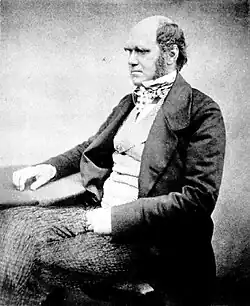
فرگشت فرهنگی، که از لحاظ تاریخی به عنوان فرگشت اجتماعی-فرهنگی نیز شناخته میشود، در ابتدا در قرن نوزدهم توسط انسانشناسانی برخاست که از تحقیقات چارلز داروین در مورد فرگشت تأثیر پذیرفته بودند. امروزه، فرگشت فرهنگی به پایه و اساس یک زمینه رو به رشد تحقیقات علمی در علوم اجتماعی، از جمله انسانشناسی، اقتصاد، روانشناسی و مطالعات سازمانی تبدیل شده است. قبلاً اعتقاد بر این بود که تغییرات اجتماعی ناشی از سازگاریهای زیستی است، اما مردم شناسان اکنون معمولاً پذیرفتهاند که تغییرات اجتماعی در نتیجه ترکیبی از تأثیرات اجتماعی، فرگشتی و زیستی ایجاد میشود.[۳][۴]
چندین رویکرد مختلف برای مطالعه فرگشت فرهنگی وجود داشته است، از جمله نظریه وراثت دوگانه، فرگشت اجتماعی-فرهنگی، یادهشناسی، فرگشت گرایی فرهنگی و انواع دیگر در نظریه انتخاب فرهنگی. رویکردهای فرگشت فرهنگی نه تنها در تاریخ توسعه و رشتهای منشأ خود، بلکه در نحوه مفهوم سازی فرایند فرگشت فرهنگی و مفروضات آن و نظریهها و روشهایی که برای مطالعه آن اعمال میشود، متفاوت هستند. در سالهای اخیر، همگرایی در دستهای از نظریههای مرتبط به سمت مشاهده فرگشت فرهنگی بهعنوان یک رشته یکپارچه در نوع خود وجود داشته است.[۵][۶]
تفاوت سرعت فرگشت فرهنگی و ژنتیکی
یکی از قویترین استدلالهای نظریه فرگشت فرهنگی، تفاوت چشمگیر سرعت میان دو نوع فرگشت است. فرگشت ژنتیکی فرایندی کند است — گسترش یک جهش مفید در کل جمعیت معمولاً به هزاران تا دهها هزار سال نیاز دارد. برای مثال، ژن تحمل لاکتوز با ضریب انتخاب نسبتاً بالای ۰٫۰۹ تا ۰٫۱۹ حدود ۹۰۰۰ سال طول کشید تا در جمعیت اسکاندیناوی به اکثریت برسد.[۷] در مقابل، فرگشت فرهنگی میتواند در طول چند نسل — یا حتی چند دهه — تغییرات بنیادین ایجاد کند. پیتر ریچرسون و رابرت بوید استدلال میکنند که همین تفاوت سرعت است که انسان را از سایر گونهها متمایز میکند؛ زیرا به انسان اجازه میدهد بدون انتظار برای تغییرات ژنتیکی، بهسرعت با محیطهای جدید سازگار شود.[۸]
این تفاوت سرعت پیامدهای مهمی برای درک پدیدههای فرهنگی و اجتماعی دارد. نخست، توضیح میدهد چرا ادیان، زبانها و ایدئولوژیها اینقدر سریع تغییر میکنند و انشعاب میدهند — مسیحیت در کمتر از سه قرن از یک جنبش کوچک در فلسطین به دین رسمی امپراتوری روم تبدیل شد، تغییری که هیچ فرگشت ژنتیکی مشابهی نمیتوانست در این بازه زمانی رخ دهد.[۹] دوم، توضیح میدهد چرا جوامعی که از یادگیری فرهنگی انباشتهشده بهره میبرند در رقابت با جوامعی که به غرایز ژنتیکی تکیه میکنند پیروز میشوند — فرهنگ مثل یک «حافظه جمعی» عمل میکند که دانش و راهبردهای انطباقی را بدون نیاز به تغییر ژنتیکی از نسلی به نسل دیگر منتقل میکند.[۱۰]
پیتر ریچرسون و رابرت بوید همچنین هشدار میدهند که همانطور که فرهنگ میتواند سریع انطباق یابد، میتواند به همان سرعت در مسیرهای مضر نیز حرکت کند.[۱۱]
مستندات درون خطی
- ↑ J., Richerson, Peter (2005). Not by genes alone: how culture transformed human evolution. Boyd, Robert, 1948-. Chicago: University of Chicago Press. ISBN 978-0-226-71284-0. OCLC 54806438.
{{cite book}}: نگهداری یادکرد:نامهای متعدد:فهرست نویسندگان (رده) - ↑ "What is Cultural Evolution". Archived from the original on 13 آوریل 2021. Retrieved 2018-06-22.
- ↑ "cultural evolution | social science". Encyclopedia Britannica. Retrieved 2017-03-30.
- ↑ "Cultural Evolution Theory Definition". ThoughtCo. Retrieved 2017-03-30.
- ↑ Mesoudi, Alex; Whiten, Andrew; Laland, Kevin N. (2006-08-01). "Towards a unified science of cultural evolution". The Behavioral and Brain Sciences. 29 (4): 329–347, discussion 347–383. CiteSeerX 10.1.1.612.2415. doi:10.1017/S0140525X06009083. ISSN 0140-525X. PMID 17094820.
- ↑ Mesoudi, Alex (2011). Cultural Evolution: How Darwinian theory can explain human culture and synthesize the social sciences. Chicago, IL: University of Chicago Press. ISBN 978-0-226-52044-5.
- ↑ Bersaglieri، Todd (۲۰۰۴). «Genetic Signatures of Strong Recent Positive Selection at the Lactase Gene». American Journal of Human Genetics. ۷۴ (۶): ۱۱۱۱–۱۱۲۰. doi:10.1086/421051. PMC 1182075. PMID 15114531.
{{cite journal}}: نگهداری یادکرد:تاریخ بهطور خودکار ترجمهشده (رده) - ↑ Richerson، Peter J.؛ Boyd، Robert (۲۰۰۵). Not by Genes Alone: How Culture Transformed Human Evolution. University of Chicago Press. صص. ۱۰۵–۱۳۰. شابک ۹۷۸-۰-۲۲۶-۷۱۲۱۲-۳.
{{cite book}}: نگهداری یادکرد:تاریخ بهطور خودکار ترجمهشده (رده) - ↑ Henrich، Joseph (۲۰۱۵). The Secret of Our Success: How Culture Is Driving Human Evolution, Domesticating Our Species, and Making Us Smarter. Princeton University Press. صص. ۲۳–۵۶. شابک ۹۷۸-۰-۶۹۱-۱۶۶۸۵-۸.
{{cite book}}: نگهداری یادکرد:تاریخ بهطور خودکار ترجمهشده (رده) - ↑ Henrich، Joseph؛ McElreath، Richard (۲۰۰۳). «The evolution of cultural evolution». Evolutionary Anthropology. ۱۲ (۳): ۱۲۳–۱۳۵. doi:10.1002/evan.10110.
{{cite journal}}: نگهداری یادکرد:تاریخ بهطور خودکار ترجمهشده (رده) - ↑ Richerson، Peter J.؛ Boyd، Robert (۲۰۰۵). Not by Genes Alone: How Culture Transformed Human Evolution. University of Chicago Press. صص. ۱۹۱–۲۱۵. شابک ۹۷۸-۰-۲۲۶-۷۱۲۱۲-۳.
{{cite book}}: نگهداری یادکرد:تاریخ بهطور خودکار ترجمهشده (رده)
منابع
- Bock, Kenneth E. (1956), The Acceptance of Histories: Toward a Perspective for Social Science, Berkeley: University of California Press
- Bock, Kenneth E. (1978), "Theories of Progress, Development, Evolution", in Bottomore, T.; Nisbet, R. (eds.), A History of Sociological Analysis, New York: Basic Books, pp. 39–79
- Bowler, Peter J. (1984), Evolution: The History of an Idea, Berkeley: University of California Press
- Darwin, C. R. (1871), The Descent of Man and Selection in Relation to Sex, John Murray
- Degrood, David H. (1976), Philosophies of Essence: An Examination of the Category of Essence, Amsterdam: B. R. Gruner Publishing Company
- Dietz, Thomas; Burns, Thomas R.; Buttel, Frederick H. (1990), "Evolutionary Theory in Sociology: An Examination of Current Thinking", Sociological Forum, 4: 47–70, doi:10.1007/BF01112616, S2CID 145188414
- Lennox, James G. (1987), "Kinds, Forms of Kinds and the More and the Less in Aristotle's Biology", in Gotthelf, A.; Lennox, J.G. (eds.), Philosophical Issues in Aristotle's Biology, Cambridge, MA: Cambridge University Press, pp. 339–359
- Lovejoy, Arthur O. (1936), The Great Chain of Being, Cambridge, MA: Harvard University Press
- McLaughlin, Paul (1998), "Rethinking the Agrarian Question: The Limits of Essentialism and the Promise of Evolutionism", Human Ecology Review, 5 (2): 25–39
- McLaughlin, Paul (2012), "The Second Darwinian Revolution: Steps Toward a New Evolutionary Environmental Sociology", Nature and Culture, 7 (3): 231–258, doi:10.3167/nc.2012.070301
- Nisbet, Robert (1969), Social Change and History, New York: Oxford University Press
- Richards, Richard A. (2010), The Species Problem: A Philosophical Analysis, New York: Cambridge University Press
- Rist, Gilbert (2002), The History of Development: From Western Origins to Global Faith, New York: Zed Books
- Sober, Elliot (1980), "Evolution, Population Thinking, and Essentialism", Philosophy of Science, 47 (3): 350–383, doi:10.1086/288942, S2CID 170129617
برای مطالعه بیشتر
کتابهای پایه اولیه
- Boyd, R.; Richerson, P.J. (1985). Culture and the Evolutionary Process. Chicago: University of Chicago Press.
- Cavalli-Sforza, L.L; Feldman, M.W (1981). Cultural Transmission and Evolution: A Quantitative Approach, Princeton. NJ: Princeton University Press.
- Dawkins, R (1976). The Selfish Gene. Oxford; New York: Oxford University Press.
- D. C., Dennett (1995). Darwin's Dangerous Idea: Evolution and the Meanings of Life. London: Penguin.
- Hull, D. L (1988). Science as a Process: An Evolutionary Account of the Social and Conceptual Development of Science. Chicago: University of Chicago Press.
- Toulmin, S. (1972). Human Understanding: The Collective Use and Evolution of Concepts. Oxford: Clarendon Press.
- Waddington, C. H. (1977). Tools for Thought: How to Understand and Apply the Latest Scientific Techniques of Problem Solving. New York: Basic Books.
در اقتصاد فرگشتی
- Aldrich, H. E.; Hodgson, G. M; Hull, D. L.; Knudsen, T.; Mokyr, J.; Vanberg, V. (2008). "In defence of generalized Darwinism". Journal of Evolutionary Economics. 18 (5): 577–596. doi:10.1007/s00191-008-0110-z.
{{cite journal}}:|hdl-access=نیاز به|hdl=دارد (کمک) - Hodgson, G. M.; Knudsen, T (2004). "The firm as an interactor: firms as vehicles for habits and routines". Journal of Evolutionary Economics. 14 (3): 281–307. doi:10.1007/s00191-004-0192-1.
{{cite journal}}:|hdl-access=نیاز به|hdl=دارد (کمک) - Hodgson, G. M.; Knudsen, T. (2006). "Dismantling Lamarckism: why descriptions of socio-economic evolution as Lamarckian are misleading". Journal of Evolutionary Economics. 16 (4): 343–366. doi:10.1007/s00191-006-0019-3.
{{cite journal}}:|hdl-access=نیاز به|hdl=دارد (کمک)- Brown, G.R.; Richerson, P.J. (2013). "Applying evolutionary theory to human behaviour: past differences and current debates". Journal of Bioeconomics. 16 (2): 105–128. doi:10.1007/s10818-013-9166-4.
{{cite journal}}:|hdl-access=نیاز به|hdl=دارد (کمک)
- Brown, G.R.; Richerson, P.J. (2013). "Applying evolutionary theory to human behaviour: past differences and current debates". Journal of Bioeconomics. 16 (2): 105–128. doi:10.1007/s10818-013-9166-4.
- Bisin, A; Verdier, T. (2001). "The Economics of Cultural Transmission and the Dynamics of Preferences". Journal of Economic Theory. 97 (2): 298–319. CiteSeerX 10.1.1.336.3854. doi:10.1006/jeth.2000.2678.
- Field, A.J. (2008). "Why multilevel selection matters". Journal of Bioeconomics. 10 (3): 203–238. doi:10.1007/s10818-007-9018-1.
- Wilson, D.S.; Ostrom, E; Cox, M.E. (2013). "Generalizing the core design principles for the efficacy of groups". Journal of Economic Behavior & Organization. 90, supplement: S21–S32. doi:10.1016/j.jebo.2012.12.010.
در زیستشناسی فرگشتی
- Lindenfors, P. (2017). For whose benefit? The biological and cultural evolution of cooperation. Springer.
- Jablonka, E. , Lamb, M.J. , (2014). Evolution in Four Dimensions, revised edition: Genetic, Epigenetic, Behavioral, and Symbolic Variation in the History of Life. MIT Press.
- Gould, S. J.; Vrba, E. S. (1982). "Exaptation – a missing term in the science of form". Paleobiology. 8 (8): 4–15. doi:10.1017/S0094837300004310.
در مطالعات سازمانی
- Baldwin, J.; Anderssen, C. R.; Ridgway, K. (2013). "Hierarchical and cladistic classifications of manufacturing systems: a basis for applying generalised Darwinism?". Paper presented at the annual meeting of the European Academy of Management. Istanbul.
{{cite book}}: نگهداری یادکرد:مکان بدون ناشر (رده) - Baum, J. A. C. (1994). Singh, J. V. (ed.). "Evolutionary dynamics of organizations". New York: Oxford University Press: 1–22.
{{cite journal}}: یادکرد journal نیازمند|journal=است (کمک) - Baum, J. A. C. (2007). "Cultural group selection in organization studies". Organization Studies. 28: 37–47. doi:10.1177/0170840607073567. S2CID 143456734.
- Baum, J. A. C. (2007). "Cultural group selection in organization studies". Organization Studies. 28: 37–47. doi:10.1177/0170840607073567.
- Campbell, D. T. (1965). "Variation and selective retention in socio-cultural evolution". In Barringer, H. R.; Blanksten, G. I. & Mack, R. W. (eds.). Social change in developing areas: A reinterpretation of evolutionary theory. Cambridge MA: Schenkman. pp. 19–48.
- Campbell, D. T. (1997). Heyes, C.; Frankel, B. (eds.). "From evolutionary epistemology via selection theory to a sociology of scientific validity". Evolution and Cognition (3): 5–38.
- DiMaggio, P. J.; Powell, W. W. (1983). "The iron cage revisited: Institutional isomorphism and collective rationality in organizational fields". American Sociological Review. 48 (2): 147–160. doi:10.2307/2095101. JSTOR 2095101.
- Hull, D. L. (1990). "Conceptual evolution: A response: Proceedings of the BiennialMeeting of the Philosophy of Science Association" (Vol. Two: Symposia and Invited Papers): 255–264.
{{cite journal}}:|issue=متن اضافی دارد (کمک); یادکرد journal نیازمند|journal=است (کمک) - Hodgson, G. M. (2013). "Understanding organizational evolution: Toward a research agenda using generalized Darwinism". Organization Studies. 34 (7): 973–992. doi:10.1177/0170840613485855.
{{cite journal}}:|hdl-access=نیاز به|hdl=دارد (کمک) - McCarthy, I. P.; Leseure, M.; Ridgway, K.; N., Fieller. (1997). "Building manufacturing cladograms". International Journal of Technology Management. 13 (1): 269–286. doi:10.1504/IJTM.1997.001664.
- McKelvey, B. (1978). "Organizational systematics: Taxonomic lessons from biology". Management Science. 24 (13): 1428–1440. doi:10.1287/mnsc.24.13.1428.
- McKelvey, B. (1997). "Perspective—quasi-natural organization science". Organization Science. 8 (4): 351–380. doi:10.1287/orsc.8.4.351.
- Reydon, A. C.; Scholz, M. T. (2009). "Why organizational ecology is not a Darwinian research program". Philosophy of the Social Sciences. 39 (3): 408–439. doi:10.1177/0048393108325331.
- Reydon, A. C.; Scholz, M. T. (2014). "Darwinism and organizational ecology: a case of incompleteness or incompatibility?". Philosophy of the Social Sciences. 44 (3): 365–374. doi:10.1177/0048393113491634.
- Richerson, P. J.; Collins, D.; Genet, R. M. (2006). "Why managers need an evolutionary theory of organizations". Strategic Organization. 4 (2): 201–211. doi:10.1177/1476127006064069.
- Røvik, K. A. (2011). "From Fashion to Virus: An Alternative Theory of Organizations' Handling of Management Ideas". Organization Studies. 32 (5): 631–653. doi:10.1177/0170840611405426.
- Scholz, M. T.; Reydon, A. C. (2013). "On the explanatory power of generalized Darwinism: Missing items on the research agenda". Organization Studies. 34 (7): 993–999. doi:10.1177/0170840613485861.
- Stoelhorst, J. W.; Richerson, P. J. (2013). "A naturalistic theory of economic organization". Journal of Economic Behavior & Organization. 90: S45–S56. doi:10.1016/j.jebo.2012.12.012.
- Sammut-Bonnici, T.; Wensley, R. (2002). "Darwinism, probability and complexity: market-based organizational transformation and change explained through the theories of evolution" (PDF). International Journal of Management Reviews. 4 (3): 291–315. doi:10.1111/1468-2370.00088.
- Terreberry, S. (1968). "The evolution of organizational environments". Administrative Science Quarterly. 12 (4): 590–613. doi:10.2307/2391535. JSTOR 2391535.
یادهشناسی سازمانی
- Csikszentmihalyi, M. (1988). "Society, culture, and person: a systems view of creativity". In Sternberg, R. J (ed.). The Nature of Creativity: Contemporary Psychological Perspectives. New York: Cambridge University Press. pp. 325–39.
- Price, I (1995). "Organisational memetics?: Organisational learning as a selection process" (PDF). Management Learning. 26 (3): 299–318. doi:10.1177/1350507695263002.
- Deacon, T. W. (1999). "Memes as Signs in the Dynamic Logic of Semiosis: Molecular Science meets Computation Theory".
{{cite journal}}: یادکرد journal نیازمند|journal=است (کمک) - Lord, A. S.; Price, I. (2001). "Reconstruction of organisational phylogeny from memetic similarity analysis: Proof of feasibility". Journal of Memetics—Evolutionary Models of Information Transmission. 5 (2).
- Hodgson, G. M.; Knudsen, T. (2008). "Information, complexity and generative replication". Biology and Philosophy. 43: 47–65. doi:10.1007/s10539-007-9073-y.
{{cite journal}}:|hdl-access=نیاز به|hdl=دارد (کمک) - Langrish, J. Z. (2004). "Darwinian Design: The Memetic Evolution of Design Ideas". Design Issues. 20 (4): 4–19. doi:10.1162/0747936042311968.
- Weeks, J.; Galunic, C. (2003). "A theory of the cultural evolution of the firm: The intra-organizational ecology of memes". Organization Studies. 24 (8): 1309–1352. CiteSeerX 10.1.1.126.6468. doi:10.1177/01708406030248005.
زبانشناسی فرگشتی
- Kirby, S. (2007). "The evolution of language". In Dunbar, R; Barret, L. (eds.). Oxford handbook of evolutionary psychology. Oxford: Oxford University Press. pp. 669–681.
- Feldman, C. F. (1987). "Thought from Language: the linguistic construction of cognitive representations". In Bruner, J.; Haste, H. (eds.). Making.
پیوند به بیرون


- فرگشت جامعهشناسانه فرهنگی